Solutions by typeInfrastructure integrity
What if the sign warning of the danger is the broken one?
The sign says DANGER and cannot be read
It is 06:30 and still dark. Over the carriageway, a variable message sign is showing the word DANGER with half a dozen LEDs blown: the letters in the middle have pieces missing and from a car at a hundred and twenty nothing reads. The sign is lit, the system logs it as correct and it answers commands properly. The only thing it is not doing is the only thing it was there for.
5 cameras across 2 sectors
What IRIS is
IRIS watches the cameras for you.
IRIS Neural is an artificial intelligence that watches the cameras you already have and understands what happens in front of them. When something important happens —or something you told it you need to keep an eye on—, it alerts you; and whatever can be counted, it counts in numbers. All day long, without anyone having to watch a screen.
You tell it what you need to watch, and IRIS does it.
Works with the cameras you already have. Nothing to replace.
A person replies, not a form.
- Your footage never leaves your premises.
- It doesn't identify people.
- Certifications →
This is how you ask for it
«Alert me if a sign looks broken, dark or with an incomplete message when seen from the road.»
A sign that cannot be read is not a small fault: it is the warning that never arrived. If there is a closed lane, roadworks or a stopped vehicle further on, the driver goes in exactly as if there were nothing. And when something goes wrong, the first question in the inquiry is whether the signage was in place and visible. Answering it means searching backwards through video and hoping somebody happened to drive past and notice that day.
You decide once
The organisation decides it once: which signs are critical, what message must be visible in each period, how long an unreadable sign is tolerated, and what happens when a vehicle enters a lane under a red cross. It is agreed between operations and road safety and written as rules. IRIS then applies them on every sign with a camera, every day, and does not get tired at three in the morning.
Signage has a trap: it gets checked from the system that sends it, not from the place where it is read. The control room knows it sent «DANGER» to the sign, and knows the sign replied that it displayed it. What nobody checks is whether that word can be read from a car. A blown LED module, a sign turned by the wind or a works board hidden behind a lorry appear on no screen at all.
And there is a second case, the opposite one: the sign is perfect and it is the driver who ignores it. A lane under a lit red cross with two cars underneath is a scene you read in one second, and today it is only seen if an operator happened to have that camera in front of them at that moment. The same goes for a car entering a lane closed for works, with the crew inside it.
IRIS looks at the sign from where the driver looks at it. It sees the panel and whether the message is complete, it sees the lit cross and whether anyone passes beneath it, it sees the works barrier and whether the sign announcing it has been turned. It alerts with the camera, the time and the video. And because it is the same check every day, it also serves later to show that the signage was in place.
And there is signage that is not on a road and fails just the same. In a substation, what says a cabinet is safe to touch is not a board over the carriageway: it is the lock and the isolation tag, in place where they should be. A medium-voltage cabinet wide open, with two hands inside and no padlock or tag in sight, is exactly the same problem as a sign that cannot be read: the warning that prevents the accident is missing. And it is checked the same way, by looking at the place instead of the system.
What changes
Before: the signs were checked on a periodic tour, and everything else was discovered through a report or a complaint.
Now: an unreadable sign is picked up the same day it fails, and a vehicle entering a closed lane comes through at the time, with video. The inspection tour stops being a full circuit and becomes a list of the points that are wrong today.
Where we have seen it
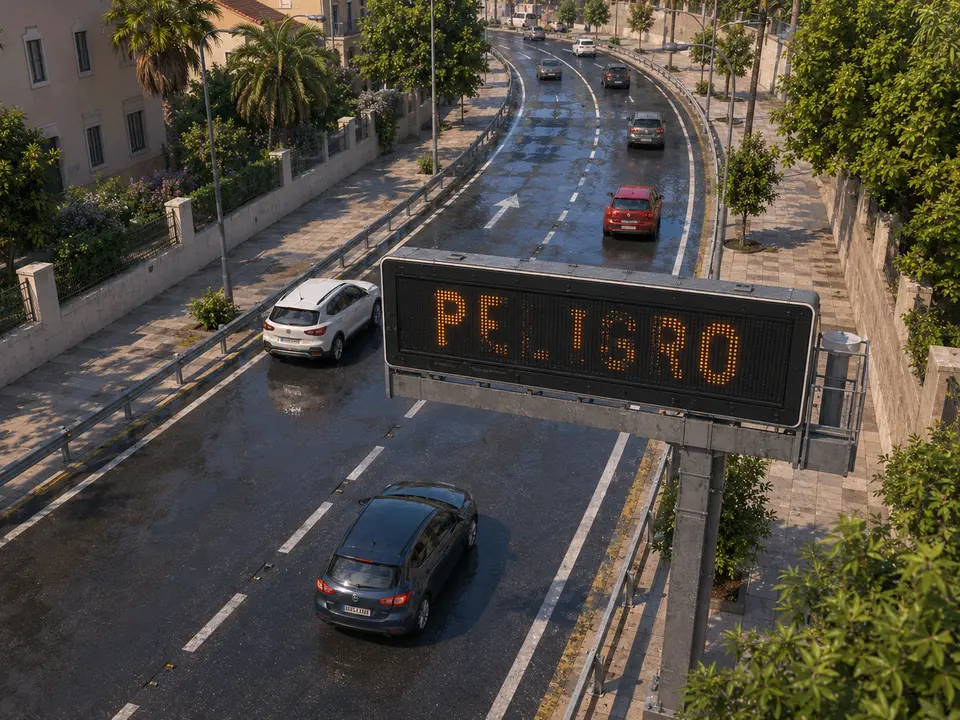
CAM-70Variable message sign
«Tell me if a sign looks broken, dark or with the message incomplete when seen from the road.»
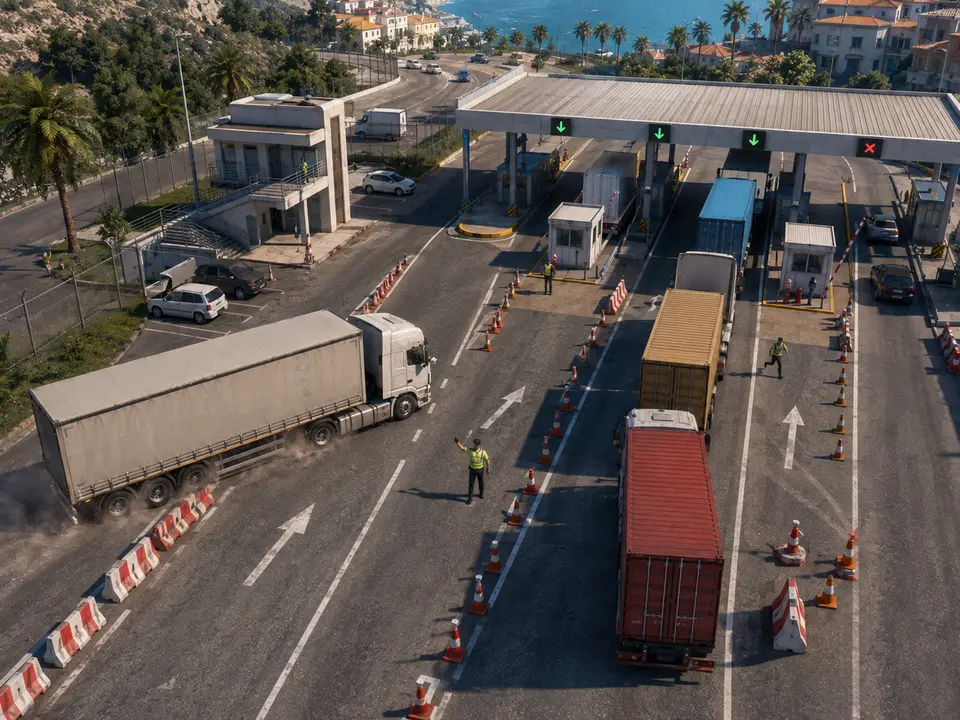
CAM-562Two cars in the lane with the red cross above it
«Give me a red alert if a vehicle enters a lane with the cross lit.»
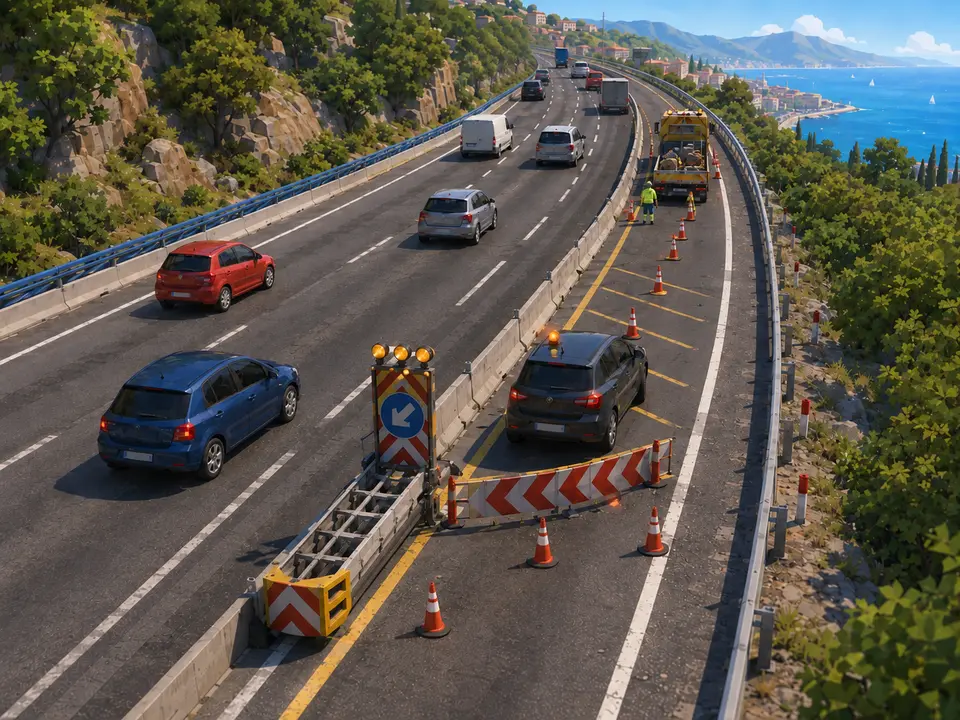
CAM-66Lane closed for roadworks
«Tell me if a vehicle enters the closed lane or if a worker steps out of the protected area.»
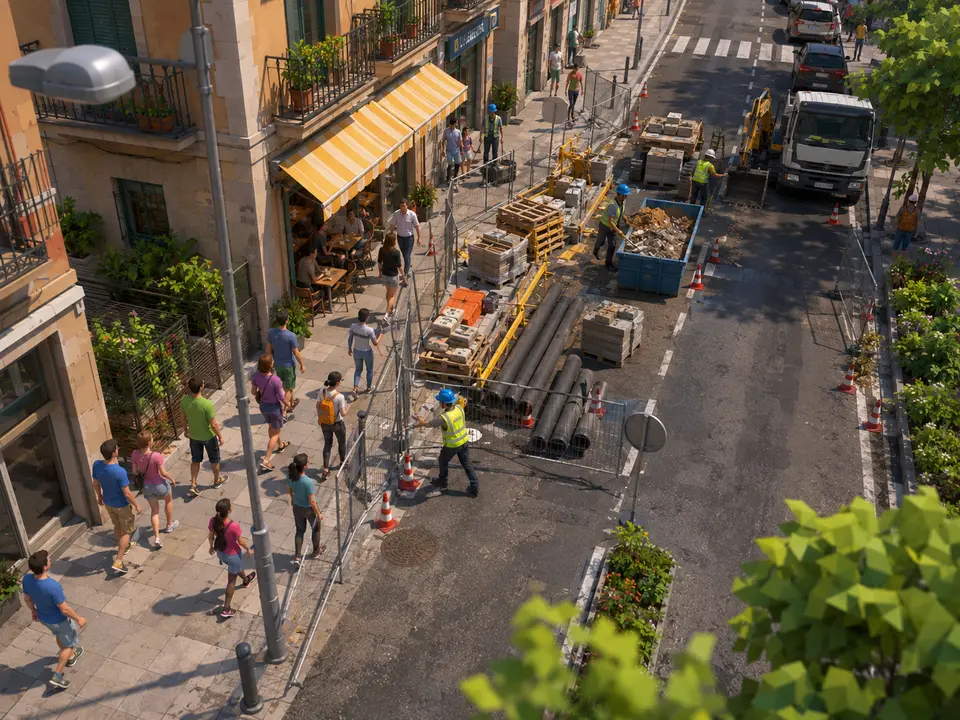
CAM-34Unsignposted roadworks
«Tell me if roadworks take over the street without the signage in place, and what exactly they occupy.»


What it does not do
IRIS does not repair the sign, does not change the message and does not fine anybody: it identifies no people and decides no penalty. It reads the scene and raises the alert.
It is not a universal sign reader either. It sees what the camera sees: if the sign is edge-on, far away, against the sun or hidden by a lorry, it cannot be read, and in that case what IRIS says is that it cannot read it, not that it is fine.
Questions
- Does it read what the sign says?
- It reads what can be seen from the road, which is what matters. IRIS compares the sign with how it should look: if pieces of letters are missing, if modules are dark or if the message comes out incomplete, it says so. What it does not do is replace the system that drives the sign, which is what knows the message that was ordered. The interesting part is crossing the two: what was sent and what is actually being seen.
- Does it detect a car in a lane under a red cross?
- Yes, and it is one of the most straightforward rules to write. The camera sees the lit lane signal and sees whether a vehicle passes beneath it. When both coincide, the alert fires with the video of the moment. What IRIS does not do is identify the vehicle or process anything: it shows the scene so the control room can act on the traffic, which is where the real risk sits.
- Can it help show the signage was in place?
- Yes, and it is a use that comes up often. Every check is stored with its time and its image, so you can show how the sign looked that day at that hour, without spending an afternoon searching. What we do not do is sell it as a closed legal proof: it is dated video and a recorded check, and whatever weight that carries is decided by whoever handles the case, not by us.
- Does it work at night and in bad weather?
- At night it works well with the electronic signs, because they emit their own light and read better than by day. With metal signs it depends on the lighting and on headlamps. In heavy rain, fog or with a dirty lens there are moments when it simply cannot see, and then IRIS says it cannot check that sign rather than passing something it has not seen. We prefer an acknowledged gap to a false green.
Demo · IRIS at work
We won't just tell you. We'll show you.
It is a summary of the real screen: it plays by itself, step by step, and shows only the path of one case. The actual tool has far more than fits in here.
- The alert fires
- It lands in the tray
- You open it
- You confirm or dismiss
Not seeing yours here?
These words are the ones we have built, not the ones IRIS understands. The list falls short on purpose: you ask for it in a sentence, and sentences do not run out. Tell us what is in front of your cameras and we will tell you whether it understands it, or not yet.
And the best part
What happens in the small hoursdoes not have to wait for the morning report.
IRIS understands it there and then and tells whoever is on call, with the camera and the time. The next day there is nothing to reconstruct: it is already written down.
Tell us your problem and we will say whether IRIS understands it, or not yet.
We reply the same working day.