Solutions by typePersonal safety
What if someone is down there when the train comes in?
Someone has gone down onto the track
It is 23:20 on platform 3. A passenger has dropped his phone between the edge and the rail. He looks down the line, sees no headlights, sits on the edge and climbs down. It takes him fourteen seconds to find it. The train that comes through at that hour does not stop at that platform and it is running fast. In the control room there is one person and a hundred and twenty cameras spread across the screens.
3 cameras across 2 sectors
What IRIS is
IRIS watches the cameras for you.
IRIS Neural is an artificial intelligence that watches the cameras you already have and understands what happens in front of them. When something important happens —or something you told it you need to keep an eye on—, it alerts you; and whatever can be counted, it counts in numbers. All day long, without anyone having to watch a screen.
You tell it what you need to watch, and IRIS does it.
Works with the cameras you already have. Nothing to replace.
A person replies, not a form.
- Your footage never leaves your premises.
- It doesn't identify people.
- Certifications →
This is how you ask for it
«Tell me instantly if anyone gets down onto the track, on any platform and at any hour.»
If it goes well, nothing happens and nobody ever finds out. If it goes badly, the line is closed for hours, thousands are evacuated and rerouted, the driver is off for months and the investigation runs a year. None of that gets fixed afterwards: it is decided in the first few seconds. And those seconds depend on somebody looking at that one tile out of a hundred and twenty.
You decide once
Here the organisation decides something it does not do in other rules: no waiting time. If anyone ends up below the platform edge line, at any moment, then the control post is alerted immediately, with the camera open and the exact platform. There is no margin, because there is no normal reason to be down there.
Nobody gets down onto the track by accident. They get down for something small and specific: a phone, a backpack, a card, a cap. And they get down because in that moment they believe there is plenty of time, which is exactly what everybody believes. On the platform there is almost never anyone to shout in time, because at eleven at night the platform is half empty and the other passengers are looking at their own phones.
From the control room, that platform is one tile out of a hundred and twenty. The person on duty watches, above all, the big stations and the busy corridors. Nobody is to blame for that: a human eye cannot spread itself across a hundred and twenty images for eight hours straight. Meanwhile, the train needs hundreds of metres to stop and the driver sees the platform when they are already entering it.
IRIS watches the platform edge on every camera at once and alerts instantly: camera open, exact platform, video from before. And it does the other half of the job, the far end of the platform, where people step past the yellow line just as a train comes in. A track gives no second chances. Everything that can be won here is won in the first few seconds.
What changes
Before, the first news came over the intercom: an agitated passenger who cannot say which platform they are on or which way the train is coming. While that was sorted out, the seconds that mattered were lost. Now the control post gets the camera open, the platform and the exact minute, and can send the instruction and the announcement at once.
Where we have seen it
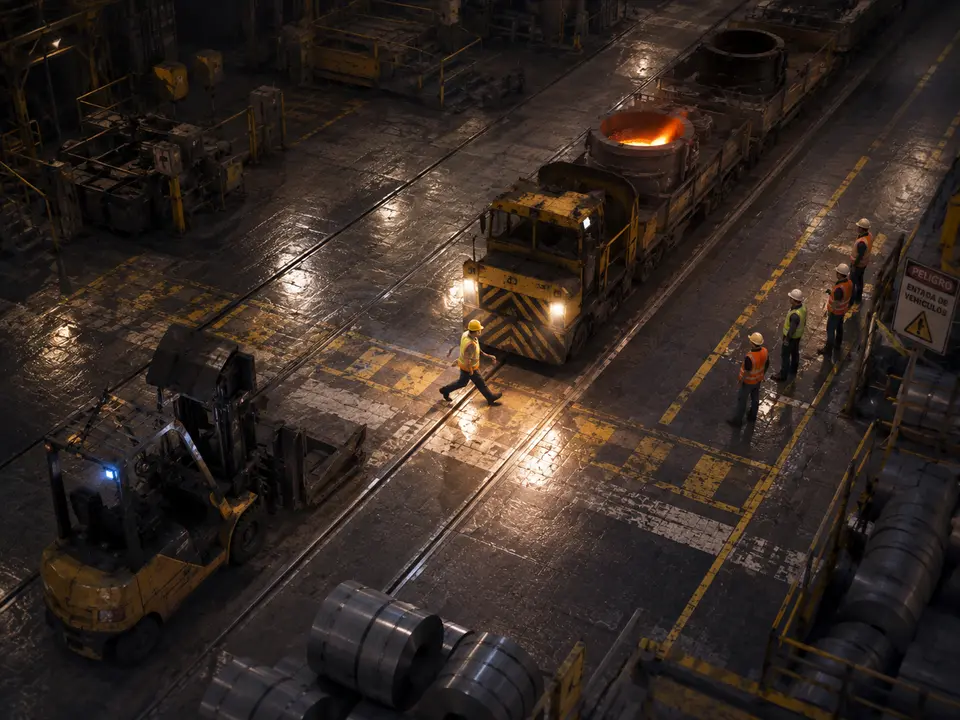
CAM-377He crosses the track in front of the ladle
«Tell me if anybody crosses the track when the loco with the ladle is coming, and save me the video.»
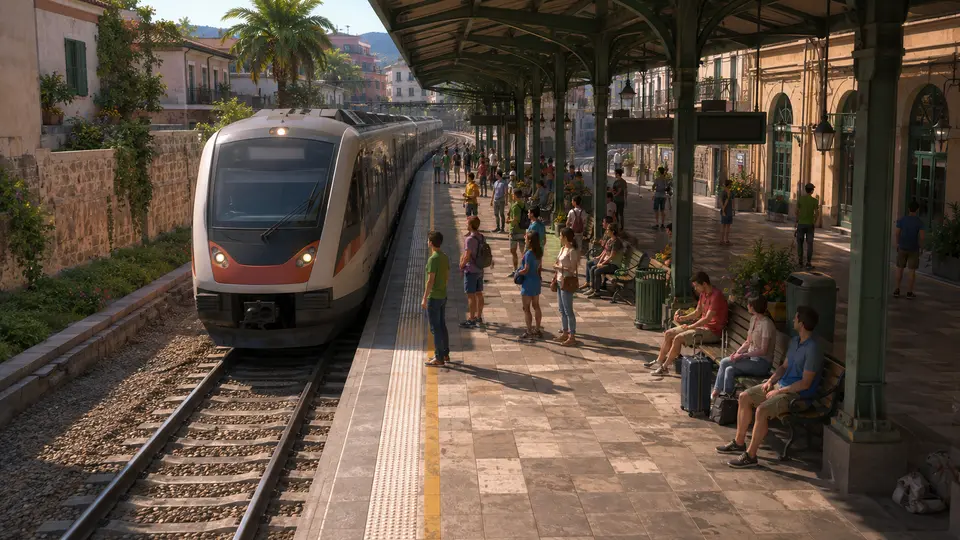
CAM-84Passengers in the braking zone
«Tell me if people are past the yellow line at the head of the platform while a train is coming in.»
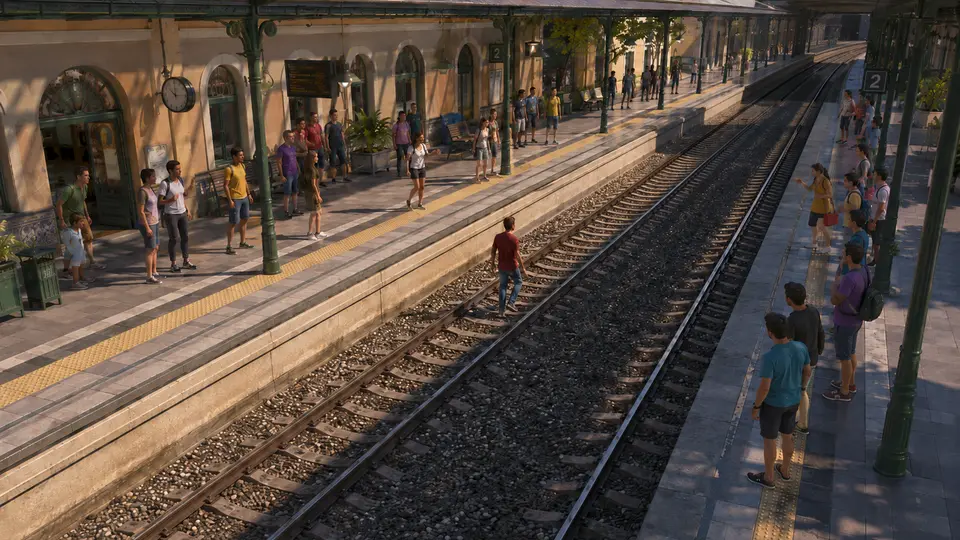
CAM-81Person on the track
«Tell me straight away if anyone gets down onto the track, on any platform, at any hour.»


What it does not do
IRIS does not stop trains and does not replace railway signalling. It alerts whoever is at the control post, with the camera open and the exact platform, and the decision to close the line or brake belongs to whoever is responsible for making it.
And it only sees what the camera sees: if someone ends up under the platform edge, out of frame, IRIS cannot reach there either.
Questions
- Does IRIS wait a few seconds before alerting?
- No. This is one of the few scenes where no waiting time is set. In other rules it pays to wait a few seconds to avoid over-alerting, because standing still or crouching can be perfectly normal. Here there is no normal reason to be on the track, so every second of waiting is a second taken from whoever has to react. The sentence is written that way on purpose: instantly, on any platform, at any hour.
- Does it also alert on people stepping past the yellow line?
- Yes, and it matters more than it looks. At the far end of the platform, with a train entering the braking zone, all it takes is one person accidentally nudging another. You ask IRIS to alert if passengers are past the yellow line while a train is coming in. This alert is designed for an immediate announcement, not for a report: fifteen seconds later it is worth nothing.
- Can IRIS stop the train?
- No. Stopping or holding a train is decided at the control post and carried out through the signalling systems, which are built and certified for exactly that. IRIS touches none of it. What it does is get the alert to the person with that responsibility straight away, with the camera already open and the exact platform, instead of them having to work out where the problem is while someone describes it on the phone.
- Is it useful outside a passenger station?
- Yes. There are tracks inside factories and ports where shunting locomotives run, and the danger there is the same with fewer people watching. In a steel plant, for instance, someone crossing the track just as the locomotive comes through with a ladle of molten metal is the scene nobody wants to see twice. The rule is the same: person on the track, instant alert and video kept.
See it for yourself
No extra alarms here. Just what needs looking at.
Not a recorded video, not an explanatory drawing: a summary of the real screen, with a different case every time it starts. There is a lot more behind it.
- You draw the line
- It counts by itself
- A number comes out
Not seeing yours here?
These words are the ones we have built, not the ones IRIS understands. The list falls short on purpose: you ask for it in a sentence, and sentences do not run out. Tell us what is in front of your cameras and we will tell you whether it understands it, or not yet.
And the best part
Finding something in yesterday’s videoshould take as long as asking for it.
No more scrubbing back through six hours with your finger on the mouse. You type what you are after, in plain words, and the matching moments come up. Same cameras as always.
Tell us your problem and we will say whether IRIS understands it, or not yet.
We reply the same working day.