Solutions by typeProduction efficiency
Who is working there right now, and was it planned?
Someone is working and there is no open work order
A quarter past three in the morning, with the site lights on. A person with no helmet and no high-vis has both hands on a manifold valve. From that area a black hose runs across the gravel to an open-bed van. There, another person holds the hose over a white tank loaded on the bed. On tonight’s work-order board there is no operation scheduled on that manifold.
3 cameras across 3 sectors
What IRIS is
IRIS watches the cameras for you.
IRIS Neural is an artificial intelligence that watches the cameras you already have and understands what happens in front of them. When something important happens —or something you told it you need to keep an eye on—, it alerts you; and whatever can be counted, it counts in numbers. All day long, without anyone having to watch a screen.
You tell it what you need to watch, and IRIS does it.
Works with the cameras you already have. Nothing to replace.
A person replies, not a form.
- Your footage never leaves your premises.
- It doesn't identify people.
- Certifications →
This is how you ask for it
«Tell me if anyone operates a manifold valve outside an open work order, and all the more so at night.»
The discrepancy shows up in the month-end balance, or in the quarterly stock take, or in next week’s count. The question is always the same: when did it leave, which way and at what time. A site knows very well what comes in through the dock and rather less what goes out, so the answer costs hours and often never arrives. And when it does, it is almost always the most boring explanation.
You decide once
The organisation defines the legitimate route and writes it once: which cabinets, which valves and which stores are watched, which time bands have scheduled activity, which work-order board it is checked against and who gets told. If there is an open order, there is no alert, even at three in the morning. If there is not, the alert goes out while it is happening, with the camera, the time and video that started before. IRIS does not write that standard: it applies it the same way every time.
Almost everything that leaves a site was planned. A unit pulled from a cabinet because it is due for replacement. A valve opened because there is a scheduled operation. Boxes leaving a controlled-product store because there is an order. The problem is not the rare exception: it is that nobody can tell it apart from the rest at the moment it happens.
That is why the rule does not talk about people. It does not say who looks like what, and the word suspicious does not appear here to describe anybody: it says that a unit has left its slot and is moving down the aisle at midnight, that there are two hands on a valve at quarter past three with a hose running to a van, that boxes have been taken from the controlled cabinet at ten at night.
IRIS crosses that fact with one single question: is there an open work order for this, here and now? If there is, it says nothing, even in the small hours. If there is not, it hands over the camera, the minute and video that started before the cabinet door was opened. What the manager receives is not an accusation: it is an image, a time and a question that needs clearing up. And when it does not clear up, the alert has been raised while the equipment is still inside the building.
What changes
Before, the question came up at the quarterly stock take and the answer cost hours of video and a list of access records. Now the alert arrives while it is happening, with the exact minute and video that started before the door was opened. Almost always it clears up in a minute and closes there: planned work that was never logged. And when it does not clear up, somebody can still do something, because the equipment has not left the building yet.
Where we have seen it
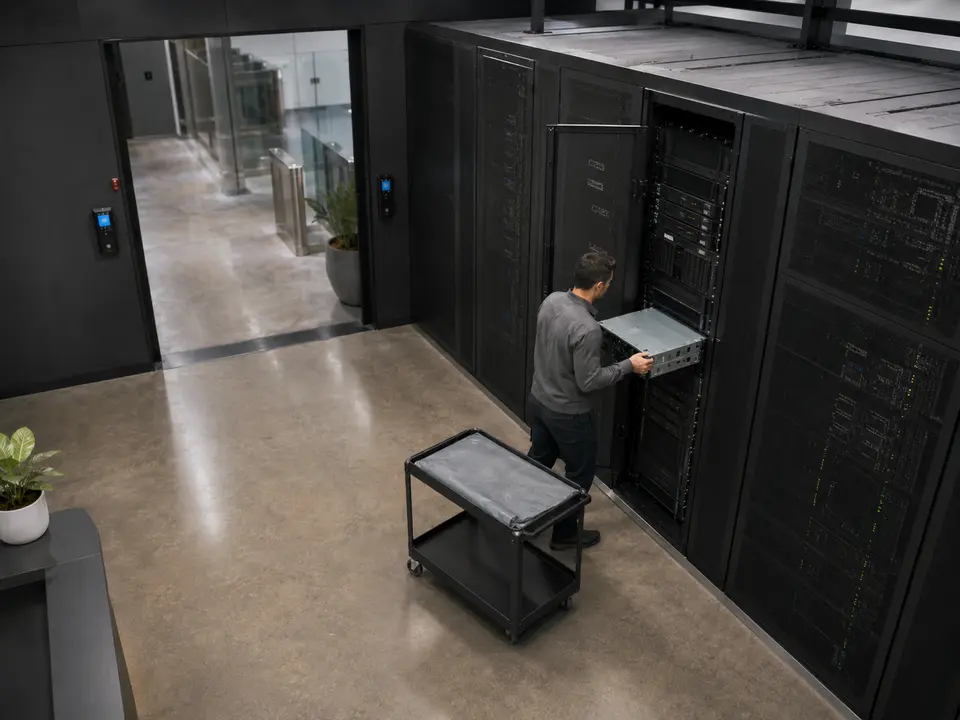
CAM-554A unit leaves the rack and no work order is open for it
«Tell me if a unit comes out of a cabinet and moves down the aisle when no work order is open for that cabinet.»
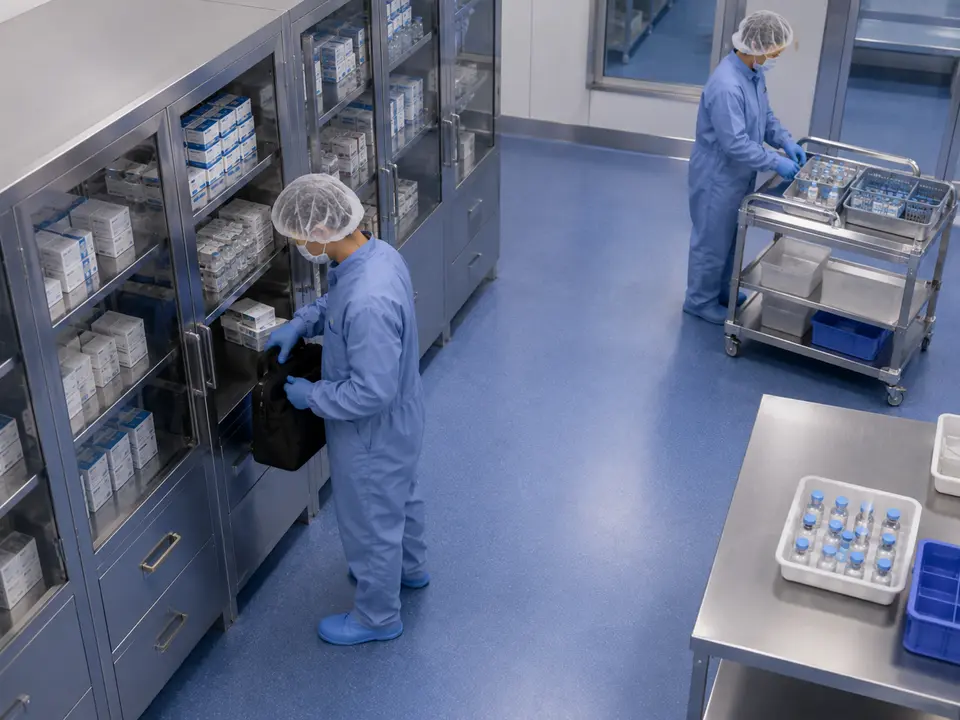
CAM-297Boxes leave the controlled cabinet with no work order open
«Tell me if boxes are taken out of the controlled cabinet when no work order is open for that hour.»
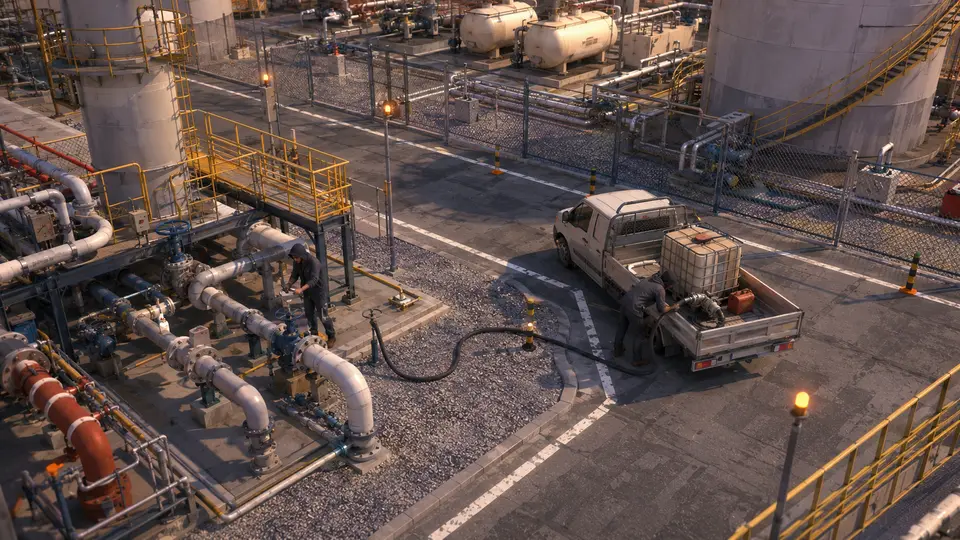
CAM-339Someone opens a valve at night and fills a tank
«Tell me if anybody operates a valve on the manifold with no work order open, and all the more so at night.»


What it does not do
By itself, IRIS does not know whether there was an open order. It sees the fact: the unit has left and is moving, the valve is being operated, boxes have left the cabinet. Whether it was planned is told by another system, the work-order one, and that has to be connected.
And it identifies nobody, reads no serial numbers and keeps no inventory. That belongs to other systems.
Questions
- Does IRIS know that is a theft?
- No, and it does not say so. What it detects is a specific situation: someone is operating a valve in a time band where no work order is open, and a hose runs to a vehicle. That is visible in the image and can be stated. Judging it is a job for people, with the video in front of them. IRIS does not judge intent, does not profile anyone and does not use the word suspicious: it hands over a fact, a time and an image.
- How does IRIS know there was no work order?
- By itself it does not know, and this is the limit of these cameras. IRIS sees the fact: the unit has left and is moving, or the valve is being operated. Whether it was planned is told by another system, the work-order one, and that has to be connected. When the two pieces of data are crossed, the alert only fires when it really means something. If it is not connected, IRIS alerts anyway and a person does the check in ten seconds.
- Is this accusing someone of taking something?
- No, and it is worth saying plainly. The alert is about the thing, not the person: what IRIS sees is that a unit has left its place and is moving. It does not know who is carrying it, does not recognise faces and does not judge intent. Almost always the explanation is the simplest one: planned work that somebody never got round to logging. Whoever decides whether that is fine or not is a person, watching the video, with the work sheet in front of them.
- What if it is genuine work outside normal hours?
- Then there is an open work order and the site knows it. The rule is written against the work-order board: if the job is authorised, there is no alert, even at three in the morning. When it is not, the alert arrives while it is happening and whoever is on call decides whether to phone, to go over, or to do nothing. The time of day is not what triggers the rule: what triggers it is the absence of an open order.
The real interface, step by step
You set the rule once. IRIS applies it every time.
You will see a summary of the interface, played step by step and hands-free. Each round starts with another case. The complete tool does not fit in a demo.
- The rule gets built
- It goes to every camera
- Published, it watches alone
- And then it fires
Not seeing yours here?
These words are the ones we have built, not the ones IRIS understands. The list falls short on purpose: you ask for it in a sentence, and sentences do not run out. Tell us what is in front of your cameras and we will tell you whether it understands it, or not yet.
And the best part
A recording gets watched when nothing can be done.An alert lands while there is still time to act.
IRIS raises the alert while it is happening and says where: the camera, the time and the images from that moment. With that, whoever is on duty is still in time to act.
Tell us your problem and we will say whether IRIS understands it, or not yet.
We reply the same working day.