Solutions by typePersonal safety
Has someone gone in with nobody left outside?
He went down the shaft with nobody above
It is 10:40 on an ordinary street. Two workers have opened the manhole, set out the cones, and one has gone down with the gas detector. The one above stays on watch, as the procedure requires. At 11:05 his phone rings: he has to move the van because it is blocking the road. Now there is a person four metres underground, in a place where the air can change in a minute, and nobody left on the street.
6 cameras across 4 sectors
What IRIS is
IRIS watches the cameras for you.
IRIS Neural is an artificial intelligence that watches the cameras you already have and understands what happens in front of them. When something important happens —or something you told it you need to keep an eye on—, it alerts you; and whatever can be counted, it counts in numbers. All day long, without anyone having to watch a screen.
You tell it what you need to watch, and IRIS does it.
Works with the cameras you already have. Nothing to replace.
A person replies, not a form.
- Your footage never leaves your premises.
- It doesn't identify people.
- Certifications →
This is how you ask for it
«Tell me if someone goes down a shaft and there is nobody watching outside.»
There are no minor injuries here. In a confined space, the person who enters loses consciousness in seconds, and the one who climbs down to pull them out drops on top of them. A single failure takes two people, sometimes three. And then comes everything else: the investigation, the plant shutdown, the liability of whoever signed the permit, and a company that takes years to be what it was. The recording was there, but nobody was watching it.
You decide once
The company decides once which openings count as confined-space entries and how much slack is allowed for a brief lapse. In one sentence: if someone enters through a manhole, and more than two minutes pass, and nobody is left outside on watch, then tell the team leader, open the camera and keep the video. Written once, applied to every single entry.
In a confined space — a shaft, a tank, a silo, a reactor — one person rarely dies alone. The one who enters dies and so does the one who climbs down to pull them out. Because the air inside gives no warning: no smell, nothing to see, and whoever breathes it loses consciousness in seconds. From outside, the scene looks perfectly ordinary. Just a ladder coming out of a hole.
That is why the trade rule is short enough for anyone to understand: nobody goes in unless somebody stays out on watch. And that is why it gets broken the same way every time. The entry starts properly, with the attendant in place and the permit signed. The problem shows up twenty minutes in, when the van has to be moved, a tool fetched or a call taken. Nobody decides to leave them alone. They are simply left alone.
IRIS does not look inside the tank; it looks at the opening. It sees when someone enters, counts how many people stay above and alerts when that count reaches zero. It also flags the hatch that has been open for half an hour with nobody in front of it, which is the other half of the same problem and the hole somebody falls into at night. This is one of the few scenes where an alert does not change the report: it changes the number of casualties.
What changes
Before, whether the attendant stayed up top depended on nobody calling him. If he left, nobody knew, and the person below least of all. Now, two minutes after the opening is left unattended, the team leader gets the alert with the camera open. And entries are logged: how many there were, how long they lasted and in how many the opening was left alone.
Where we have seen it
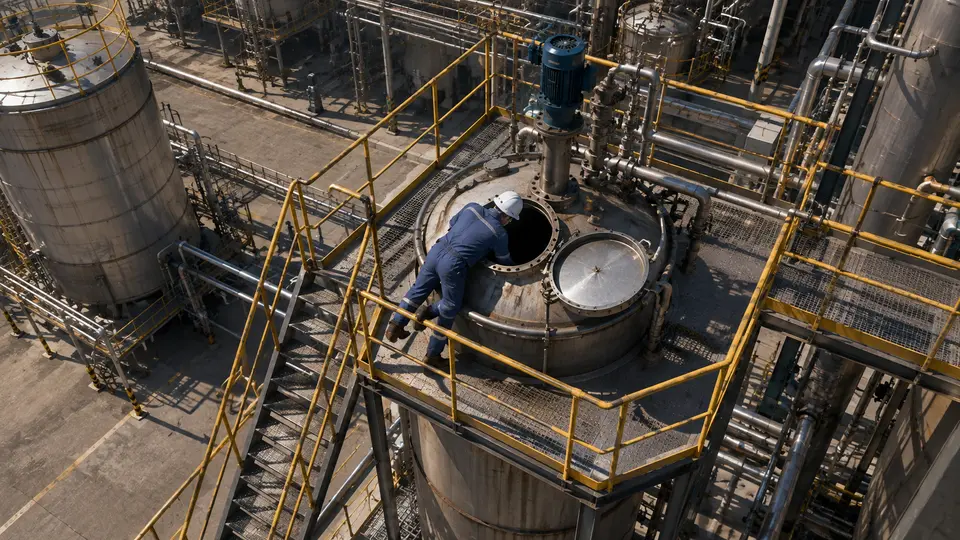
CAM-312Someone leaning into the reactor and nobody outside
«Tell me if anyone climbs into an open reactor and there is no second person on the platform.»
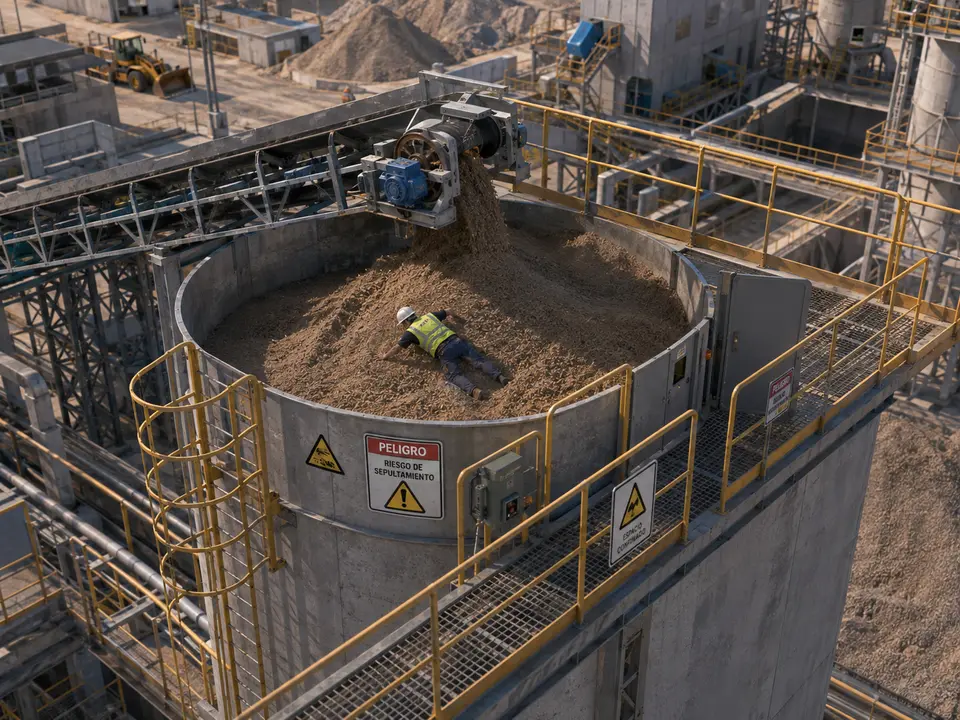
CAM-397A person sunk into the material inside the silo
«Tell me right away if anyone climbs onto or falls onto the material inside the silo, and tell me whether anyone is keeping watch outside.»
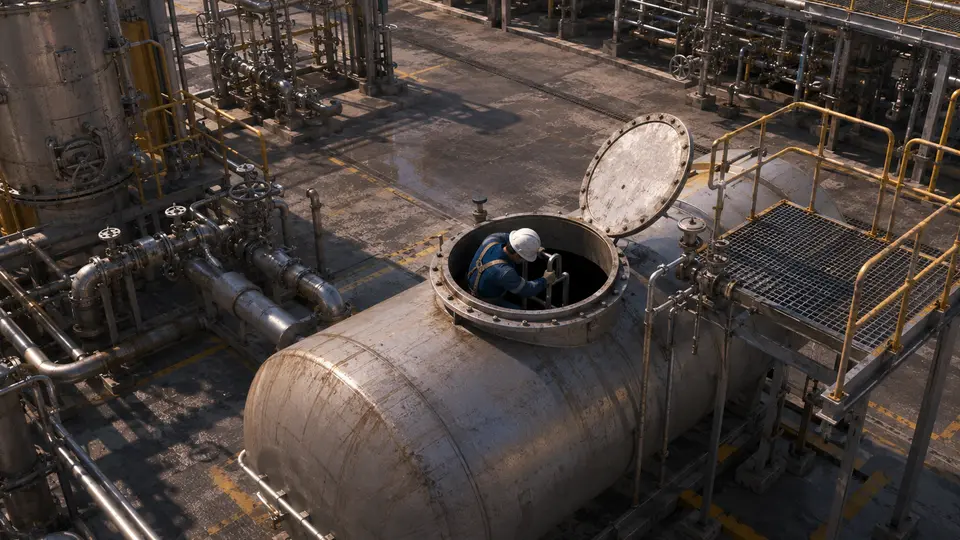
CAM-329He climbed into the vessel and nobody is outside
«Tell me if anyone enters through a manway and nobody is left outside keeping watch.»
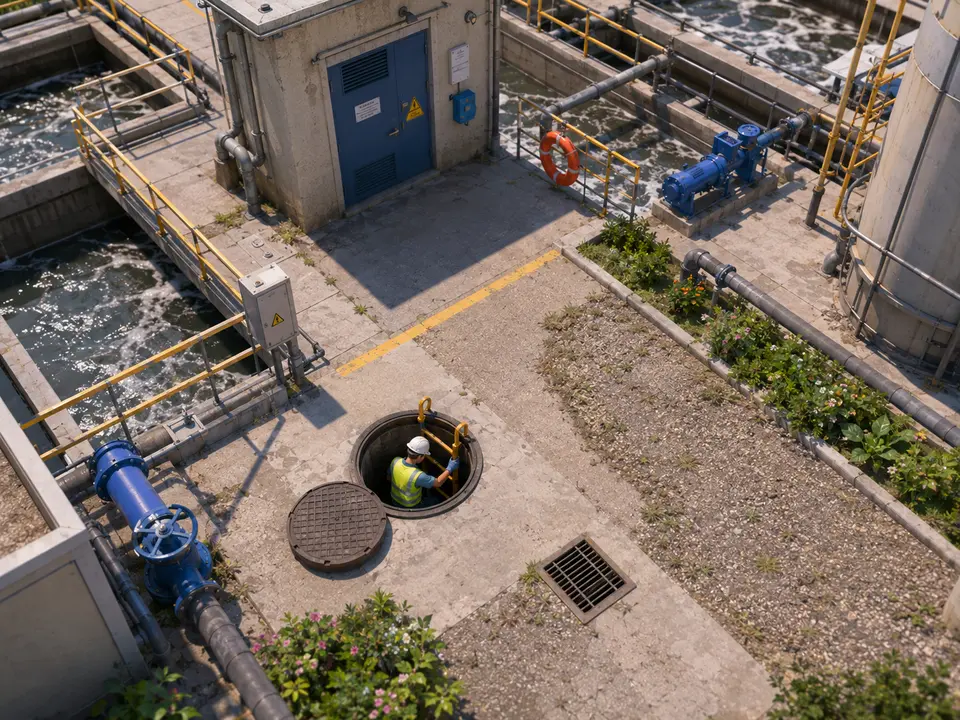
CAM-412Someone has climbed down into the chamber and nobody is left up top
«Tell me if anyone climbs down into a chamber and there is nobody keeping watch outside.»
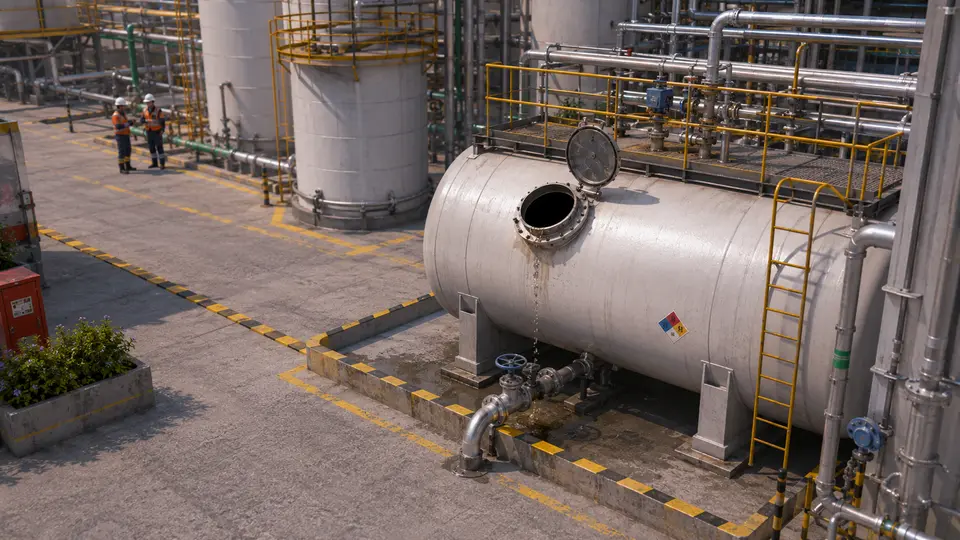
CAM-309The manway has been open for half an hour and nobody is there
«Tell me if a manway or a valve is left open for more than twenty minutes with nobody in front of it.»
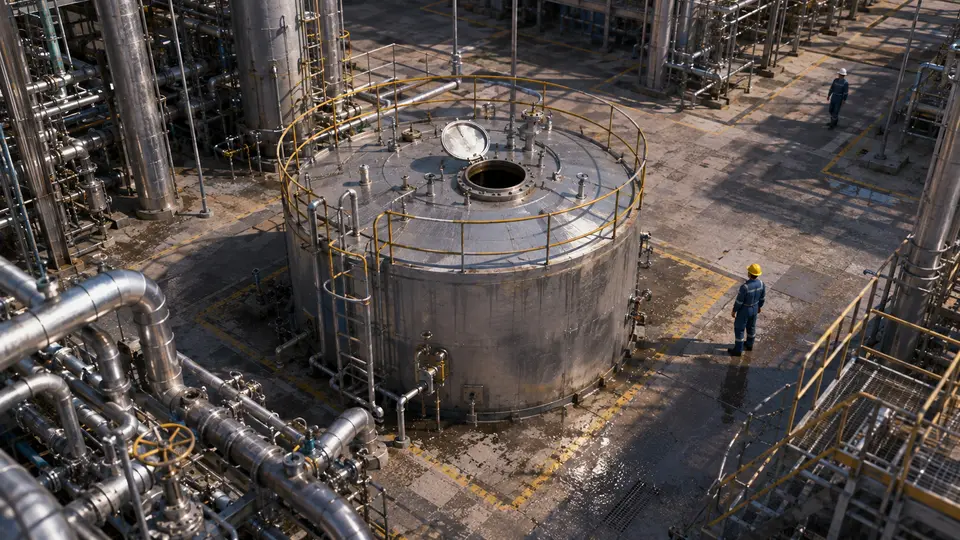
CAM-324The tank hatch is open and nobody is up there
«Tell me if a tank hatch has been open for more than ten minutes with nobody working up there.»


What it does not do
IRIS does not measure gases, does not replace an atmosphere monitor and sees nothing of what happens inside the tank. It watches the opening: who goes in and who stays out.
The entry permit, the ventilation and the gas detector remain what protects the person going down. IRIS only notices on the day the procedure breaks without anyone deciding to break it.
Questions
- Does it alert if the attendant steps away for a moment?
- Yes, and that is exactly the case worth catching, because it is how it almost always happens. The entry starts with an attendant and the problem appears twenty minutes later. You set a short margin — the time it takes to turn round for a tool — and past that IRIS alerts. The alert is not against the person who walked off: it is on the side of the person below, who has no way of knowing they have been left alone.
- Does it replace the entry permit?
- No, and it should not. The permit, the ventilation and the gas detector are what protect the person going down, and a camera does none of that. IRIS is the eye that notices that today, mid-morning, the procedure broke without anyone deciding it. It exists to surface the exception on the same day and in the same minute, not to authorise work or to sign off an entry.
- Does it also cover hatches and openings left open?
- Yes, and it is the other half of the same problem. A manhole left open with nobody in front of it for twenty minutes is a hole in the ground, and it usually stays that way through forgetfulness at the end of a shift or at lunchtime. At night it is where whoever walks past falls in. The same camera that watches who goes in can flag the cover nobody put back, with a different sentence and a different waiting time.
- Can a record of every entry be kept?
- Yes, and in an audit that is worth more than the alert. It logs how many entries there were, at what times, how long each lasted and in how many the opening was left unattended, with the video attached. That turns a practice that used to depend entirely on the crew’s memory into something you can show. And once a number can be shown, it can be improved.
See it for yourself
This isn’t a video. It’s a slice of the real screen.
A summary of the real interface, played hands-free. You see one case from start to finish; what you do not see are the other screens, and there are many.
- Four cameras at once
- Each understands its own view
- The numbers climb by themselves
Not seeing yours here?
These words are the ones we have built, not the ones IRIS understands. The list falls short on purpose: you ask for it in a sentence, and sentences do not run out. Tell us what is in front of your cameras and we will tell you whether it understands it, or not yet.
And the best part
You decide the rule onceand it is applied the same way every time.
At three in the morning it means what it means at noon, on camera one and on camera four thousand. It does not depend on who is on shift, or how tired they are.
Tell us your problem and we will say whether IRIS understands it, or not yet.
We reply the same working day.