Solutions by typeEnvironment and cleanliness
How long does it take somebody to see a plume of smoke nobody expected?
The two minutes that decide everything
It is 19:40 on a mountain road. In the scrub, ten metres from the verge, a plume of smoke rises with flame at the base: it is still the size of a bush. A car has stopped and someone is looking for their phone; it will take them two minutes to give a location, because they do not know which kilometre they are on. The camera on the pole has been watching that plume since it was half a metre high. Nobody was looking at that screen.
8 cameras across 5 sectors
What IRIS is
IRIS watches the cameras for you.
IRIS Neural is an artificial intelligence that watches the cameras you already have and understands what happens in front of them. When something important happens —or something you told it you need to keep an eye on—, it alerts you; and whatever can be counted, it counts in numbers. All day long, without anyone having to watch a screen.
You tell it what you need to watch, and IRIS does it.
Works with the cameras you already have. Nothing to replace.
A person replies, not a form.
- Your footage never leaves your premises.
- It doesn't identify people.
- Certifications →
This is how you ask for it
«Alert me in red the moment there is smoke or flame on any camera, and tell me which cameras still have people in them.»
In a fire, what separates an extinguisher from an operation with aircraft is minutes, not resources. Those same two minutes, inside a plant, separate a burning flange from a hall that has to be evacuated. And there is a part you never get back: the stretch of time when nobody yet knew how many people were nearby. Then come the shutdown, the insurer, the investigation and an awkward question in the meeting: the camera was watching, so why did it not say anything?
You decide once
You say which cameras cover areas where there must be no fire, who receives the alert at each hour of the day and what opens at once: if smoke or flame appears in the battery yard, alert control and the on-call team in red, open the other cameras looking at that same spot at the same time and keep the video from before. IRIS applies it across three hundred cameras at once, at night too.
Black smoke is not smoke: it is a clue about what is burning. Steam is white and rises straight, quarry dust is grey and hangs low, but black smoke comes off something that should not be burning — oil, plastic, rubber, cable — and that is why it frightens anyone who knows their site. It comes off the head of a transformer, straight up, over the roofs of the neighbourhood next door.
And there is a harder version still: the flare at a refinery, a flame that burns every day and that nobody looks at precisely because it is always there. The day it goes out, or the day it shoots up in size and starts trailing a black plume over the tanks, it is the same picture on a screen and something completely different to the people running the unit.
IRIS watches all of them at once and does not get tired. When smoke or flame appears where it should not, it says so in red, with the camera, the minute and the video from before it started; it opens the other cameras looking at the same spot at the same time, because the first thing anyone in charge asks is «show me that from another angle»; and it says which frames still have people in them, which is the question that comes right after. It puts nothing out. What it does is move the decision to minute one instead of minute twelve.
What changes
Before, a fire outside a building was reported by a person: a driver pulling over, an operator stepping into the yard, a neighbour calling in. And the first half hour went on working out where it was and how many people were near it.
Now the alert comes from the camera itself, in red, with the location and the video from before. The decision is still human; what has changed is that it is made with the scene in front of you.
Where we have seen it
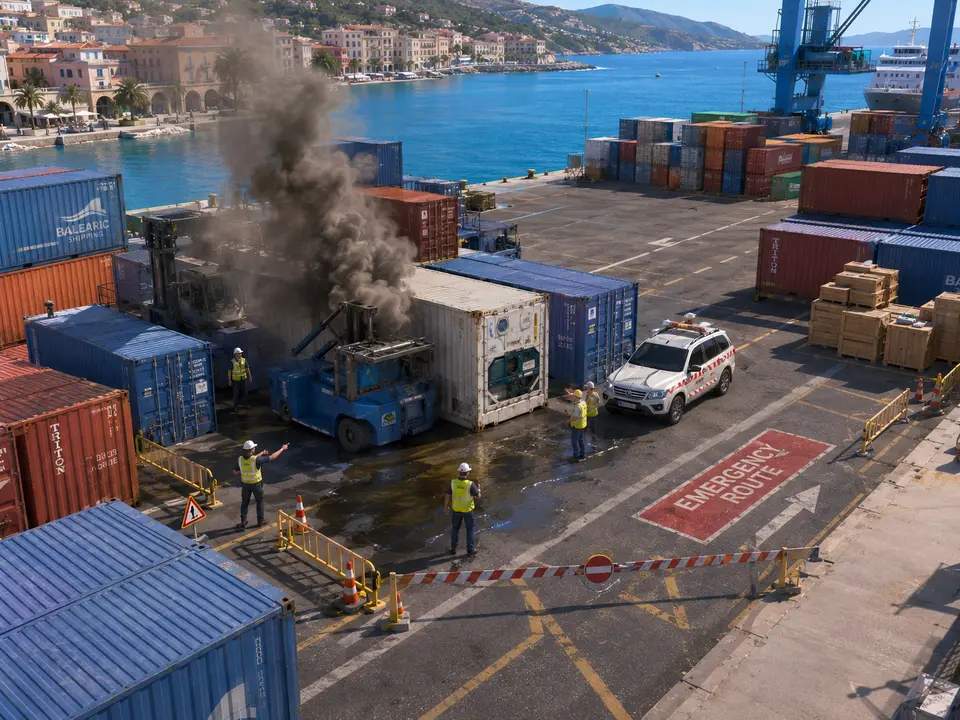
CAM-453Black smoke over the yard and liquid spreading across the ground
«Tell me the moment there is smoke in the yard or a liquid spilling across the ground, and tell me whether the emergency route is clear.»
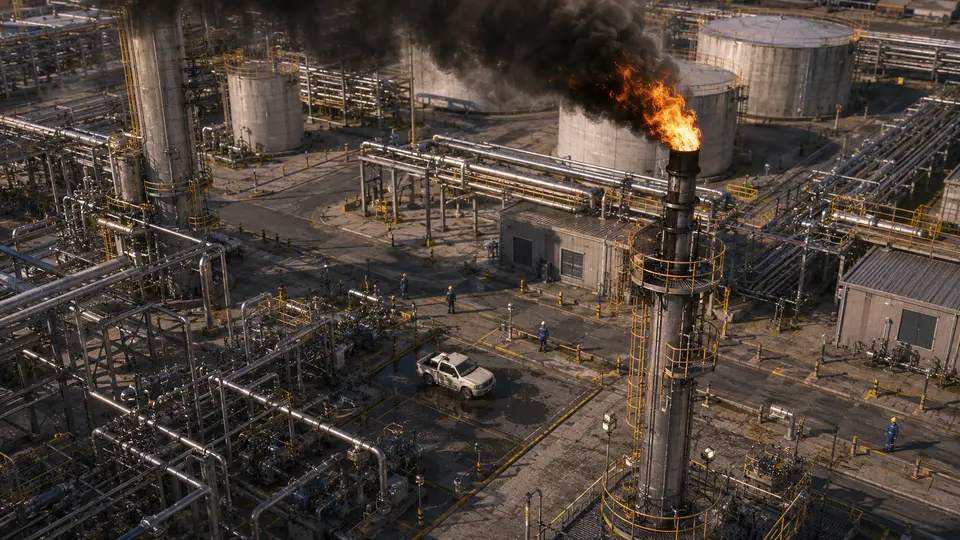
CAM-322The flare is not burning the way it always does
«Tell me when the flare flame goes out, jumps in size or starts throwing black smoke, and tell me since when.»
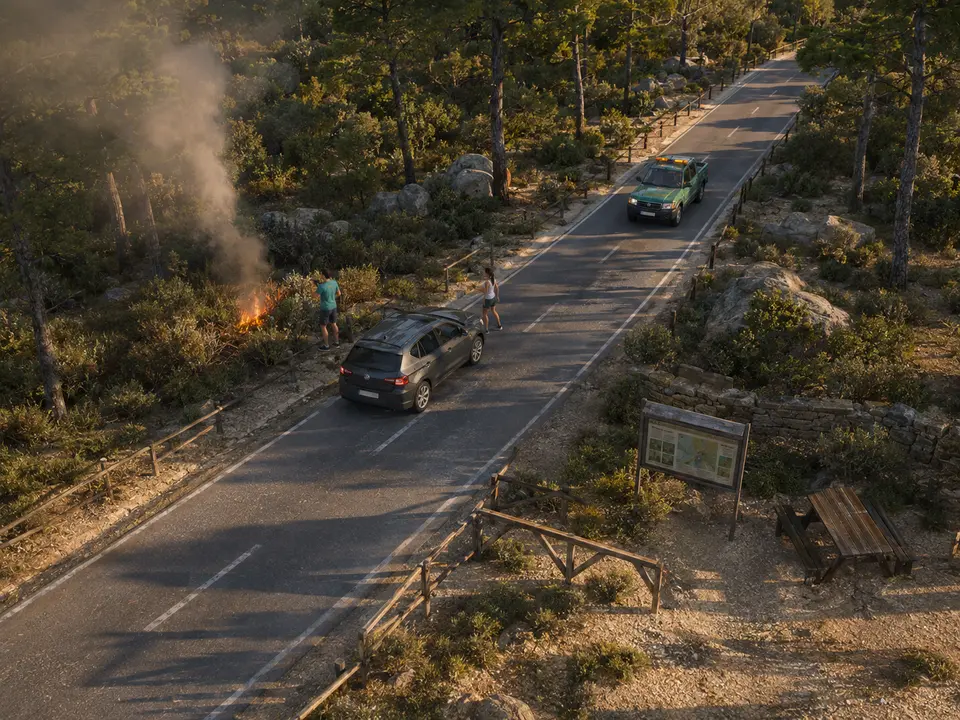
CAM-567A column of smoke, and the two minutes that decide everything
«Give me a red alert the moment you see smoke coming out of the hillside.»
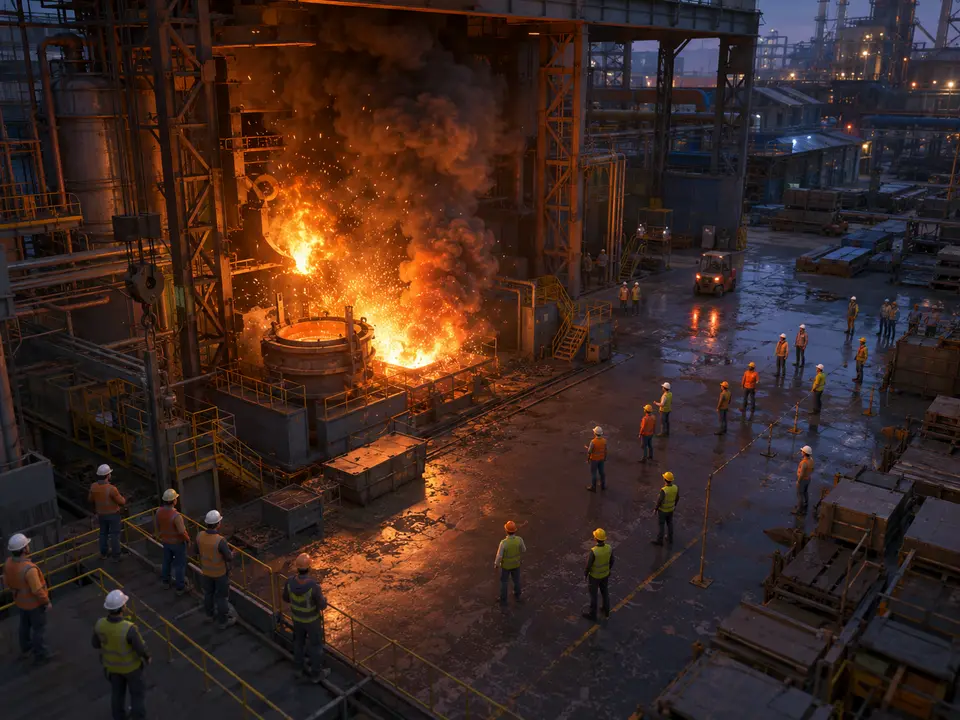
CAM-369A fireball over the ladle, and the bay is emptying
«Alert me the moment there is flame or black smoke in the casting bay, and tell me which cameras still have people in them.»
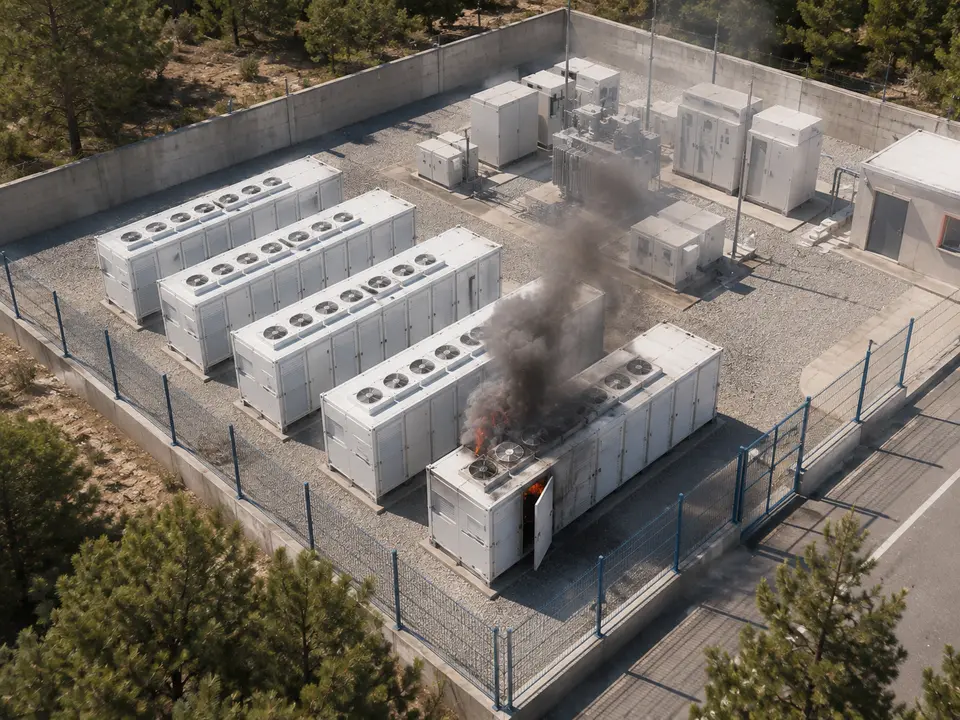
CAM-353Black smoke pouring out of a battery container
«Alert me right away if smoke or flame comes out of a battery container, or if a door opens on its own.»
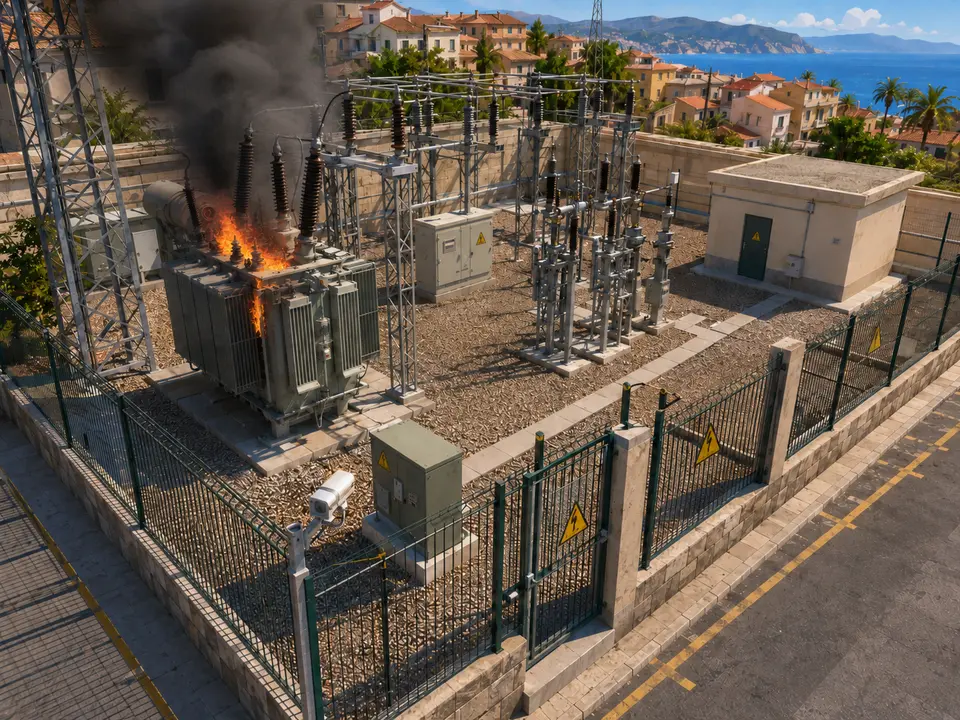
CAM-344Flame and black smoke on the transformer
«Tell me the moment there is smoke or flame on any machine in the yard, even with nobody there.»


What it does not do
IRIS is not a certified fire detection system and does not replace the detectors, sprinklers or fire protection in your plant. It is one more layer, the one covering what is out in the open and has no detector.
It also does not extinguish anything, shut anything down or call the fire service on its own: it alerts whoever you choose, and that person decides.
Questions
- Does it replace fire detectors?
- No, and we do not want anyone to read it that way. Detectors are approved, certified, and regulation says where they must be installed: IRIS does not touch that. What IRIS covers is what a detector cannot, which is everything outdoors: a yard, a flare, a battery park, an outdoor transformer, a hillside. There is no ceiling to hang a sensor from, but there are cameras. It is a layer that adds, not one that replaces.
- Does it tell smoke from steam or dust?
- Yes, in most scenes, because they do not look alike: steam is white and breaks up quickly, dust rises at ground level and travels with a machine, and smoke climbs in a column, darkens and does not stop. But we are not going to claim it is infallible: a white steam plume against a grey sky, in a plant that also has a flare, is a hard case. That is why the rule can be set up with confirmation — two cameras looking at the same spot — and why the decision still belongs to a person with the video in front of them.
- Can it watch a flare that burns all year round?
- Yes, and it is one of the cases where the difference shows most. The rule is not «alert if there is a flame», because there always is one: it is «alert if that flame changes». It goes out, it shoots up in size, it starts trailing black smoke. An operator who walks past that screen twenty times a day stops seeing it by the third week, and that is not a personal failing: it is how anybody’s attention works. IRIS looks the same on day one and on day three hundred, and it says what time the change started.
- Does it work at night?
- Yes, if there is flame or if there is light. At night a flame shows up far better than by day: a fireball above a ladle or an orange flame at the head of a transformer stand out in the image. What you do not see at night is smoke on its own, with no flame and nothing lighting it, and we say that plainly. That is why in critical areas the rule usually leans on more than one camera and on the lighting that already exists, and why a trial on your site, with your cameras and your lights, is the only honest way to know what can be seen.
Demo · IRIS at work
We won't just tell you. We'll show you.
It is a summary of the real screen: it plays by itself, step by step, and shows only the path of one case. The actual tool has far more than fits in here.
- The alert fires
- It lands in the tray
- You open it
- You confirm or dismiss
Not seeing yours here?
These words are the ones we have built, not the ones IRIS understands. The list falls short on purpose: you ask for it in a sentence, and sentences do not run out. Tell us what is in front of your cameras and we will tell you whether it understands it, or not yet.
And the best part
You can add more cameras;you cannot add more hours to anyone’s day.
Cameras can be multiplied; a person’s hours cannot. IRIS looks at everything coming in and leaves them the one thing no machine does better: deciding what to do.
Tell us your problem and we will say whether IRIS understands it, or not yet.
We reply the same working day.