CAM-359
One tracker row is facing the opposite way to all the others
Midday at the coastal solar plant. Every row is turned the same way, following the sun, except one: the row in the middle has stayed facing the opposite way and shows the backs of the modules and the bare frame. Its neighbours, on both sides, are aligned with each other. The whole comparison fits inside one frame, which is why the difference is obvious at a glance.

Turn on IRIS Vision
AI-generated image
What IRIS is
IRIS watches the plant for you.
IRIS looks at the cameras you already have on the plant floor and understands what it sees: a stopped line, someone inside a robotic cell, someone without their safety gear on, jammed parts. When something like that happens, it alerts right away; and whatever can be counted, it counts in numbers. All day long, with no one needing to watch the screen.
You tell it what you need to watch, and IRIS does it.
Here, for example, IRIS compares each row of solar panels with its neighbours and flags it the moment one ends up facing the wrong way. So you find out the same day, not in next month's bill, which row has stopped turning. With that alert you decide whether it's the motor or the connection, and send someone before you lose more weeks of sun.
Works with the cameras you already have. Nothing to replace.
A person replies, not a form.
- Your footage never leaves your premises.
- It doesn't identify people.
- Certifications →
What IRIS understands
What it recognises in this scene
- row turned the opposite way
- neighbouring row, correct orientation
- aligned block on the other side
- site fence
What this camera measures
An alert says something is happening. The reading says how much.
- 12rows in frame
- 1rows with a different orientation
- 3 h 20 mintime without moving
- ≈ 60°difference against the neighbours
- 09:40last time it was aligned
The figures on this screen are an example from the illustration, not any client's measurement.
The rule
You decide once. IRIS applies it always.
If
a row holds a different orientation from its neighbours for longer than agreed
Then
- opens an alert with the row, the time and the image showing it beside its neighbours
- notifies plant maintenance with the last time it was still aligned
- keeps the image so it can be checked against what the control system says
The instruction that set it up«Tell me if any tracker row stays at a different orientation from its neighbours for more than an hour.»
What changes
What changes for whoever answers for the plant
The plant operator finds out today, not on the end-of-month invoice. A stuck row does not show up as a fault: it still produces something, so it can go weeks without anyone looking at it. IRIS sees that this row is not where the others are, and the alert is cross-checked against the control system. If control says the row is obeying and the image says it has not moved, the problem is the motor or the coupling, and you already know where to go.
What people usually ask
Why watch the trackers with a camera if there is already telemetry?
Because they do not say the same thing. The control system says which command was issued; the camera says where the row actually ended up. When a row accepts the command but the motor slips, control never notices and the image does. Together they point at the fault far sooner than either one alone.
Can IRIS measure the angle of a row?
Yes, by comparing it with its neighbours in the same image. No absolute angle is needed: it is enough that every row in the block does the same thing and one does not. That comparison is repeatable, it is visible in the picture and anyone can understand it. The exact figure, if it is needed, comes from the plant control system.
Does this work for wind turbines too?
Yes. It is the same idea: a machine standing still or facing the wrong way while its peers are working. On a wind farm IRIS sees that a rotor is not turning or that a nacelle is pointing somewhere other than the rest, and it alerts the same way. What the camera contributes is the visible comparison, not a diagnosis of the machine: that is maintenance's job, with the machine's own data.
Other cameras
- CAM-340 · Someone is walking through a compound that is always empty
- CAM-341 · The fence is down and someone is coming through the gap
- CAM-342 · Eleven minutes parked where nobody ever stops
- CAM-343 · A cabinet is being emptied of its copper
- CAM-344 · Flame and black smoke on the transformer
- CAM-345 · A trail of oil under the transformer
See it for yourself
We won't just tell you. We'll show you.
It is a summary of the real screen: it plays by itself, step by step, and shows only the path of one case. The actual tool has far more than fits in here.
- Finds the plate
- Reads the characters
- Follows the same plate
See it somewhere else
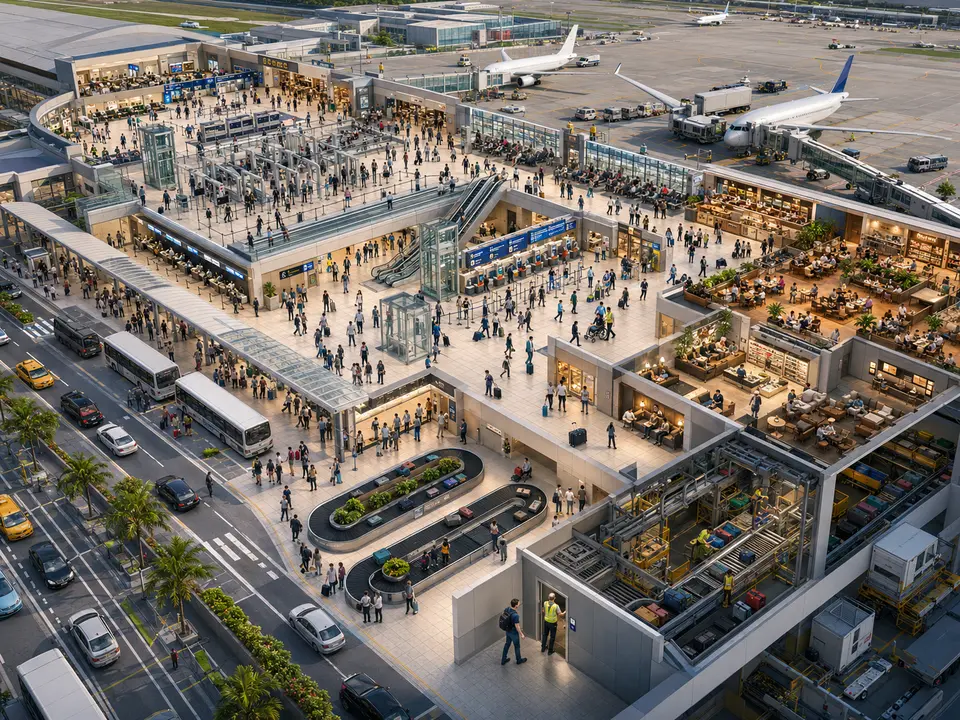
What does an airport see before the queue forms?
14 cases: 7 raise an alert when something happens and 7 only measure. You see each image as it is, and then with what IRIS understands on top.
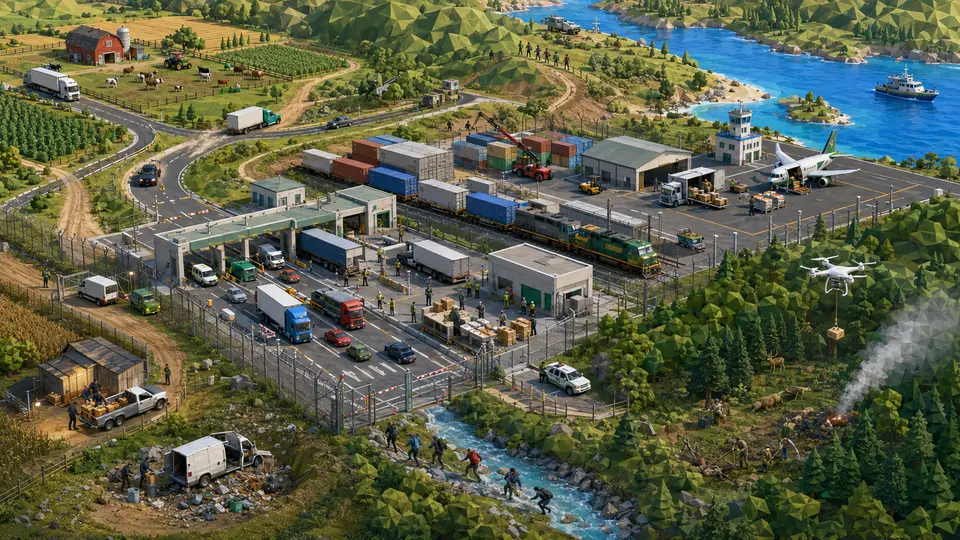
What can a camera see without pointing at anyone?
13 cases: 9 raise an alert when something happens and 4 only measure. You see each image as it is, and then with what IRIS understands on top.


And the best part
A wall of monitors is impressive.Nobody can read forty tiles at once.
The more tiles there are, the less each one gets looked at. IRIS watches all four thousand cameras at once and points at a single one: the one that needs someone right now.
Tell us your problem and we will say whether IRIS understands it, or not yet.
We reply the same working day.