Critical infrastructurePersonal safety
CAM-157
Blocked walkway between the reactors
The walkway between the building and the reactors. In the middle of the route there are coils of blue hose stacked on each other, green hoses rolled up, wooden pallets, a yellow drum and loose kit on the floor. A worker is coming down the walkway skirting the pile; further back another one stands by a pallet. To the right, the reactors with their handrails and the pipework; to the left, the building face with its green doors and the lifebuoy.

Turn on IRIS Vision
AI-generated image
What IRIS is
IRIS watches over critical infrastructure.
IRIS looks at the cameras you already have at the dam, the water plant or the power plant, and understands what it sees: someone entering where they shouldn't, a strange vehicle, an overflow, the perimeter. When something like that happens, it alerts right away; and whatever can be counted, it counts in numbers. All day long, with no one needing to watch the screen.
You tell it what you need to watch, and IRIS does it.
Here, for example, IRIS measures how much clear walkway is left between the reactors and compares that width against the minimum the plant has set. If it stays below that for too long, it alerts you with the time it started being blocked. With that you decide whether to clear it now or it can wait, and later check if it gets blocked again.
Works with the cameras you already have. Nothing to replace.
A person replies, not a form.
- Your footage never leaves your premises.
- It doesn't identify people.
- Certifications →
What IRIS understands
What it recognises in this scene
- obstructed route
- hose coils
- pallets and drum
- clear width left
- worker skirting the pile
What this camera measures
An alert says something is happening. The reading says how much.
- 3 h 20 minObstructed for
- 70 cmClear width, in cm
- 120 cmMinimum set by the plant
- 7Items in the route
- 2People in the frame
- 11:05Time of the alert
The figures on this screen are an example from the illustration, not any client's measurement.
The rule
You decide once. IRIS applies it always.
If
the clear width of a marked walkway drops below what the plant has set and stays there
Then
- alert the maintenance lead with the camera and the stretch
- log since what time it has been obstructed
- keep the alert open until the route is clear again
The instruction that set it up«Tell me if the walkway between the reactors is left with less clear width than we need, and do not let it slide just because it is work kit.»
What changes
What changes for whoever answers for the site
That walkway is the route through and it is also the way out. It gets filled on a Monday because the hoses had to go down there for a moment, and it is still filled a month later, because whoever walks past skirts it and carries on, and nobody writes it down anywhere. The day you have to get out fast, or get a stretcher in, that pile is the problem. IRIS moves nothing and tells nobody off: it looks at how much clear width is left, compares it with the width the plant has set, and raises it when it has been below for too long. With a start time, so it stops being an impression and becomes a fact.
What people usually ask
How does it tell kit that is passing through from kit that has settled in?
By the clock. The rule carries a time inside it: the plant decides how many minutes or hours the route may sit below the minimum width before anything is raised. Unloading some hoses and taking them away in twenty minutes raises nothing. Leaving them there for two hours does. It is the same distinction a site foreman makes by eye, written down in one sentence with a stopwatch behind it.
Wouldn't anyone walking past see this anyway?
They do see it, and that is exactly the problem: they see it, walk around it and carry on. An obstructed walkway does not bother anyone enough for somebody to write it down, which is why they last for weeks. The camera does not see it better than a person: it sees it every day at the same hour, without tiring and without getting used to it, and it writes it down with a start time. That turns a corridor grumble into something you can plan around.
Does IRIS identify the workers in the picture?
No. IRIS does not identify anyone: it does not recognise faces, it does not read number plates, it does not compare them against any database and it does not store who anyone is. What is measured here is the clear width, not people; two of them in the frame only tells you the walkway is being used that narrow. Who they are, it does not know.
See it for yourself
No extra alarms here. Just what needs looking at.
Not a recorded video, not an explanatory drawing: a summary of the real screen, with a different case every time it starts. There is a lot more behind it.
- Checks the whole system
- Flags what is failing
- Puts it on one screen
See it somewhere else
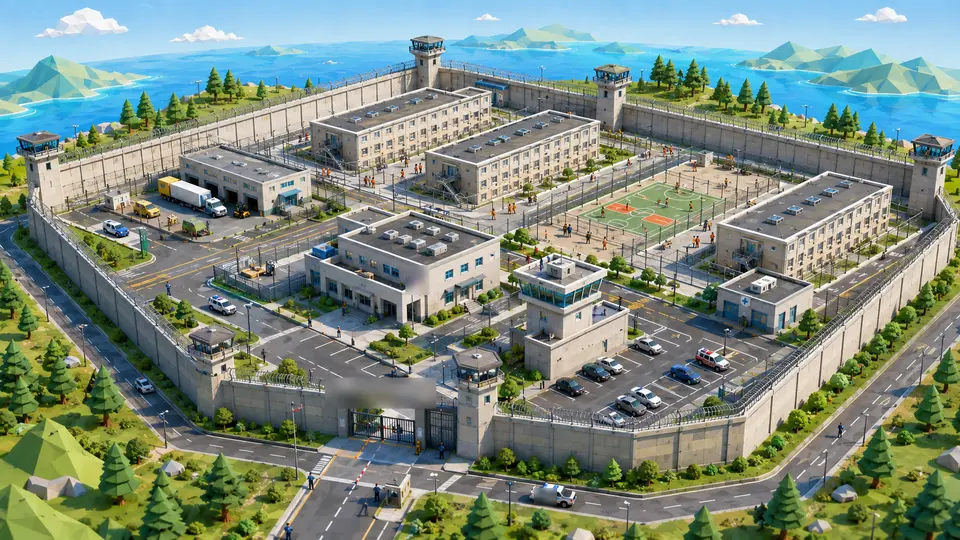
Who is watching the yard screen when the fight starts?
17 cases: 16 raise an alert when something happens and one only measures. You see each image as it is, and then with what IRIS understands on top.

How long before somebody comes down that corridor at four in the morning?
13 cases: 12 raise an alert when something happens and one only measures. You see each image as it is, and then with what IRIS understands on top.


And the best part
A wall of monitors is impressive.Nobody can read forty tiles at once.
The more tiles there are, the less each one gets looked at. IRIS watches all four thousand cameras at once and points at a single one: the one that needs someone right now.
Tell us your problem and we will say whether IRIS understands it, or not yet.
We reply the same working day.