Solutions by typeMobility analysis
How long before anyone even knows it happened?
It has happened and nobody knows yet
It’s 6:40 p.m. and the light is going. Three cars have crashed and ended up across two lanes, with debris on the tarmac. Behind them a line is building by the second. Almost four minutes have passed and no call has reached the control room yet: every driver going past assumes the one in front has already made it. The camera on that stretch has been watching since the first second.
2 cameras across 2 sectors
What IRIS is
IRIS watches the cameras for you.
IRIS Neural is an artificial intelligence that watches the cameras you already have and understands what happens in front of them. When something important happens —or something you told it you need to keep an eye on—, it alerts you; and whatever can be counted, it counts in numbers. All day long, without anyone having to watch a screen.
You tell it what you need to watch, and IRIS does it.
Works with the cameras you already have. Nothing to replace.
A person replies, not a form.
- Your footage never leaves your premises.
- It doesn't identify people.
- Certifications →
This is how you ask for it
«Alert me as soon as there is a crash on the road, and tell me which lanes or accesses are blocked and whether there are people on the roadway.»
The dangerous crash is often not the first one: it’s the second, the one at the tail of the line when someone arrives at road speed and finds stopped cars behind a bend. And while nobody knows what happened, nobody knows what to send either: whether two ambulances are needed or none, which access the recovery truck takes, which lanes to close. Every minute of that fog is paid for in line, in risk and in calls that all say different things.
You decide once
You decide this once, with the control room supervisor in the room. You say which stretches and intersections are watched, what counts as a crash at each one — cars stopped across lanes, people out of the vehicle, a line that grows suddenly —, who gets told and what arrives with the alert: camera, time, blocked lanes and direction. IRIS applies it on every camera along those stretches, around the clock, on a Tuesday morning and at four on a Sunday, which is when fewest people are watching screens.
After a crash there is a blind spell. It has already happened, but for the control room it doesn’t exist yet. Calls take time, and when they come they describe the place the way somebody driving can: past the gas station, before the bridge, I think it was the other way. With that, a resource is dispatched, and often it is sent to the wrong spot or through an access that is closed right now.
At a city intersection the scene is different and the problem is the same. Two cars collide in the middle, a person is on the ground being helped by passersby, a bus is stopped behind and onlookers line both sidewalks. Traffic halts on all four approaches at once. What the coordinator needs isn’t only that there’s been a crash: it’s which accesses are blocked, so the ambulance isn’t sent down the one it can’t use.
IRIS watches that intersection and that stretch on the camera that was already there. When it sees vehicles stopped where nobody ever stops, people out of their cars on the roadway and a line growing backward, it says so: camera, time, video of the moment of impact and which lanes are blocked. With that, the coordinator opens the picture before picking up the phone. IRIS doesn’t resolve the crash. It shortens the blind minute, and that minute is what separates one crash from two.
What changes
Before, the control room found out from the first phone call and from the line showing on the panel ten minutes later. Now the alert arrives with the camera open, the time of impact and the lanes that are blocked, and the coordinator sees the scene while still on the phone. The same footage covers what comes after: the report and the insurer are found by time and camera, not by scrubbing through two hours of recording.
Where we have seen it
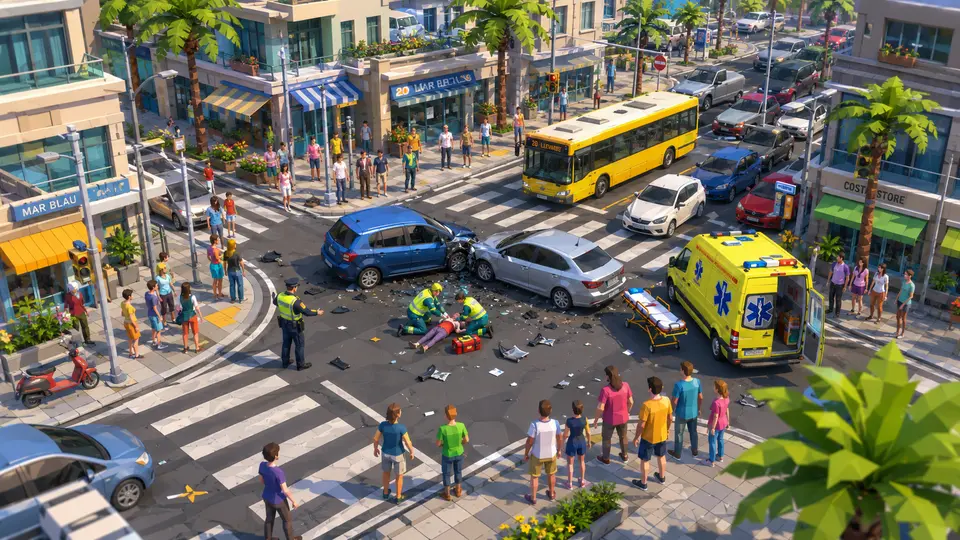
CAM-14Collision at an intersection
«Tell me if there is a collision with people on the roadway, and which approaches are blocked.»
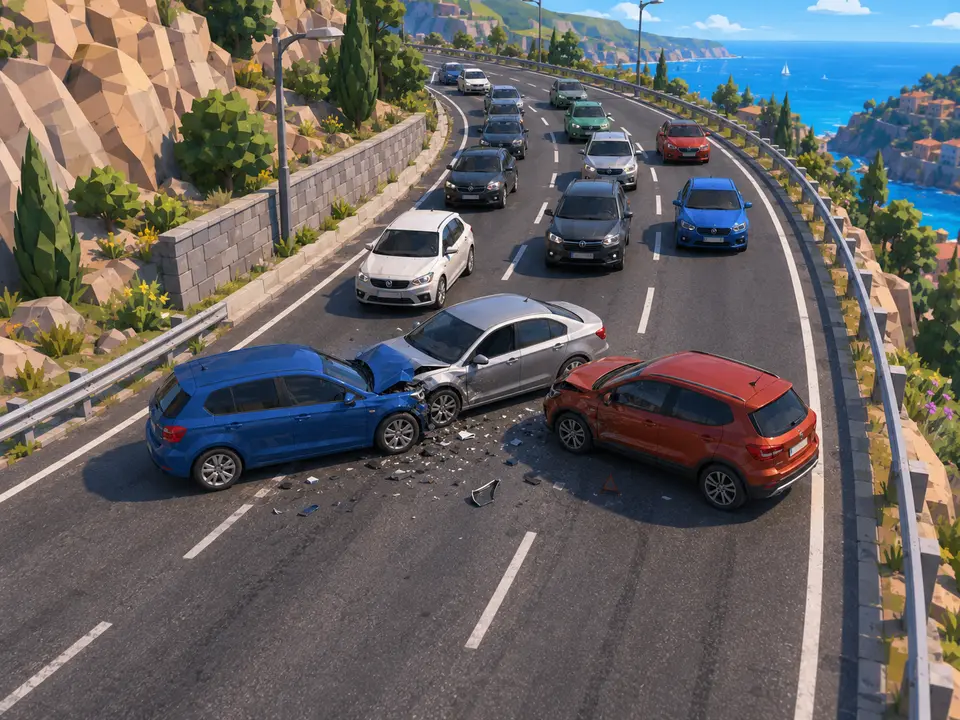
CAM-61Multi-vehicle crash
«Tell me the moment there is a crash on the road, and which lanes are blocked.»


What it doesn’t do
IRIS does not say who is at fault, whether anyone is injured or how badly. It sees people out of their vehicles and on the roadway; it does not see injuries and makes no diagnosis.
And it does not call the whoever coordinates the response by itself, nor replace any protocol: it brings the scene to whoever has to decide. What falls outside the frame or behind a truck, it does not see.
Questions
- Does IRIS call the ambulance?
- No. IRIS alerts the people whose job it is to call. As soon as it sees the scene it sends the alert to the control room with the camera open, the time and which lanes are blocked, and there a person decides what to activate and who to speak to. That person knows the protocol, the state of the resources and what else is happening in the area that evening. What changes isn’t who decides: it’s that they decide while looking at the scene seconds later, instead of four minutes later, blind, over the phone.
- Can it tell a crash from a breakdown?
- Partly, and it’s worth knowing how far. A crash leaves a recognisable scene: vehicles across the lanes, debris on the tarmac, people out of the cars and a line that grows suddenly. A breakdown is usually one car alone, pulled over with its hazards on. IRIS separates those two patterns fairly well, but not always. So the usual setup is to alert on both, with different labels: a car stopped on the shoulder also needs attention, even if it isn’t urgent in the same way.
- Can it say which lanes are blocked?
- Yes, if you have told it where each lane is. You mark it once on the camera image: this is the right-hand lane, this the left, this the north approach to the intersection. From then on, when there’s a crash IRIS looks at which of those areas are taken up by stopped vehicles or people and says so with the alert. That’s what lets you send the recovery truck through the access still open and update the signs before the line reaches the previous exit.
- Can the footage be recovered afterward?
- Yes, and without scrubbing. The alert is stored with its time and its camera, so the video of the crash opens by asking for what happened rather than hunting by hand through two hours of recording. That’s what you need when the report arrives, when the insurer asks for images, or when someone has to show in a meeting why that intersection always jams the same way. How long it is kept and who may see it is decided by your organization, not by IRIS.
A different case every time
Watch what happens. Then watch what IRIS does with it.
Not a recorded video and not a drawing: it’s a summary of the real tool, with a different case each time round. The whole tool doesn’t fit in a box.
- You ask
- IRIS searches
- It shows you
Not seeing yours here?
These words are the ones we have built, not the ones IRIS understands. The list falls short on purpose: you ask for it in a sentence, and sentences don’t run out. Tell us what is in front of your cameras and we’ll tell you whether it understands it, or not yet.
And the best part
You decide once what matters to you.It stops depending on who happens to be on shift.
You say it in your own words and it stays written down. Nobody has to remember anything at the start of a shift: what you decided is already in place, and still there tomorrow.
Tell us your problem and we’ll say whether IRIS understands it, or not yet.
A person answers, the same working day.