Solutions by typeCustomer experience
How many people leave because they cannot find a seat?
Dirty tables while people stand holding trays
Saturday, 14:20, the food court is full. On the corner table there are two trays, three cups and the burger wrappers: the family sitting there got up nine minutes ago. Four metres away, three people walk a slow circle holding their trays, look around, find nothing and end up standing by the railing. The table is free. Nobody knows it, because nobody has cleared it.
4 cameras across 3 sectors
What IRIS is
IRIS watches the cameras for you.
IRIS Neural is an artificial intelligence that watches the cameras you already have and understands what happens in front of them. When something important happens —or something you told it you need to keep an eye on—, it alerts you; and whatever can be counted, it counts in numbers. All day long, without anyone having to watch a screen.
You tell it what you need to watch, and IRIS does it.
Works with the cameras you already have. Nothing to replace.
A person replies, not a form.
- Your footage never leaves your premises.
- It doesn't identify people.
- Certifications →
This is how you ask for it
«“Alert me if a table has gone more than five minutes uncleared while people are waiting for a seat.”»
A dirty table is a table that does not exist. At peak hour, every table that takes ten extra minutes to become available again is two orders that never happen, and the people who leave standing do not come back next Saturday. At the end of the shift nobody knows how many tables were left like that, or for how long, because it is written down nowhere. All that remains is the usual complaint: “it was packed and dirty on top of that”.
You decide once
You decide the minutes and the places: five in the food court at lunchtime, three on the hotel terrace at breakfast, half an hour for an open gaming table with no players. You also decide who gets the alert — the runner’s handheld, not the manager’s — and during which hours it is live. You say it once. IRIS applies it on Saturday at two, on Tuesday at five and on the day half the team is missing.
Nobody disputes that tables need clearing. The problem is that the person clearing cannot be everywhere: they do a lap, take what is near them and go back to the counter. The table at the back, the one off their route, sits there ten minutes with the trays still on it, exactly when the room is packed. And the people arriving with a tray in their hands do not ask and do not complain: they do a lap, find nothing and leave.
IRIS watches the room and sees two things at once: tables with things on them and nobody sitting, and people standing looking for a seat. When those two coincide for longer than the minutes you set, the alert goes to the handheld of whoever clears, with the camera and the specific table. It is not a general telling-off at the end of the shift: it is “the corner table, now”.
And there is a second half almost nobody measures. How many minutes a day tables sit occupied by empty trays. How many free tables are left at twenty past two on a Saturday. Which slot needs one more person and which one has one too many. That is not asked for with a sentence: you mark the seating area on the image and the number comes out the same every week. Not everything important is an alarm. Sometimes what matters is a number.
What changes
Before, the person clearing worked by sight: they walked laps and cleaned what they came across, and at peak hour there was always a zone that fell behind. The manager found out at the end, when there was already a crowd standing. Now the alert reaches the hand of whoever clears and names the table, with the camera. And at the end of the week you can see which slots pile up, which is what you need to put an extra person on at two, not at five.
Where we have seen it
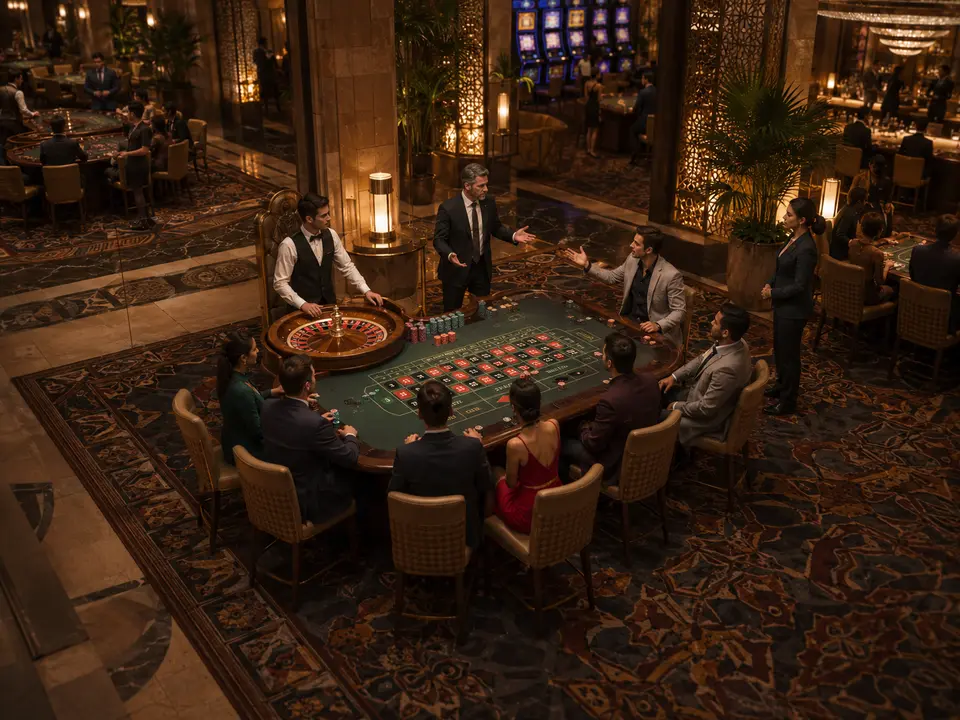
CAM-528A player raises a complaint and the table stops
«Show me the table where play stopped and a guest stood up, last night between eleven and one.»
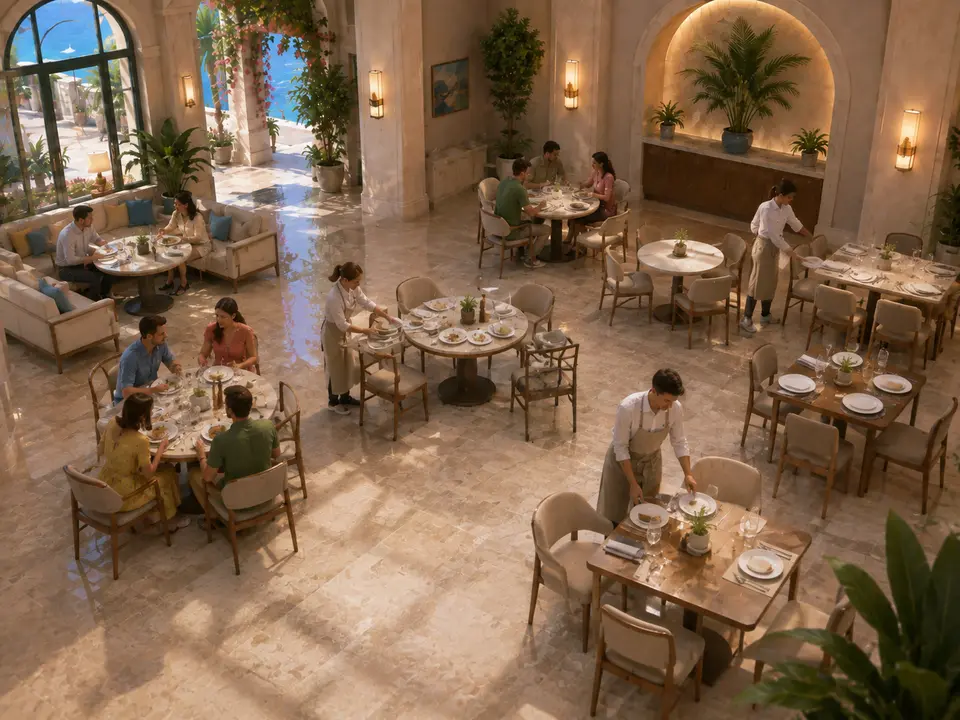
CAM-499Eight minutes uncleared, and guests are waiting for a table
«Tell me if a table has gone more than five minutes uncleared while people are waiting for a seat.»
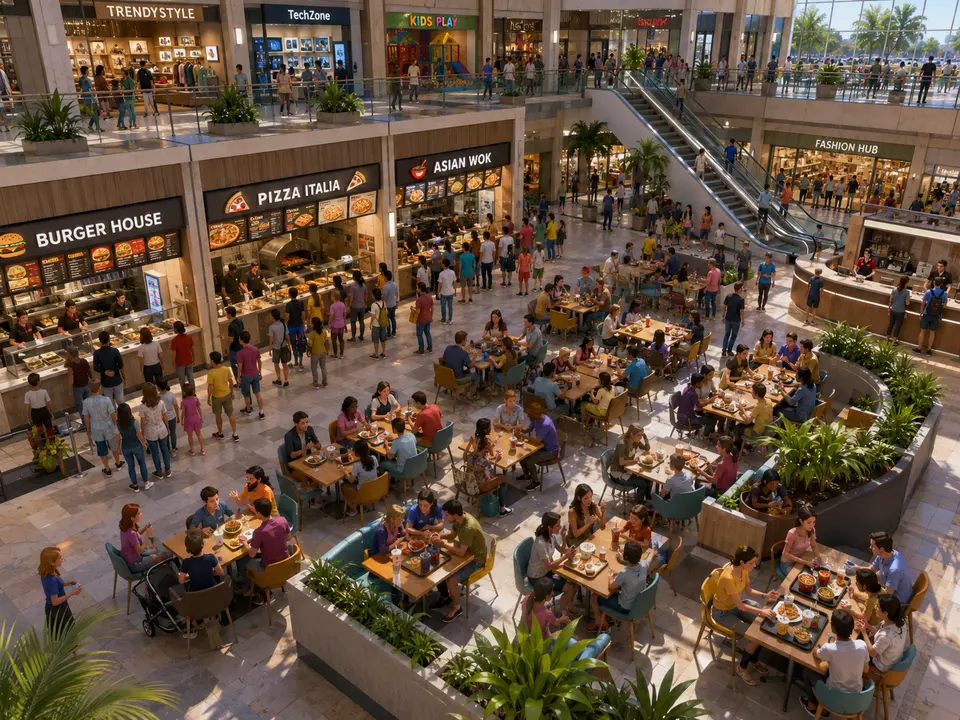
CAM-541The queue is not moving and there are barely any free tables left
«Tell me if the wait at any unit goes over eight minutes or if there are fewer than ten free tables.»
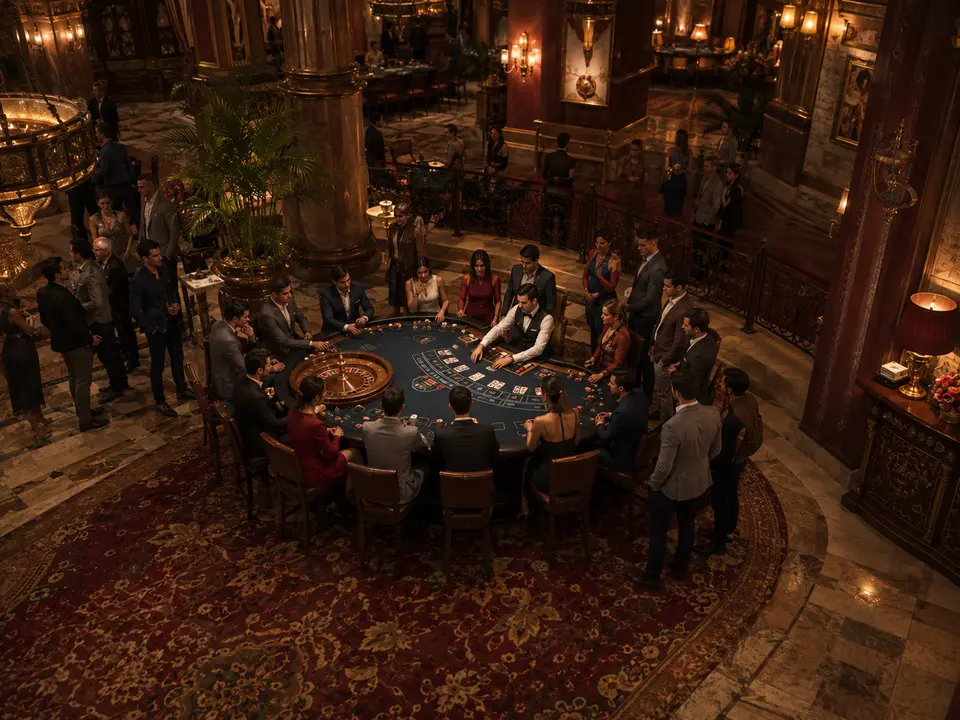
CAM-524Every seat taken and seventeen people standing around the table
«Tell me when a table has been full for a quarter of an hour with more than fifteen people standing around it.»


What it does not do
IRIS does not know whether those people went for napkins and are coming straight back. That is why the rule carries minutes: the minutes are what separate an occupied table from an abandoned one. It does not know whether the table is clean; it sees whether there are things on it and anyone sitting there. And it identifies nobody and rates nobody who clears: it says which table and since when.
Questions
- What if they went for napkins and are coming back?
- That is why the rule is measured in minutes, not instants. Five minutes with the table still laid and nobody sitting is one thing; thirty seconds is someone fetching napkins. You set the number, and it gets tuned on day one by watching that room at peak hour: in a food court the slack is short, in a hotel restaurant it is longer because people get up for the buffet. With the minutes set properly, the silly alert disappears.
- Can it tell a dirty table from an occupied one?
- Yes, because they are two different scenes. An occupied table has people sitting at it; an uncleared table has things on it and no chair in use. That difference reads well from a camera that covers the whole seating area from above, which is how they are installed. What IRIS does not do is judge whether it is clean afterwards: once someone clears it, the table counts as free again, and its job ends there.
- Can I know how many free tables are left at any moment?
- Yes, and that is not an alert any more: it is a number. You mark the seating area on the image, count how many tables are taken and how many are not, and the figure comes out by hour, by day and by season. It tells you when the court really saturates and lets you plan shifts with more than an impression. Alerts are asked for in words; numbers are asked for by drawing. They are not done the same way.
- Does it work outside a food court?
- Yes, and what you watch changes. In a hotel dining room the table has to be reset, not just cleared, and the slack is different. On a gaming floor the expensive case is the opposite: a table open for half an hour with no players while people stand waiting at the next one. In all three the question is the same — how many usable seats do I have right now? — and the answer is visible from the camera.
Demo · IRIS at work
We won't just tell you. We'll show you.
It is a summary of the real screen: it plays by itself, step by step, and shows only the path of one case. The actual tool has far more than fits in here.
- The alert fires
- It lands in the tray
- You open it
- You confirm or dismiss
Not seeing yours here?
These words are the ones we have built, not the ones IRIS understands. The list falls short on purpose: you ask for it in a sentence, and sentences do not run out. Tell us what is in front of your cameras and we will tell you whether it understands it, or not yet.
And the best part
One camera,and you already have a watchman. Four thousand cameras, and you have four thousand watchmen.
None of them tires, none of them looks away and none of them works shifts. And there is nothing to install: the cameras you already have can start understanding what they see.
Tell us your problem and we will say whether IRIS understands it, or not yet.
We reply the same working day.