Solutions by typeIntrusion detection
What if a camera stops seeing and nobody notices?
A camera that has stopped seeing
It is 19:40. A cell landing seen from a high camera. In the right foreground, someone with their arms up throws a garment over the lens, right next to the rules board. The frame turns into a smear of grey fabric. The recording does not stop: it keeps recording, and it records a rag perfectly. In the control room, the sixteen-camera wall still has sixteen tiles.
1 cameras across 1 sectors
What IRIS is
IRIS watches the cameras for you.
IRIS Neural is an artificial intelligence that watches the cameras you already have and understands what happens in front of them. When something important happens —or something you told it you need to keep an eye on—, it alerts you; and whatever can be counted, it counts in numbers. All day long, without anyone having to watch a screen.
You tell it what you need to watch, and IRIS does it.
Works with the cameras you already have. Nothing to replace.
A person replies, not a form.
- Your footage never leaves your premises.
- It doesn't identify people.
- Certifications →
This is how you ask for it
«Tell me the moment a camera stops seeing: if it is covered, if it is turned, or if the frame suddenly goes black.»
A covered camera does not raise an alarm: it stops raising them. And on a screen, that looks a lot like everything being fine. It is discovered weeks later, when someone goes looking for the video of an incident and finds an hour of grey. By then it is not only that video missing: it is the confidence in all the others, because nobody knows how many times the same thing happened on a camera where nothing was ever looked for.
You decide once
You decide this once. You say which cameras are critical, how many minutes without a usable image are tolerated before it alerts, whether the scheduled cleaning window is exempt, and who receives it: usually maintenance, not security, because the person who fixes it is the one with the ladder. And you also decide who else has to know: the person who wrote the rules that hung off that camera, because while it is blind those rules are not being applied.
This is the only word in this vocabulary that is not about what happens in front of a camera, but about the camera itself. And it is the easiest one to forget, because it produces nothing: no alert, no incident, not a line in any report. It produces silence. And silence, seen from a control room with sixteen tiles lit up, looks an awful lot like calm.
On a cell landing somebody covers it deliberately, and usually right before something happens. But most cameras that stop seeing are touched by nobody. A spider’s web in front of the infrared, giving a white flare at night. A branch that grows all summer until it fills half the image. A sticker. A lorry parked opposite for three weeks. Salt on the dome of a port camera. A pane that fogs at six in the morning and clears at nine, exactly across the window that matters. And the worst of all, because you cannot see it: the installer who knocked the housing while climbing the ladder and left the camera looking two metres to the left of where it should. They all cost the same: the hours in which that camera was worth nothing.
And there is a second effect, worse than losing that video, that is almost never mentioned. Every rule that hung off that camera has stopped being applied, and it stopped without saying so. The lone worker in that room is no longer being counted. The counting line on that door no longer adds up, and the monthly figure comes out lower with nobody knowing why. The stretch of perimeter that lens watched no longer exists. A blind camera does not warn you that it has stopped warning you: that is the quietest failure a video installation can have, and the only one that gets worse the more you rely on it.
That is why this rule is usually not asked for by security: it is asked for by maintenance. IRIS looks at what the camera is sending and says whether there is a scene there or a smear. When the scene goes, someone with a ladder fixes it on the same shift and the rules come back to life. It is not the flashiest thing IRIS does. In any given year, it is the thing that most often prevents an uncomfortable conversation.
What changes
Before, it was discovered when someone needed the video, and by then it was too late by definition: you cannot recover an hour that was not recorded properly. Now it is discovered within minutes and fixed the same day, by the person who always fixes it. And you get the record nobody had: which camera, how long it was blind, and which rules depended on it during that time. With that, you can have a serious conversation about the installation.
Where we have seen it
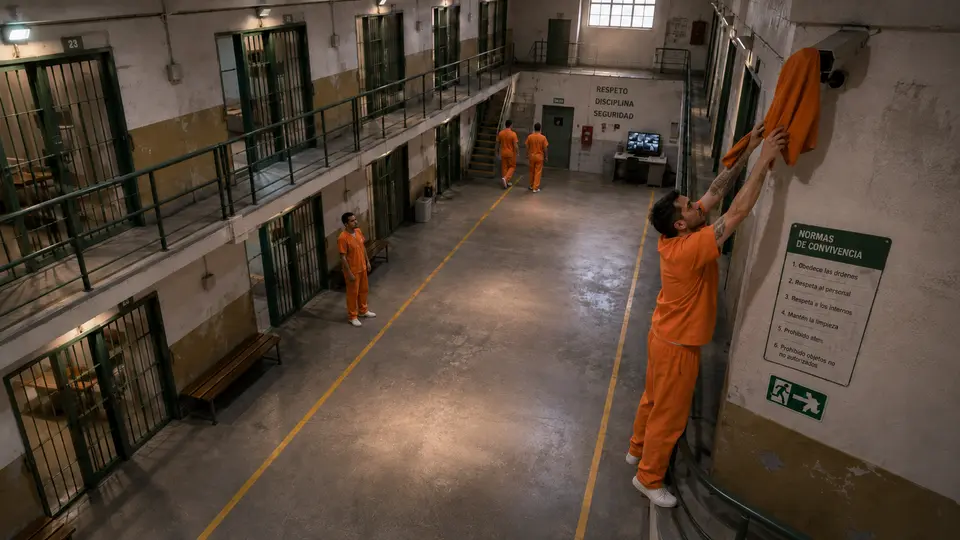
CAM-113The camera has been covered
«Tell me the moment a camera stops seeing: if it is covered, if it is turned, or if the frame goes black all at once.»

What it does not do
IRIS does not know why a camera stopped seeing. It does not tell a garment from a spider’s web, a parked lorry or fog. It says this: this camera is not delivering a usable image, and it started at 19:41.
And if the camera loses the signal entirely, that is no longer a question of image. Your recorder or your network sees it before anyone else. IRIS looks at what arrives; when nothing arrives, it is the system that raises it, not the sight.
Questions
- Can it tell whether it was covered on purpose?
- No, and it does not try to. IRIS does not know whether there is a garment, a spider or a lorry in front of it: it knows there is no scene any more. And for what this rule is for, that does not matter, because the cost is the same in all three cases: the hours in which that camera was worth nothing. Whoever goes up the ladder sees in two seconds whether it is a web or something else, and from there the kind of problem gets decided. That part is done by a person.
- What about a camera that slowly drifts out of focus?
- Yes, and that is the case that gets used most, even if it is not the one that sounds best. A dome slowly fogging over a month is seen by nobody, because each day looks like the last and the eye adapts. IRIS compares against what that camera used to deliver, not against a general idea of sharpness, so it notices the decline even when it is slow. In a large installation, this rule usually finds more broken cameras in the first week than the whole previous year.
- Does the recorder not do this already?
- In part, and the missing part is exactly the one that hurts. The recorder knows whether the camera answers and whether video arrives. It does not know whether that video is any use. A camera turned to face a wall answers perfectly, sends its stream on time and raises no incident at all: it is healthy and it is seeing nothing. The same goes for a fogged dome or a salt-covered lens. What IRIS adds is looking at the image, not at the device.
- What happens to the rules that depended on that camera?
- They stop while the camera cannot see, and that is why the alert can also go to whoever wrote them. It is the most important thing about this word and the least often said: if that camera was counting the person working alone, during that hour nobody was being counted. If it was adding entries, the day’s figure comes out lower. When the image comes back, the rules resume on their own, and it is written down how long they were stopped, so nobody later reads a number that is not what it looks like.
Demo · IRIS at work
A new case each time. Always the same screen.
It plays by itself and shows one case from start to finish. It is a summary: the real screen has far more functions than fit in this box.
- Cameras on the map
- You draw an area
- What passed shows up
Not seeing yours here?
These words are the ones we have built, not the ones IRIS understands. The list falls short on purpose: you ask for it in a sentence, and sentences do not run out. Tell us what is in front of your cameras and we will tell you whether it understands it, or not yet.
And the best part
You can add more cameras;you cannot add more hours to anyone’s day.
Cameras can be multiplied; a person’s hours cannot. IRIS looks at everything coming in and leaves them the one thing no machine does better: deciding what to do.
Tell us your problem and we will say whether IRIS understands it, or not yet.
We reply the same working day.