Solutions by typePersonal safety
Where is the cloud going and who is still inside?
A plume where nothing ever comes out
It is 03:40 in the machine room of a cold store. A hose gives way and ammonia starts escaping at the flange. The cloud fills the room in under a minute and spills out of the door into the corridor of chill chambers. There is an operator inside on the night round. The fixed detector is in the far corner, nine metres away. He has a few seconds to realise what is happening.
4 cameras across 4 sectors
What IRIS is
IRIS watches the cameras for you.
IRIS Neural is an artificial intelligence that watches the cameras you already have and understands what happens in front of them. When something important happens —or something you told it you need to keep an eye on—, it alerts you; and whatever can be counted, it counts in numbers. All day long, without anyone having to watch a screen.
You tell it what you need to watch, and IRIS does it.
Works with the cameras you already have. Nothing to replace.
A person replies, not a form.
- Your footage never leaves your premises.
- It doesn't identify people.
- Certifications →
This is how you ask for it
«Tell me if a cloud or a plume comes out of a place where nothing normally comes out.»
The detector will eventually trip, but it reports what reaches it, not what is in the room. Meanwhile nobody knows the shape of the cloud, where it is heading or whether anyone is still inside. That gap of minutes decides whether the evacuation goes through the right door. And in a process unit the same scene is a plume coming out of a dome where nothing ever comes out, and at four in the morning nobody sees it.
You decide once
The plant decides once which points can never emit a cloud and what happens when they do. If a cloud or plume appears at one of those points, for a few continuous seconds, and no vapour release is scheduled there, then the shift supervisor is alerted, that camera opens and it reports which other cameras are seeing people. That rule is written once and does not depend on anyone watching that screen at four in the morning.
A gas release is nothing like a fire. It makes no noise, gives off no heat, and often you cannot even smell it until you are already in it. What is there to detect it is fixed detectors placed at specific points, and they work very well when the gas reaches them. The trouble is that a cloud does not travel in a straight line to the detector: it travels with the air, hugs the floor if it is heavy, rises if it is not, and slips through whichever door is open.
The day it goes wrong, the control room knows there is an alarm but does not know the picture. It does not know whether the cloud is heading for the corridor or for the yard, or how many people are on the far side. And the decisions that have to be made in the first two minutes — which way out, who to call, which door not to open — depend on exactly that.
IRIS watches the scene and sees what the detector cannot: where the cloud appeared, what shape it has and which way it is moving. At the same time it counts how many people each camera in the plant can see. With those two things, a shift supervisor stops asking what is happening and starts with who is still inside. That is the question that saves people.
What changes
Before, the first warning came from a fixed detector or from someone who smelled something. The control room knew there was an alarm, but not where the cloud was or who was still inside, and that got worked out over the radio. Now the camera shows the shape and the direction from the first second, and the same alert carries the head count per camera. The first two minutes stop being a conversation and become a decision.
Where we have seen it
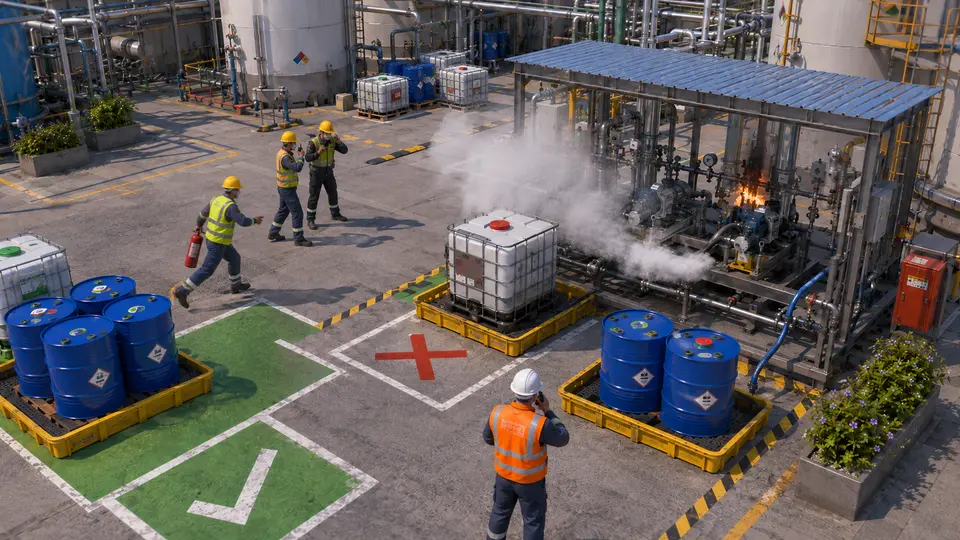
CAM-308A white cloud and a flame at the pump skid
«Tell me as soon as smoke, a cloud or fire shows up anywhere in the pump yard.»
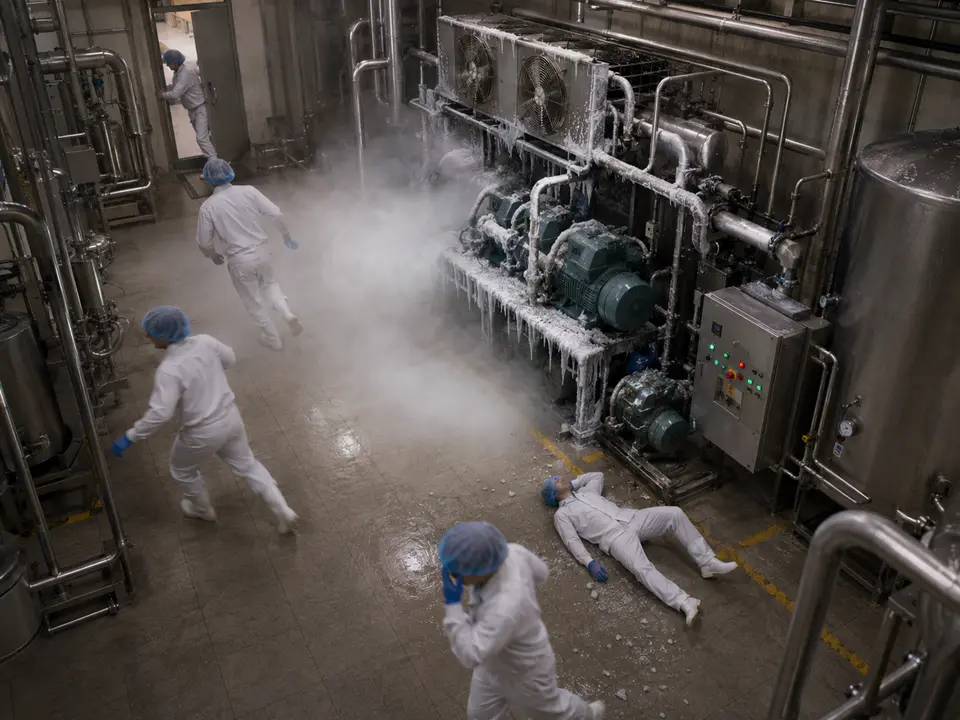
CAM-219Cloud in the chiller plant room and a person on the floor
«Tell me if a cloud comes out in the plant room, if somebody is on the floor, or if anybody is left inside during an evacuation.»
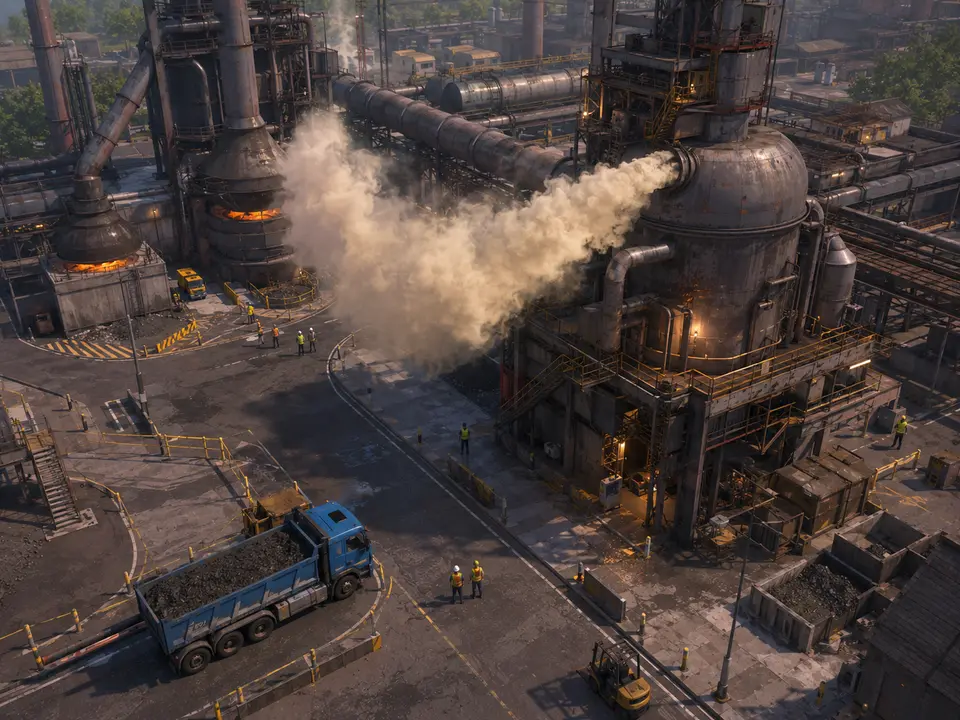
CAM-368A plume is blasting out of the dome and crossing the yard
«Tell me if a cloud or a plume comes out of somewhere that normally releases nothing.»
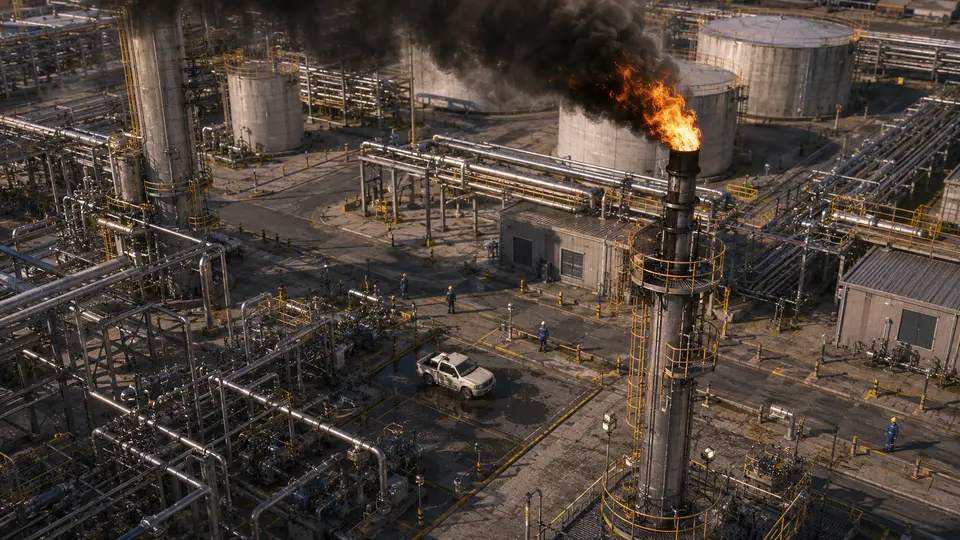
CAM-322The flare is not burning the way it always does
«Tell me when the flare flame goes out, jumps in size or starts throwing black smoke, and tell me since when.»


What it does not do
IRIS does not know which gas it is, does not measure concentration and does not say whether the air is breathable. None of that is visible in an image.
So it does not replace gas detectors or an alarm system: it completes them. The detector says how much there is where it sits; the camera says where it is, what shape it has and which way it is going.
Questions
- Does it replace gas detectors?
- No, and it should not try. A detector measures concentration at the point where it is installed, and that is a figure no camera can provide. What IRIS adds is the opposite: it does not measure, but it sees the whole scene. It knows where the cloud appeared, what shape it has and which way it is moving. The two pieces together are what let you decide which door to evacuate through.
- Does it know which gas it is?
- No. In an image you cannot tell ammonia from steam or from smoke, and claiming otherwise would be a lie. IRIS sees that something has appeared that was not there before, at a point where it should not appear, and it alerts. Identifying the substance is the job of the detectors and of the plant staff, who already know what runs in each line. What the shift gains is the minutes of knowing sooner.
- Can it tell normal vapour from a leak?
- Yes, because normal vapour always comes out of the same place. A cooling tower, a vent, a stack: that is expected and gets excluded from the rule from the start. What is watched are the points where nothing ever comes out, and there any plume is an anomaly. The flare is handled separately: you do not watch whether it burns, you watch whether it changes size, goes out or starts producing black smoke.
- Can it say how many people are still inside?
- Yes, and it is the part that changes the first two minutes most. The same alert that says there is a cloud can also say how many people each camera in the plant is seeing: two on the platform, none in the corridor, one in the machine room. That turns an alarm into an orderly evacuation. It identifies nobody: it counts bodies per camera, which is exactly what needs to be known.
Demo · IRIS at work
We won't just tell you. We'll show you.
It is a summary of the real screen: it plays by itself, step by step, and shows only the path of one case. The actual tool has far more than fits in here.
- The alert fires
- It lands in the tray
- You open it
- You confirm or dismiss
Not seeing yours here?
These words are the ones we have built, not the ones IRIS understands. The list falls short on purpose: you ask for it in a sentence, and sentences do not run out. Tell us what is in front of your cameras and we will tell you whether it understands it, or not yet.
And the best part
What happens in the small hoursdoes not have to wait for the morning report.
IRIS understands it there and then and tells whoever is on call, with the camera and the time. The next day there is nothing to reconstruct: it is already written down.
Tell us your problem and we will say whether IRIS understands it, or not yet.
We reply the same working day.