Solutions by typeInfrastructure integrity
Who is watching a substation with nobody in it?
A machine is burning and the substation is empty
It is 12:10 on a Tuesday in July. There is not a single car parked at the substation, and there almost never is. At the top of the transformer, level with the bushings, there is a live orange flame, and above it a column of black smoke climbing straight up and over the rooftops of the neighbourhood. The yard camera has been recording it since the first second. The first warning, though, will arrive by phone: a neighbour.
3 cameras across 2 sectors
What IRIS is
IRIS watches the cameras for you.
IRIS Neural is an artificial intelligence that watches the cameras you already have and understands what happens in front of them. When something important happens —or something you told it you need to keep an eye on—, it alerts you; and whatever can be counted, it counts in numbers. All day long, without anyone having to watch a screen.
You tell it what you need to watch, and IRIS does it.
Works with the cameras you already have. Nothing to replace.
A person replies, not a form.
- Your footage never leaves your premises.
- It doesn't identify people.
- Certifications →
This is how you ask for it
«“Tell me if smoke or flame shows up anywhere in the yard, and tell me which machine.”»
Today that first warning arrives late and arrives badly. It arrives when the smoke is visible from the road, or when the line drops and half an industrial estate loses power. Then the expensive part starts: firefighters going in without knowing which machine it is, the spare transformer, the report to the regulator, and the calls from customers who cannot work. None of that is fixed by video watched three days later.
You decide once
The camera does not decide here: the utility does. It decides which machines are watched, at what hours — in an unmanned substation, all of them — who gets called first, and what happens before anyone arrives. That is decided once, sitting down, calmly. After that IRIS applies it the same way at midday on a Tuesday as at four in the morning on a Sunday, with nobody having to remember anything.
A substation is built to run on its own. No gatehouse, no shift, nobody sitting there watching: a fence, a padlock and a visit every so often. Inside is the most expensive machine on site, and that machine fails in two ways. Slowly, dripping oil for weeks. Or all at once, with flame at the top and black smoke pouring upwards.
Oil is the one that always gets missed. It is a dark stain spreading under the machine, crossing the slab and working its way into the drain that runs to the ditch. Nobody sees it because nobody goes past. By the time it is seen it is no longer a fault: it is contaminated ground, a case file and a clean-up contractor. The difference between the two is a few days of nobody looking.
IRIS watches that yard all the time and never gets tired. If flame or smoke appears, it says so straight away and says which machine — the first question firefighters ask when they arrive. If a stain shows up on the ground that was not there in earlier images, it says that too, even with no fire, no noise and nothing sounding anywhere. Then the alert reaches a person with the camera and the video from just before, and that person decides. IRIS does not open the line, does not call anyone on its own and does not say what to do: it says what is happening and where, while it is happening.
What changes
Before, the grid operator knew about the substation whatever the relays said: the line is down. About the yard itself, nothing, until someone drove out. Now the burning machine has a name before the crew leaves, and the oil stain is seen the day it appears instead of at next semester’s inspection. The maintenance round still happens exactly as before. What changes is that it is no longer the only time anyone looks at that yard.
Where we have seen it
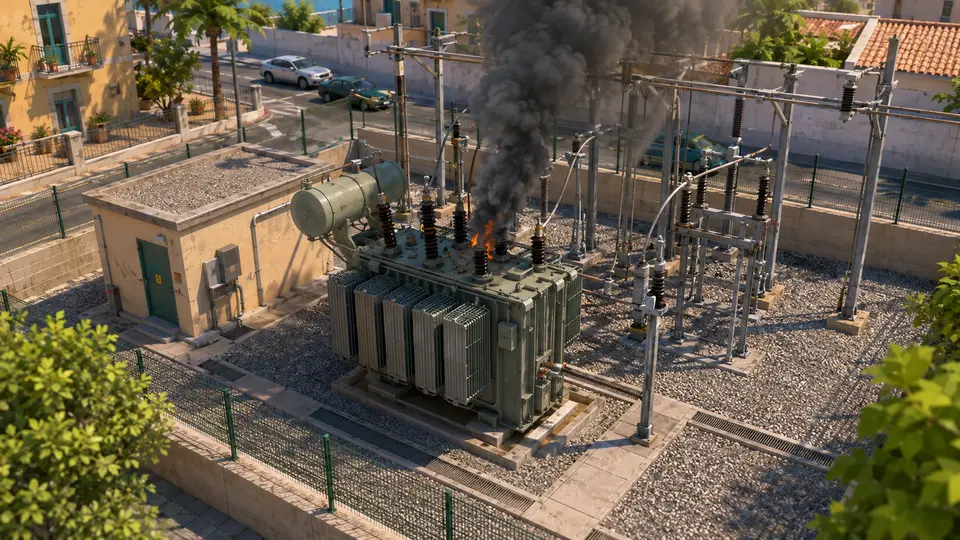
CAM-159Smoke coming off a transformer
«Tell me if smoke or fire shows up anywhere in the yard, and tell me which machine.»
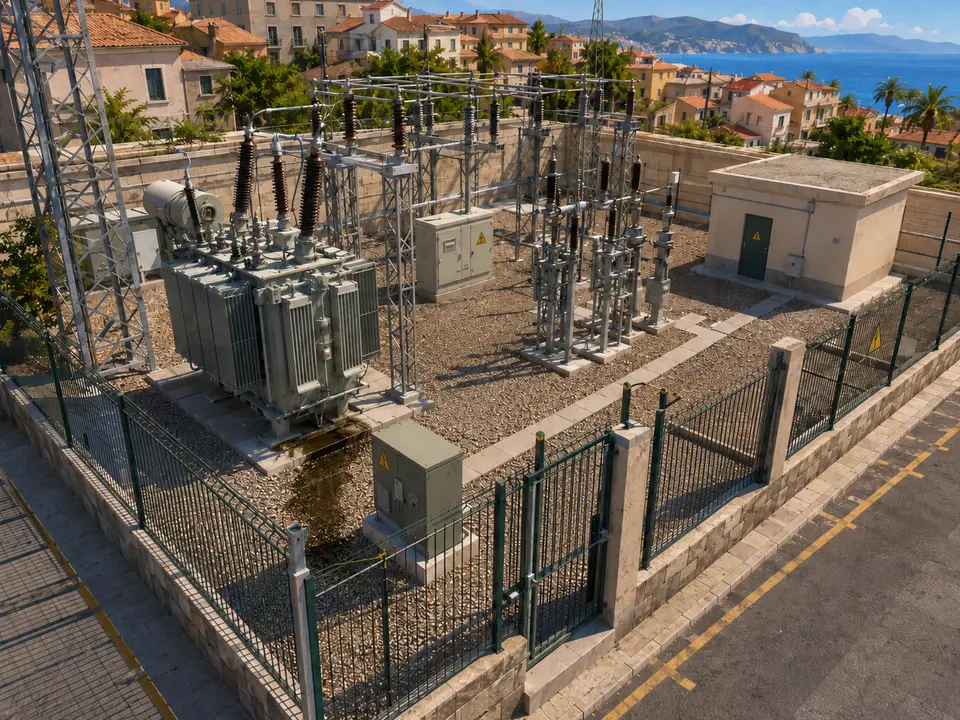
CAM-345A trail of oil under the transformer
«Tell me if a dark stain shows up on the ground under any transformer and it was not there in the earlier pictures.»
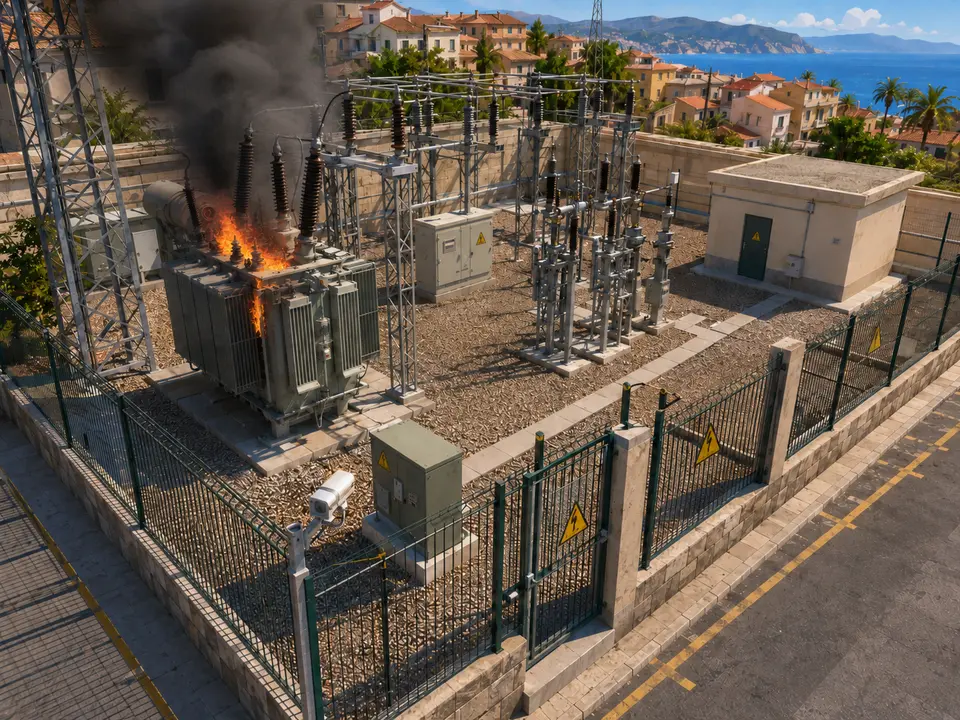
CAM-344Flame and black smoke on the transformer
«Tell me the moment there is smoke or flame on any machine in the yard, even with nobody there.»


What it does not do
IRIS switches nothing off. It does not open the line, does not fire the extinguishing system, does not know the oil temperature or the tank pressure, and does not replace the protection relays or the Buchholz. It sees what can be seen from outside: smoke, flame, a stain on the ground that was not there, an open door. What happens inside the tank stays the job of the sensors already fitted.
Questions
- Does this replace the substation’s fire detection?
- No. The fire detection keeps doing its job and IRIS does not touch it. What IRIS does is watch the yard from outside, where there is often no detector at all: between machines, in the oil pit, in the switchgear bay. A detector tells you there is fire where the detector is; the camera sees smoke rising from a machine with no detector above it, and says which one. Together they cover more than either does alone, and neither gets in the other’s way.
- How does it know the stain on the ground is new?
- Because it compares. IRIS keeps what that same framing looked like before and flags something dark under a machine that was not in the earlier images. It does not measure litres or say which fluid it is: it says there is a stain that was not there yesterday, on which machine, and since when it has been visible. With that, whoever drives out knows which machine to walk up to instead of doing the whole round. If the stain is rainwater, you see it in the picture and rule it out in ten seconds.
- Does it work if the substation loses its connection?
- Yes. IRIS can run inside the installation itself, without depending on the internet or an outside server. The alert is generated the same way and the video is stored the same way; what may be delayed is it reaching the control room if the comms link is down. As soon as the link is back, everything arrives, stamped with the time it actually happened and not the time the connection recovered. For an isolated substation this is not a detail: it is half the reason for installing it.
- Will it not alert every time a cloud of steam drifts past?
- It can happen, which is why it is tuned before it goes live. A yard has water-vapour plumes, dust off the track and smoke from a stubble fire on the other side of the wall, and all of that looks like what we are after. The rule is tuned on the real images of that substation: which areas are watched, how big the smoke has to be, how many seconds it has to last. We do not promise there will never be an extra alert. We promise each one arrives with its video, and that ruling it out takes ten seconds instead of a drive out there.
See it for yourself
This isn’t a video. It’s a slice of the real screen.
A summary of the real interface, played hands-free. You see one case from start to finish; what you do not see are the other screens, and there are many.
- Four cameras at once
- Each understands its own view
- The numbers climb by themselves
Not seeing yours here?
These words are the ones we have built, not the ones IRIS understands. The list falls short on purpose: you ask for it in a sentence, and sentences do not run out. Tell us what is in front of your cameras and we will tell you whether it understands it, or not yet.
And the best part
Nothing to drill, nothing to rip out:the cameras already on your walls can start understanding.
No building work, no new cabling, no swapping equipment. It connects to what is already there, and what is already there starts telling you what it sees.
Tell us your problem and we will say whether IRIS understands it, or not yet.
We reply the same working day.