Solutions by typeLogistics efficiency
Where did that seal break, here or on the road?
The seal turns up broken at the far end
It is 17:05. Out on the yard, between the docks and the waiting area, a white trailer stands away from any dock with both rear doors shut. A person is up against the door with one hand on the latch and a tool in the other. A few metres away a worker in a hi-vis vest walks past without looking over, and a forklift moves a strapped pallet. That trailer has no loading or unloading job open.
1 cameras across 1 sectors
What IRIS is
IRIS watches the cameras for you.
IRIS Neural is an artificial intelligence that watches the cameras you already have and understands what happens in front of them. When something important happens —or something you told it you need to keep an eye on—, it alerts you; and whatever can be counted, it counts in numbers. All day long, without anyone having to watch a screen.
You tell it what you need to watch, and IRIS does it.
Works with the cameras you already have. Nothing to replace.
A person replies, not a form.
- Your footage never leaves your premises.
- It doesn't identify people.
- Certifications →
This is how you ask for it
«Alert me when someone touches the latch or seal of a trailer with no loading or unloading under way.»
A seal is found broken when the truck reaches its destination, many hours and several stops later. A file is opened that leads nowhere, the insurer asks for evidence nobody has and, over time, the yard gets used to it being that way. And the worst part is not the goods: it is the suspicion spread over people who did nothing.
You decide once
What makes this work is a sentence you write: which trailers and when. If there is a load, an unload or an inspection open for that trailer, there is no alert. If there is not, there is. What counts as normal here is decided by the yard, not by the camera. IRIS applies that sentence to every trailer every afternoon, without tiring and without watching some more closely than others.
A seal is a piece of plastic worth a few cents that holds up an entire chain of trust. As long as it is intact, everyone accepts that what is inside matches the paperwork. When it turns up broken, it is not just a latch that breaks: it is the only piece of evidence there was.
The trouble is that a trailer parked away from the docks is watched by nobody. It is thirty metres from where the work happens, and whoever walks past is on their way somewhere else. It can sit like that all afternoon. And a lot fits into that afternoon: a legitimate check nobody logged, a driver verifying his own load, or somebody doing what they should not. From the outside, all three look the same.
So IRIS does not judge: it narrows things down. It knows which trailers have an operation open and which do not, and it raises an alert when hands appear on the latch of one that does not. The alert arrives with the camera, the trailer and the time, and the yard supervisor can walk over and ask while it is happening. If it was a legitimate check, it is on record and it protects the person who did it. IRIS calls nobody a suspect: it says that someone touched a latch at 17:05 and leaves a human to decide what that means.
What changes
Before, this was discovered when the doors were opened at the destination, and from there you started asking backwards with no evidence at all. Now the yard supervisor gets the alert while the trailer is still there, with the time and the video, and can go and check the latch before the truck leaves. If something does not add up, it is dealt with here and not four hundred kilometres away, when there is nothing left to check.
Where we have seen it
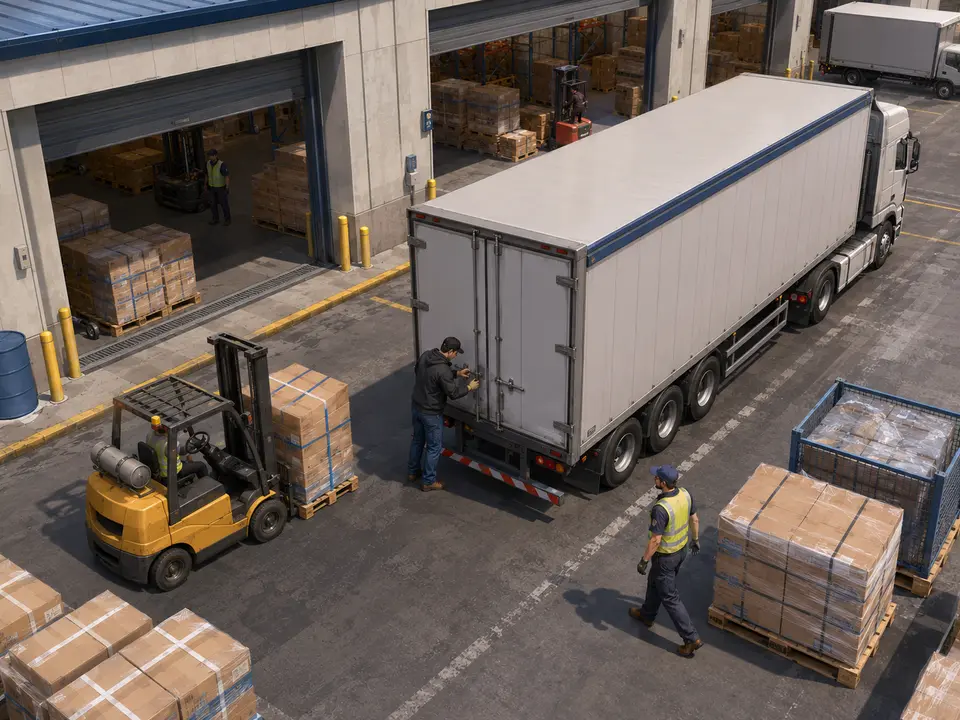
CAM-262Hands on a trailer's rear lock
«Tell me when somebody touches the lock or the seal of a trailer that has no loading or unloading under way.»

What it does not do
From a general yard camera, IRIS sees a hand on the latch and a tool; it does not confirm whether the seal is cut, and it does not read its number. That is checked by the person who walks over. It identifies nobody either: it does not recognise faces and does not know whether that person is the driver, an employee or someone passing through.
Questions
- Can IRIS tell a broken seal from an intact one?
- Not from a general yard camera. At that distance you can see a hand on the latch, a tool and the exact moment, but you cannot confirm whether the seal is cut or read its number. That is confirmed by the person who goes over to look. What IRIS adds is that somebody goes to look today and not tomorrow at the destination, when the truck has already made four stops and there is nothing left to check.
- What about legitimate openings, like an inspection?
- They are recorded just the same, and that is a good thing. The rule is written around operations: if that trailer has a load or an inspection open, there is no alert; if it does not, there is. What is normal and what is not is decided by the yard, not by the camera. And the video of a legitimate opening protects the person who did it as much as one that was not: when something goes missing, being able to show who opened it, when and under what authority works for both sides.
- Can it read the seal number?
- With a dedicated camera and a close framing, yes. With a general yard camera like this one, no, and it is better said sooner than later. And two things that get confused need separating: reading a printed code means reading a label stuck to an object, not recognising a person. IRIS reads labels, plates and codes when the camera allows it. It does not recognise faces in any case, not even where the camera would allow it.
- Does this make anyone a suspect?
- No. IRIS calls nobody a suspect and does not guess intentions: it describes a visible fact — a hand on the latch of a trailer with no open job — with the camera and the time. What that means is decided by a person, who can walk over and ask. Very often the answer will be that the driver was checking his own load, and the video makes that clear. A system that hands out labels about people does not last a month on a yard, and it should not.
A different case every time
Watch what happens. Then watch what IRIS does with it.
Not a recorded video and not a drawing: it is a summary of the real tool, with a different case each time round. The whole tool does not fit in a box.
- You ask
- IRIS searches
- It shows you
Not seeing yours here?
These words are the ones we have built, not the ones IRIS understands. The list falls short on purpose: you ask for it in a sentence, and sentences do not run out. Tell us what is in front of your cameras and we will tell you whether it understands it, or not yet.
And the best part
The cameras you bought years agostill hold up. What they were missing was not image quality.
It was someone to look. IRIS connects to the installation you already have — same equipment, same cabling — and those images go from being stored to being understood.
Tell us your problem and we will say whether IRIS understands it, or not yet.
We reply the same working day.