Solutions by typeLogistics efficiency
What happens when someone walks where the machines run?
On foot where the machines run
It is 18:20 in the quarry yard. A truck loaded with stone comes up the left side. From the right a loader arrives with a full bucket, throwing dust. Between the two, a worker in a hi-vis vest cuts across on foot to reach the workshop sooner. Neither operator sees him: from high up in a cab, a person at ground level disappears exactly when they are closest. He does it every day, and every day it works out fine.
3 cameras across 3 sectors
What IRIS is
IRIS watches the cameras for you.
IRIS Neural is an artificial intelligence that watches the cameras you already have and understands what happens in front of them. When something important happens —or something you told it you need to keep an eye on—, it alerts you; and whatever can be counted, it counts in numbers. All day long, without anyone having to watch a screen.
You tell it what you need to watch, and IRIS does it.
Works with the cameras you already have. Nothing to replace.
A person replies, not a form.
- Your footage never leaves your premises.
- It doesn't identify people.
- Certifications →
This is how you ask for it
«Alert me the moment anyone walks into the machinery area of the yard, even for a second.»
Almost always nothing happens, and that is exactly the danger: since nothing happened, tomorrow someone cuts across again. The day it goes wrong there is no margin to react. A loaded machine does not stop and a person on foot hears nothing over the engine beside them. Then comes everything else: the yard shut down, the investigation, the inspector asking why there was no real separation, and a family waiting in a hospital corridor.
You decide once
You draw on the image where the machines run and where people walk: the lane, the marked crossing, the gap between trailer and dock. You also set the exceptions — who may enter, in which window, with what job open — and who gets the alert: the operator, the yard supervisor, or both. That is done once, looking at the real yard. After that IRIS applies it on every shift, in fog, in dust and at three in the morning.
Every working yard has a rule everyone knows and almost nobody keeps perfectly: people on one side, machines on the other. It is kept well at eight in the morning. It is kept badly at six in the evening, when the shift is nearly over and the shortcut saves two minutes.
The three places where this shows up are different, and the fear is the same. On a warehouse dock, a trailer creeps forward half a metre while someone is still inside with a pallet truck: a gap opens between the truck floor and the leveller that was not there before. In a container yard, a handler carries a box clear of the ground and swings towards the row while somebody walks up its lane. In a quarry, a truck and a loader pass each other and there is a person in between that nobody sees from up in a cab.
IRIS does not watch that person: it watches the place. It knows where you drew the machine lane and raises an alert as soon as anyone on foot enters it while equipment is working or moving. The alert arrives with the camera, the spot and the video, and whoever receives it can stop the move over the radio. IRIS brakes nothing. It makes sure somebody knows in the first second, instead of at the shout.
What changes
Before, this was handled with toolbox talks and paint on the ground, and it was checked when somebody happened to walk past and see it. The proof that it worked was that there had been no accidents. Now the yard supervisor sees every time someone steps into the lane, whether or not they realised, so the shortcut can be discussed before there is anything to investigate. And the monthly meeting has a count instead of an impression.
Where we have seen it
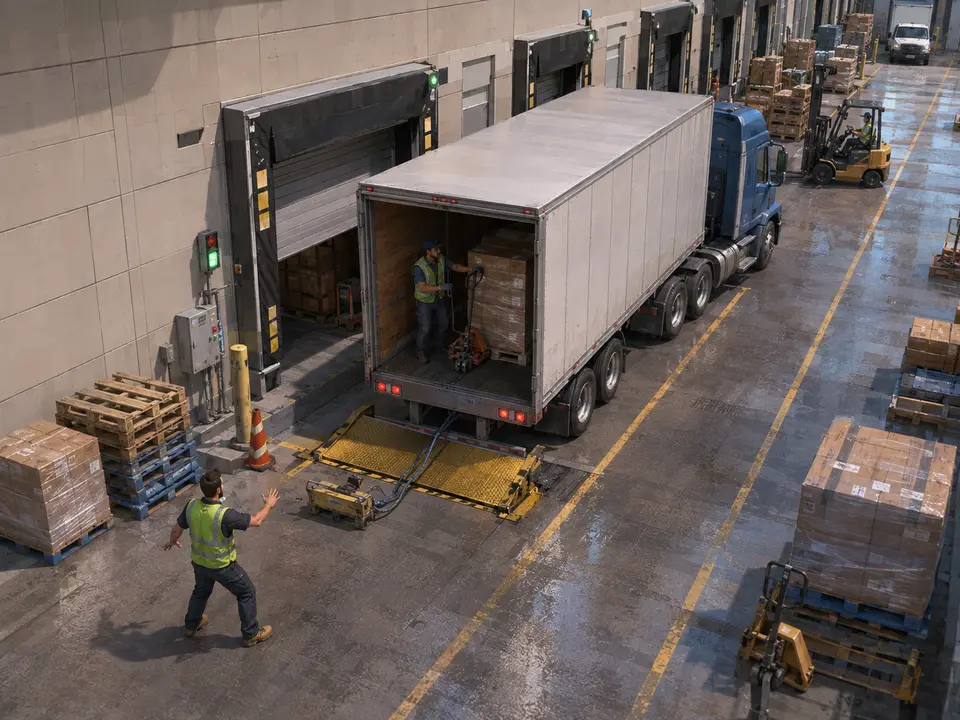
CAM-264The truck pulls away with a worker still inside
«Tell me the moment a trailer moves off the dock while the leveller is still down or somebody is still inside.»
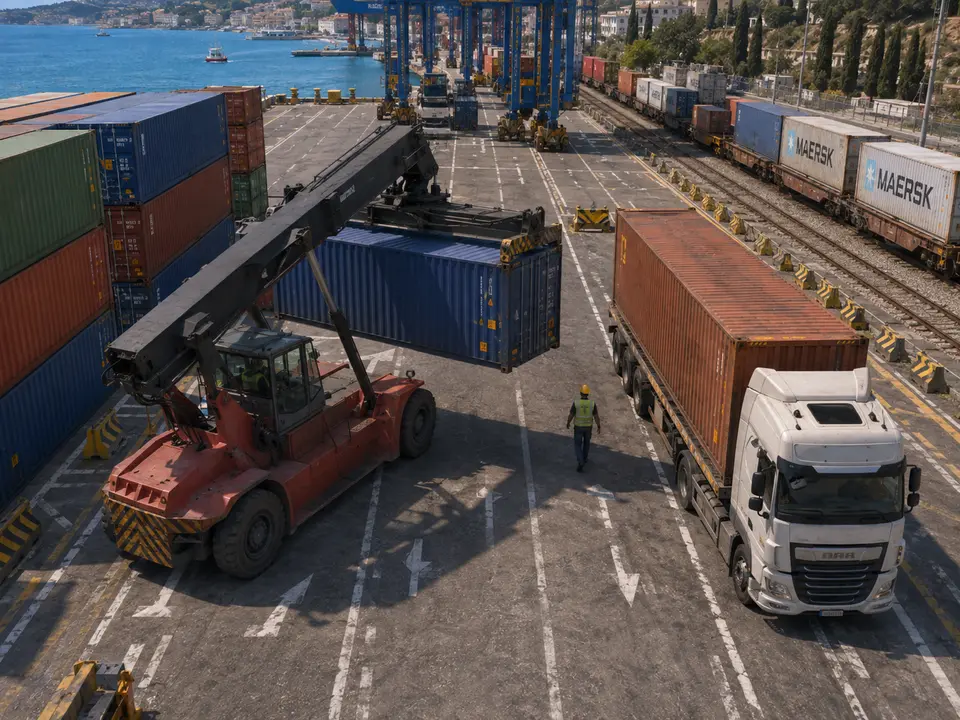
CAM-447A worker on foot between the machine and the truck
«Tell me if a person on foot enters the machine lane while a machine is working or moving.»
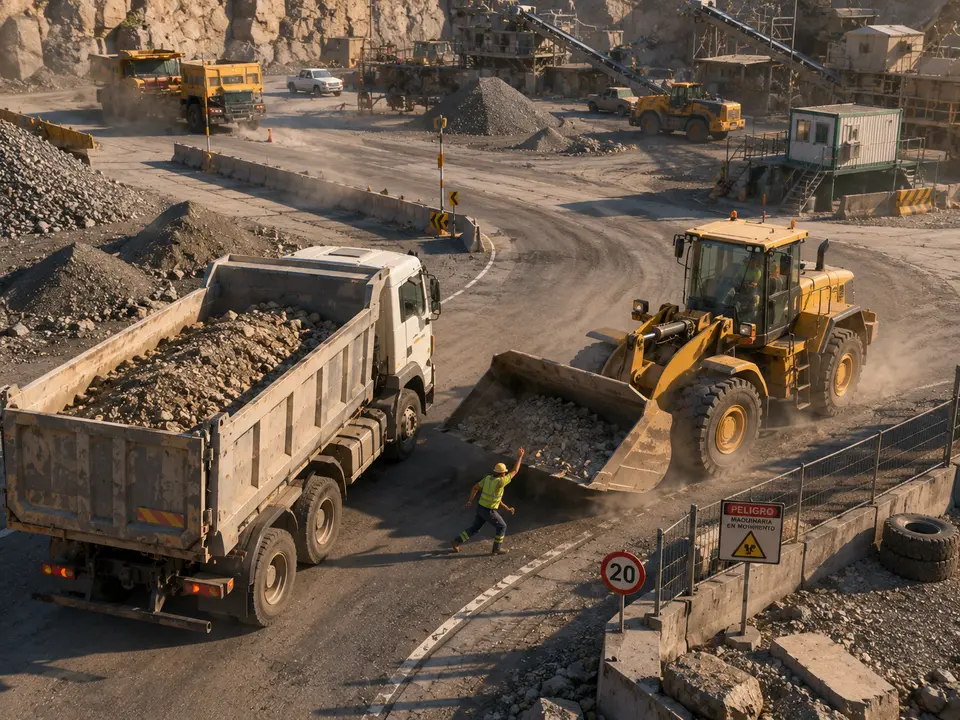
CAM-388A worker on foot between a truck and a loader
«Tell me the moment anyone is on foot in the machine area of the yard, even briefly.»


What it does not do
IRIS does not brake a machine, does not close a barrier and does not send anyone anywhere: it alerts the person who can. And it does not identify whoever walked in: it does not recognise faces and does not know whether they work here. It says there is someone on foot where they should not be, with the camera and the minute.
Questions
- Can IRIS stop the machine or the truck?
- No. IRIS does not act on anything: it does not brake a vehicle, does not lower a barrier and does not send anyone anywhere. What it does is alert, right away, the person who can act, with the camera, the spot and the picture of what is happening. The manoeuvre and the decision belong to a human. What changes is that the human knows in the first second, not when somebody shouts from the far side of the yard.
- What about the worker who has to go in to do a job?
- You narrow the rule and that is that. You can say there is no alert during the maintenance window from seven to eight, or none while the machines are stopped, or that it only fires when equipment is working or moving. What counts as normal in that yard is decided by the yard, not the camera. A system that alerts two hundred times a shift is switched off within a week, and rightly so: when everything alerts, nothing does.
- Aren’t painted walkways and the machine’s sensors enough?
- They are the first barrier and you need them. But paint alerts nobody, and the machine’s sensors watch around the machine, not around the yard: they do not see the person who will step into the lane ten seconds from now. IRIS does not replace them. It watches the whole space from above and alerts a human with the picture in front of them. It is one more layer, not a substitute, and that is how it should be presented internally.
- Does it know who the person who walked in is?
- No, and we do not want it to. IRIS does not recognise faces and identifies nobody: it works with zones drawn on the image and with what is inside them. It sees a person on foot where only machines should pass, and says so. If somebody later needs to know who it was, the yard matches it against its own shift log, with a name and a supervisor. The camera supplies the fact and the time; the name comes from the organisation.
Demo · IRIS at work
A new case each time. Always the same screen.
It plays by itself and shows one case from start to finish. It is a summary: the real screen has far more functions than fit in this box.
- Cameras on the map
- You draw an area
- What passed shows up
Not seeing yours here?
These words are the ones we have built, not the ones IRIS understands. The list falls short on purpose: you ask for it in a sentence, and sentences do not run out. Tell us what is in front of your cameras and we will tell you whether it understands it, or not yet.
And the best part
The disk fills up on its own.The questions stay unanswered.
Storing images is easy, and it is not cheap. What was missing was someone to look at them. IRIS looks at everything you record and shows you only what is worth a glance.
Tell us your problem and we will say whether IRIS understands it, or not yet.
We reply the same working day.