Solutions by typeIntrusion detection
Who pays for the pile that appeared outside the fence?
They dump there and you pay for the clean-up
Six in the evening. The access barrier is down and the plant has closed. A white van stops outside the site, on the verge, opens both rear doors, and a person starts unloading household junk and stacking it against the fence: a sofa, two mattresses, bags. It takes four minutes. When the van leaves, the pile stays there, on your boundary, and from tomorrow it grows on its own.
5 cameras across 3 sectors
What IRIS is
IRIS watches the cameras for you.
IRIS Neural is an artificial intelligence that watches the cameras you already have and understands what happens in front of them. When something important happens —or something you told it you need to keep an eye on—, it alerts you; and whatever can be counted, it counts in numbers. All day long, without anyone having to watch a screen.
You tell it what you need to watch, and IRIS does it.
Works with the cameras you already have. Nothing to replace.
A person replies, not a form.
- Your footage never leaves your premises.
- It doesn't identify people.
- Certifications →
This is how you ask for it
«Tell me if a vehicle stops outside the site and starts unloading, whether it is within opening hours or not.»
Whoever unloads pays nothing. You pay, because the pile is on your boundary and the removal order is signed by the landowner. And it is not a truck invoice: if there is anything hazardous in those bags, the file changes colour. All of that arrives months later, as a formal notice, when the video of that four-minute evening was recorded over long ago.
You decide once
You decide this once. You mark which stretches of boundary and which verges are watched, how long a vehicle has to stand with its doors open to count as unloading, and who is told depending on the hour. IRIS applies it every day, including Sundays and August, which is when the dumping happens. And where the problem is not at night but in broad daylight, the rule applies just the same: here it is the place that governs, not the hour.
Illegal dumping has an unfair rule: the person doing it is there for four minutes and the person paying for it lives with it for months. The van arrives, tips and leaves. The land is yours. The removal notice arrives in your name. And there is nobody to claim against, because nothing is left of those four minutes except the pile.
And it grows. A first pile is an invitation: the next van sees that this is a place where things get left, and in three weeks there are twenty cubic metres against the fence. What started as a sofa ends up as a removal with a lorry, a skip and a licensed waste handler, plus an inspection visit to check what was in there.
And the same problem has other faces that look nothing like each other. Inside the plant: a lorry that was carrying declared paper, and what comes down into the pit is broken brick and timber. That contaminates the whole batch, and the fine is the plant’s, not the lorry’s. On the north fence, on a windy morning: a skip filled to the brim and left uncovered releases bags and film that cross the mesh and end up on the neighbour’s pavement, and that arrives as a complaint and as a cleaning cost. And on a road it is more direct still: a load of rubble spilled inside a tunnel is not a fine, it is an obstacle in the left-hand lane with cars arriving at ninety.
IRIS watches the moment, not the pile. A vehicle stops outside the site, opens its doors and starts putting things down: camera, hour, video and an alert while it is still there. That video is what turns a removal notice into a claim against somebody else. In the pit, when what falls is not what the docket said, it says so before it mixes with the rest. And in the tunnel it says which lane the obstacle is in, so the control room can close it before somebody brakes hard.
What changes
Before, the dumping was discovered once it was already a pile: the loader driver saw it one morning and nobody knew when it had appeared or who had left it. Now an alert comes out while the van is still there with its doors open, and often that is enough for the unloading never to finish. And when it has finished, there is a video with the hour that can be taken to the council or the insurer instead of being absorbed.
Where we have seen it
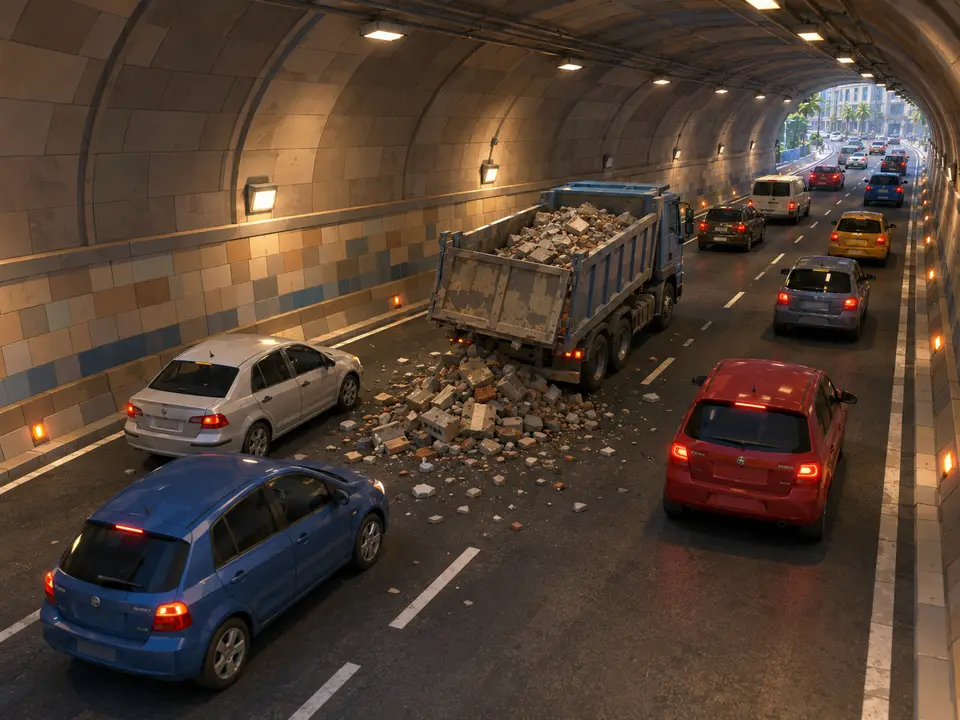
CAM-35Debris inside the tunnel
«Tell me if an obstacle appears on the tunnel roadway, and which lane it is in.»
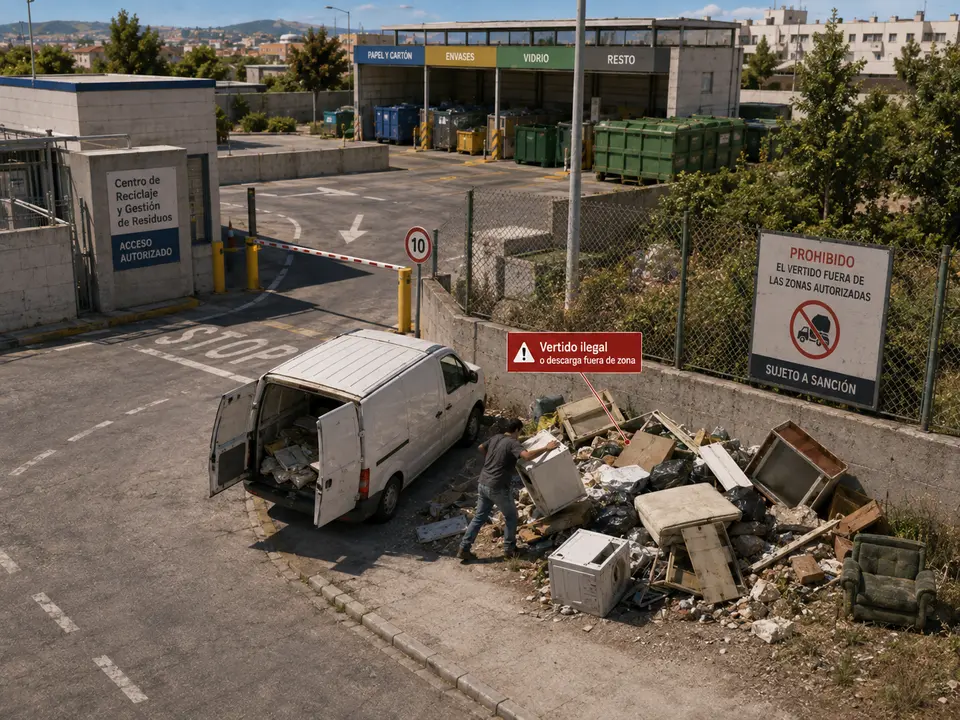
CAM-426The pile is growing on the wrong side of the fence
«Alert me if anyone unloads material outside the site, on the verge or against the fence, in or out of opening hours.»
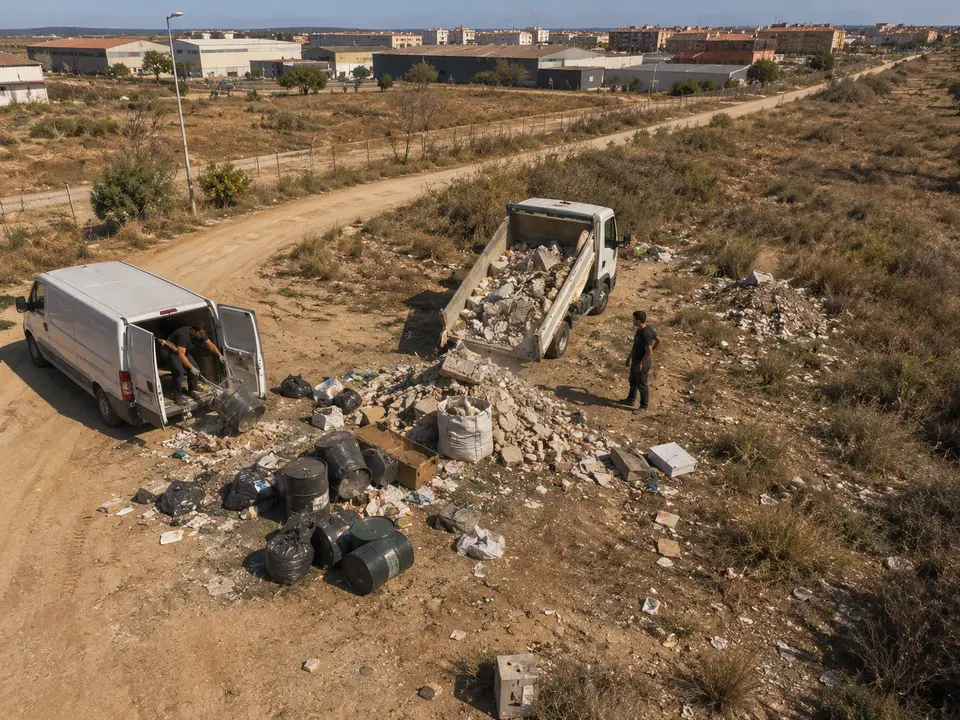
CAM-566A truck tipping rubble on waste ground, in broad daylight
«Tell me if a vehicle stops off the road on the waste ground and starts unloading.»

CAM-436The bags clear the fence and end up on the neighbour’s pavement
«Tell me if plastics start blowing over the fence towards the street.»
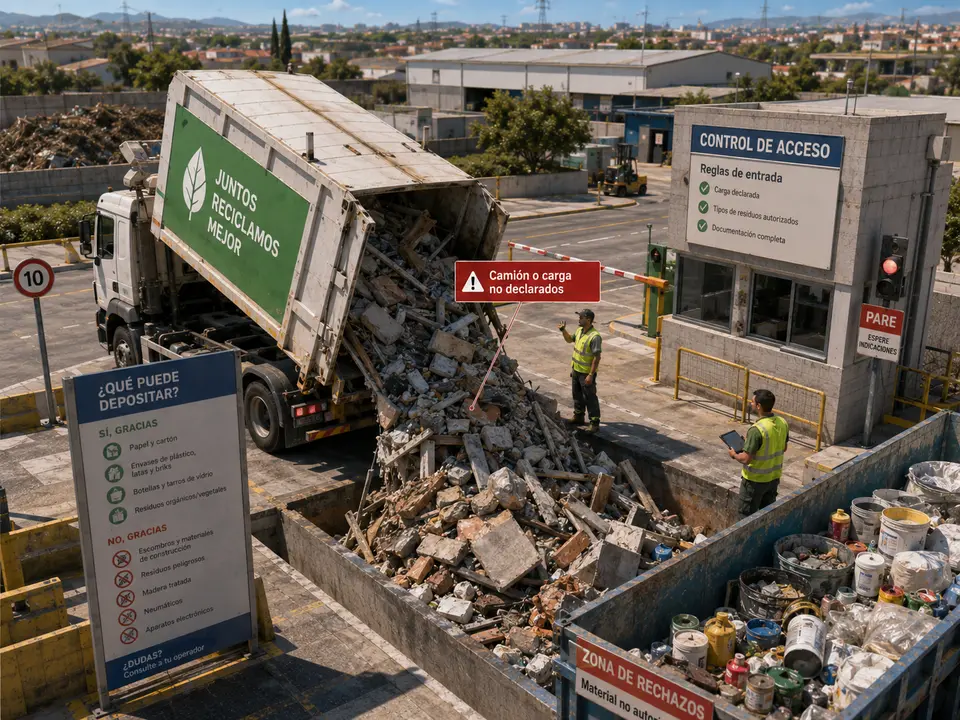
CAM-427The paperwork said cardboard; rubble is coming out
«Alert me if what is being tipped into the pit is not the type of material the truck declared.»


What it does not do
IRIS does not know what is in the bags. It sees somebody taking loads off a vehicle and leaving them on the ground; whether that is clean rubble, timber or something hazardous is settled by the person who goes to look. Nor does it classify waste by type with certainty: at the pit it flags that what is falling does not look like what was declared, and a person confirms.
And it stops nobody. No barrier comes down here: IRIS alerts, and a person decides.
Questions
- Is it any use if the van leaves in four minutes?
- Yes, for two reasons. The first is that the alert arrives while the unloading is happening, not the next day: often somebody comes out, shows their face, and the unloading never finishes. The second is that even if the van leaves, the video with the hour and the vehicle stays, and that changes who pays: a pile with no video is yours, a recorded unloading is somebody else’s. Without that minute pinned down, the video exists but nobody finds it and it ends up overwritten.
- Does it read the vehicle’s number plate?
- Yes when the camera can see it, and it cannot always see it. The plate depends on the angle, the distance and the light: a camera placed to watch a stretch of fence fifty metres away sees the van and does not read the plate. If what you want is to identify the vehicle, that is set up as what it is — a camera positioned to read plates, at a point where that is possible — and it is said before anything is promised. Detecting the unloading and reading the plate are two different jobs.
- What about bags escaping the site on the wind?
- It is the same problem in reverse, and it is watched too. A skip filled to the brim and left uncovered releases film and bags that cross the fence and end up on the neighbour’s pavement, and that comes back all the same: as a complaint, as an inspection and as a cleaning cost. The rule is written exactly like that: tell me if plastics start blowing over the fence towards the street. With that, the skip gets covered before the windy morning turns into a file.
- Can it be used in a tunnel or on a road?
- Yes, and there it is not a waste matter, it is a safety one. A lorry that loses part of its load inside a tunnel leaves an obstacle in a lane with vehicles arriving at speed. IRIS sees that something has appeared on the carriageway that was not there before, and says which lane it is in, so the control room can lower the speed limit or close it before somebody brakes hard. It is the same detection as on the verge of a plant, with a different urgency.
A different case every time
Watch what happens. Then watch what IRIS does with it.
Not a recorded video and not a drawing: it is a summary of the real tool, with a different case each time round. The whole tool does not fit in a box.
- You ask
- IRIS searches
- It shows you
Not seeing yours here?
These words are the ones we have built, not the ones IRIS understands. The list falls short on purpose: you ask for it in a sentence, and sentences do not run out. Tell us what is in front of your cameras and we will tell you whether it understands it, or not yet.
And the best part
A recollection cannot be checked.A number can, and it comes out the same every day.
The number does not depend on who was on shift or how they remember it. It is measured the same way every day, and that is why people counting is certified by the Centro Español de Metrología.
Tell us your problem and we will say whether IRIS understands it, or not yet.
We reply the same working day.