Solutions by typeEnvironment and cleanliness
Who watches a vacant plot where nothing happens for weeks?
Four minutes with the bed raised and it is gone
It is 16:20 and the sun is out. On the patch of bare ground between the industrial estate and the first houses, a tipper truck has its bed raised and has just emptied a pile of rubble: broken brick, timber and lumps of concrete. Beside it, a white van with its rear doors open. The whole operation will take four minutes. It is not night and nobody is hiding: it is mid-afternoon, and nobody watches that plot because almost nothing ever happens there.
4 cameras across 3 sectors
What IRIS is
IRIS watches the cameras for you.
IRIS Neural is an artificial intelligence that watches the cameras you already have and understands what happens in front of them. When something important happens —or something you told it you need to keep an eye on—, it alerts you; and whatever can be counted, it counts in numbers. All day long, without anyone having to watch a screen.
You tell it what you need to watch, and IRIS does it.
Works with the cameras you already have. Nothing to replace.
A person replies, not a form.
- Your footage never leaves your premises.
- It doesn't identify people.
- Certifications →
This is how you ask for it
«Tell me if a vehicle stops off the road on the plot and starts unloading.»
Clearing that pile is paid for by whoever owns the land, almost always a council or the business next door, and it is not one truck: it is a machine, a licensed waste contractor and a paper trail. Then comes the effect everybody knows: a vacant plot with one pile attracts another, and within a month the problem no longer fits into one working day.
You decide once
You say which piece of ground is not an unloading area, what counts as unloading and who is alerted at each hour: if a vehicle enters the plot, leaves the track and stays more than two minutes with the bed up, alert the municipal duty service with the camera and the video from the moment it entered the frame. IRIS applies that three hundred and sixty-five days a year, even if nothing happens for three weeks.
Fly-tipping does not look like theft. Nobody climbs a fence, nobody hides and it is almost never at night: it happens mid-afternoon, in the sun, because whoever does it knows nobody watches that plot. The bed goes up, the pile drops, the bed comes down and the truck leaves. Four minutes.
The same scene has two other faces. Outside a waste centre, at six in the evening with the barrier down, a van pulls up against the fence and somebody stacks household junk against it: it never came in, so officially nothing happened, but the material is there and the site owns the problem. And inside, at the tipping bay, a truck raises its bed over the pit and what comes out is not what was declared: it came in as paper and what is falling is broken brick, timber and concrete.
IRIS watches the place even on the days when nothing happens, which is almost all of them. It sees the vehicle leave the track, sees the raised bed, sees somebody carrying things down, and says so while it lasts, with the camera and the video from the moment it entered the frame. At the tipping bay it does the other half: it compares what is coming out with what was supposed to come out and speaks up when they do not match. What it does is stop an empty plot being the one place in town where nobody ever looks.
What changes
This used to be discovered the next day, or three days later, when somebody walked past and called it in.
Now the alert goes out while the bed is still raised, with the camera and the video from the moment the vehicle entered the frame. Sometimes somebody gets there and sometimes not, but the file no longer starts with a pile of bricks: it starts with what happened, at what time, and which way it came in.
Where we have seen it

CAM-35Debris inside the tunnel
«Tell me if an obstacle appears on the tunnel roadway, and which lane it is in.»
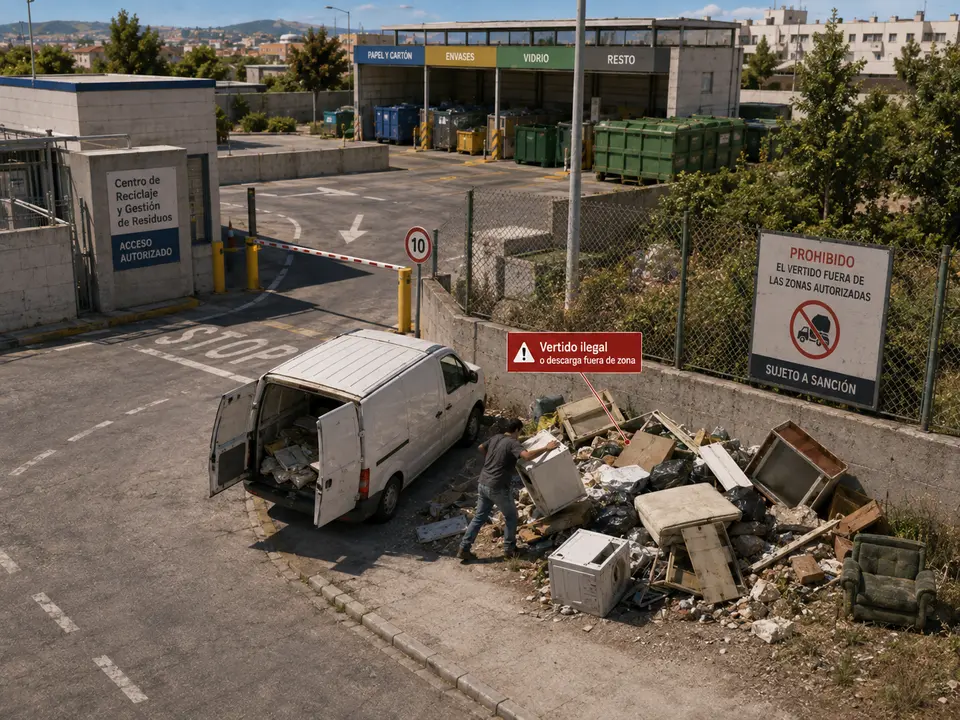
CAM-426The pile is growing on the wrong side of the fence
«Alert me if anyone unloads material outside the site, on the verge or against the fence, in or out of opening hours.»
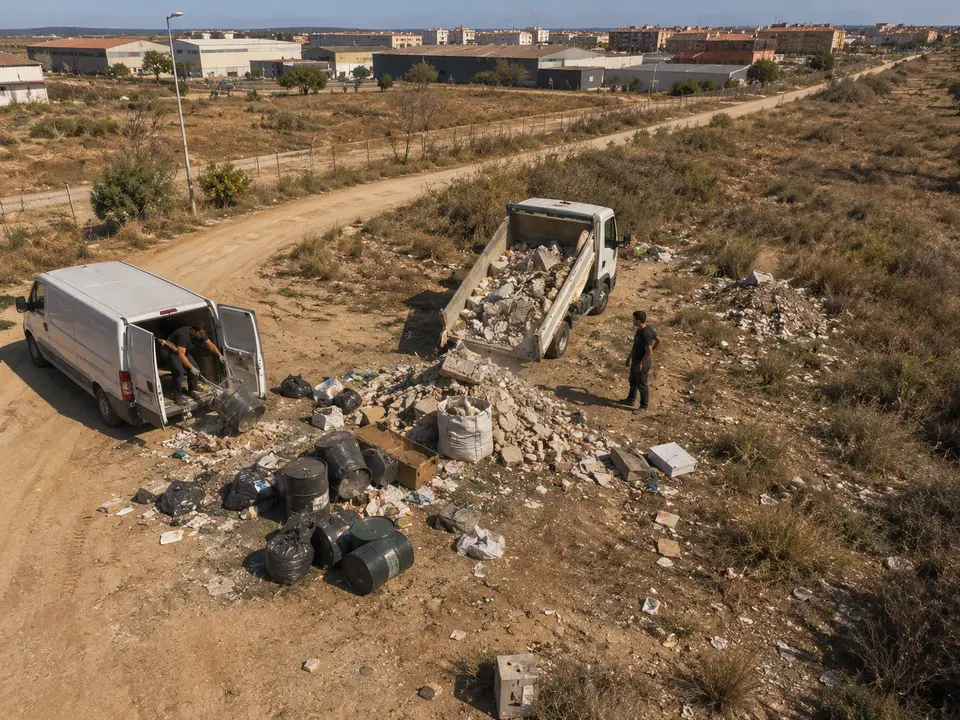
CAM-566A truck tipping rubble on waste ground, in broad daylight
«Tell me if a vehicle stops off the road on the waste ground and starts unloading.»
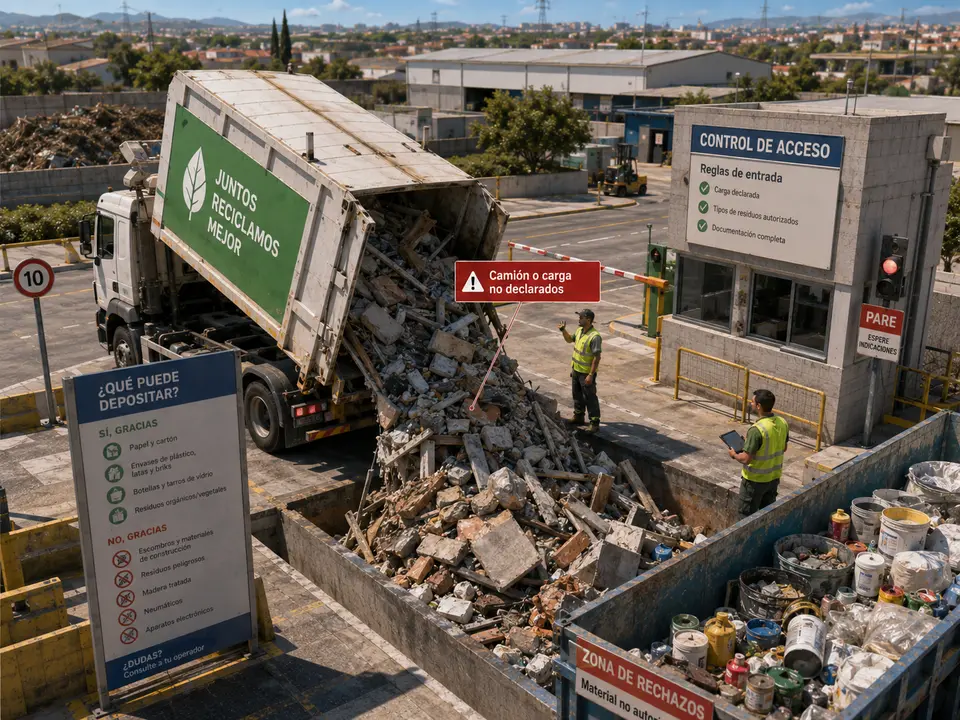
CAM-427The paperwork said cardboard; rubble is coming out
«Alert me if what is being tipped into the pit is not the type of material the truck declared.»


What it does not do
IRIS does not say what the material is or whether it is hazardous.
It also does not identify people or recognise faces, and it does not stop the truck. And it only sees the piece of ground the camera looks at: on a large plot, what happens behind a pile or outside the frame is not there.
Questions
- Does it alert while they are unloading, or afterwards?
- While they are unloading, and that is what makes it worth doing. A drop like that takes a few minutes: if the alert arrives while the truck still has its bed up, somebody can go, or at least you know which way it left. The rule usually leans on something very visible — a vehicle leaving the track and stopping where nobody has any business being — rather than on guessing intentions. And even if nobody gets there in time, the video starts when the vehicle entered the frame, not when somebody found the pile.
- Can it give me the truck’s number plate?
- Yes, on cameras set up to read plates and when the framing allows it. Two things are worth saying up front. First: reading a plate is not identifying a person; IRIS does not recognise faces and does not know who is driving. Second: what is done with that data, how long it is kept and who may see it is decided by your organisation under its own rules, not by us. And on a vacant plot the camera that sees the unloading is often not the one that sees the plate: that is why two get installed.
- Does it tell a legitimate delivery from fly-tipping?
- Yes, because the difference is not in the truck: it is in the place and the hour. The same truck, with the same raised bed, is normal inside the tipping bay at eleven in the morning and is a problem up against the outside fence at six in the evening with the barrier down. You define that once: where unloading happens, when, and with what. IRIS does not guess intentions or judge anybody; it checks whether what is happening fits what you said was normal.
- Is it any use in a place where nothing happens for three weeks?
- Yes, and it is exactly the case a person cannot cover. Nobody can watch an empty screen for three weeks and still be alert in the minute the truck turns up: human attention does not work that way, and it is nobody’s fault. A camera that does not get tired is worth little where things happen constantly and worth a great deal where they happen four times a year. That is why vacant plots, the backs of warehouses and outer fences are among the places where this shows up most.
The real interface, step by step
You set the rule once. IRIS applies it every time.
You will see a summary of the interface, played step by step and hands-free. Each round starts with another case. The complete tool does not fit in a demo.
- The rule gets built
- It goes to every camera
- Published, it watches alone
- And then it fires
Not seeing yours here?
These words are the ones we have built, not the ones IRIS understands. The list falls short on purpose: you ask for it in a sentence, and sentences do not run out. Tell us what is in front of your cameras and we will tell you whether it understands it, or not yet.
And the best part
One camera,and you already have a watchman. Four thousand cameras, and you have four thousand watchmen.
None of them tires, none of them looks away and none of them works shifts. And there is nothing to install: the cameras you already have can start understanding what they see.
Tell us your problem and we will say whether IRIS understands it, or not yet.
We reply the same working day.