Solutions by typeMobility analysis
Who reports a car stopped where it shouldn’t be?
What’s standing still draws no attention
Twenty past nine at night, mile marker 30. A car is stopped on the shoulder with the reflective triangle out and smoke coming from the hood. The driver has got out and is standing outside, one step from the lane where everyone else is still going past at a hundred and twenty. It’s been like this for four minutes. In the control room a hundred and sixty cameras are cycling, and that one hasn’t been on screen since seven.
10 cameras across 7 sectors
What IRIS is
IRIS watches the cameras for you.
IRIS Neural is an artificial intelligence that watches the cameras you already have and understands what happens in front of them. When something important happens —or something you told it you need to keep an eye on—, it alerts you; and whatever can be counted, it counts in numbers. All day long, without anyone having to watch a screen.
You tell it what you need to watch, and IRIS does it.
Works with the cameras you already have. Nothing to replace.
A person replies, not a form.
- Your footage never leaves your premises.
- It doesn't identify people.
- Certifications →
This is how you ask for it
«Alert me if a vehicle stops on the shoulder or in a lane, and tell me where and since when.»
Every minute that car stays there with someone standing beside it is a minute of risk that depends on nobody. And when the breakdown is in a live lane, the line building up behind grows faster than it takes to call a recovery truck. The expensive part isn’t the breakdown: it’s what happens behind the breakdown while nobody has seen it. The alert usually comes from another driver, and it comes when there are already three miles of line.
You decide once
The organization decides once which surfaces admit no stopped vehicle and how many seconds count as “stopped” on each: the shoulder of a highway isn’t the lane at a gate, nor the crossing outside a school. It also decides the hours, the exceptions — the maintenance vehicle that works there — and who receives the alert. IRIS checks it on all cameras at once, including the ones nobody looks at today.
Everything watched in a control room reacts to movement: something enters, something crosses, something moves. A breakdown is exactly the opposite. It’s a still thing in a place where everything else moves, and that’s why it catches nobody’s eye. A car stopped on the shoulder looks like part of the landscape, and ten minutes later it looks even more so.
The same scene shows up in places that aren’t a highway. A white van has been standing for eight minutes in the gate lane of a restricted site, barrier up and nobody inside. A car is parked on top of the crossing outside a school, six feet from the sign, exactly as the children arrive. On level -3 of a parking lot, at four in the morning, a car sits in the aisle in front of the elevators, on a floor that should be closed and empty at that hour. And there’s a road running along the wall of a prison, where a vehicle standing too long means something else entirely.
In all these cases IRIS does the same thing: it checks that an area meant to be clear is clear, and when it stops being clear it says from which minute. It doesn’t know why the vehicle is stopped, and that’s the question answered by the person who opens the camera. What changes is that they open it after four minutes instead of when the driver behind calls in.
What changes
Breakdowns used to arrive by phone, almost always from another car, with a description that was hard to use: “a car stopped just before the exit, I think.” Somebody had to work out which camera that was.
Now it arrives with the location, the camera open and how many minutes it’s been there. Whoever picks it up doesn’t lose the first quarter of an hour finding the spot: they decide at once whether to send a patrol or a sign message.
Where we have seen it

CAM-178A car caught in the water
«Tell me the moment there is a vehicle stopped in the water, and tell me exactly where it is.»
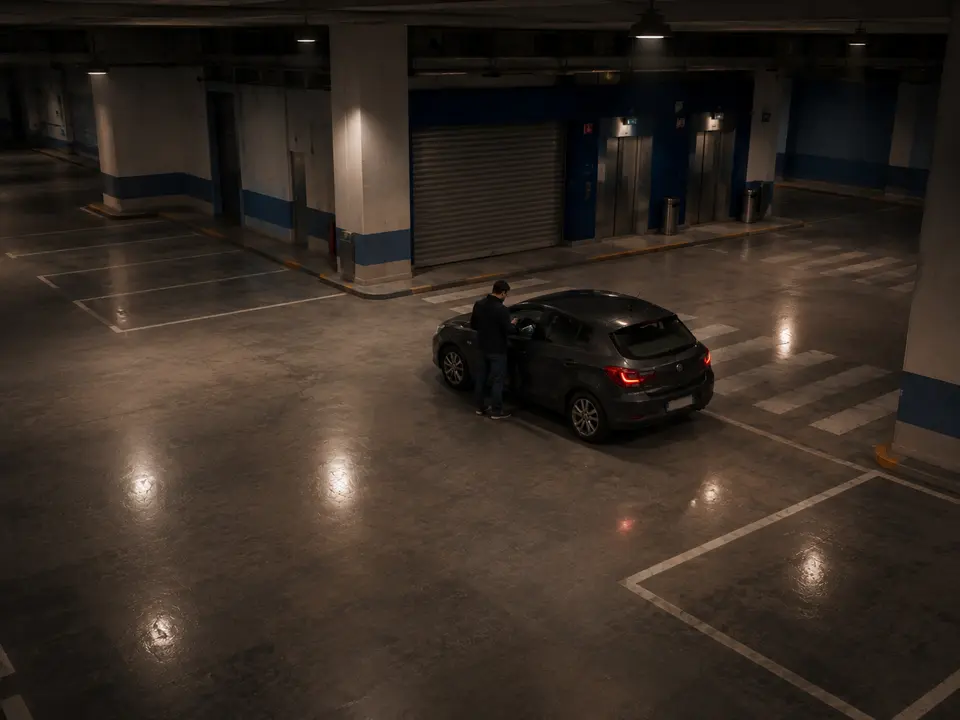
CAM-472A car stopped outside a space on a floor that should be empty
«Alert me if there is anyone or any car stopped on the closed levels outside opening hours.»
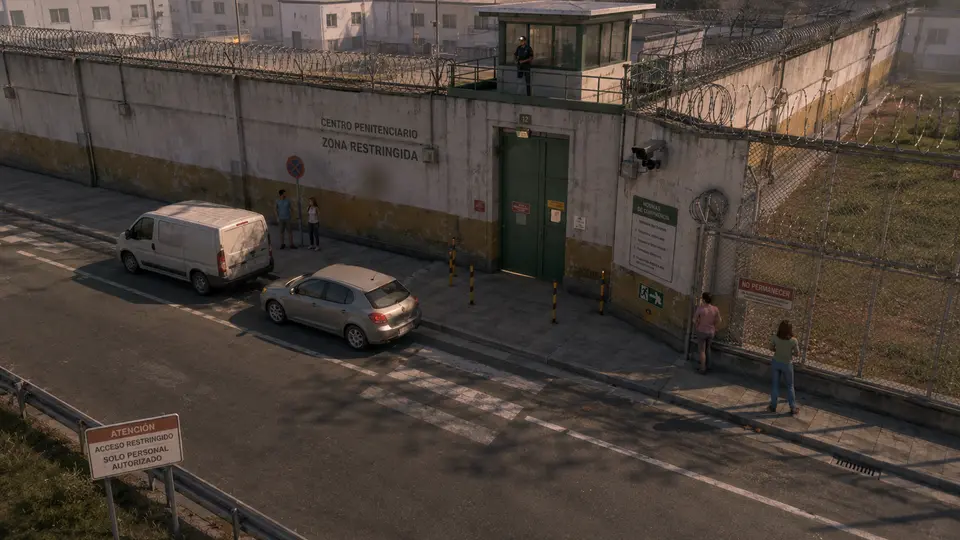
CAM-109A car parked too long against the wall
«Tell me if a vehicle stays parked against the wall for longer than we have set, or if someone stays put against the fence, and tell me which point of the perimeter it is.»
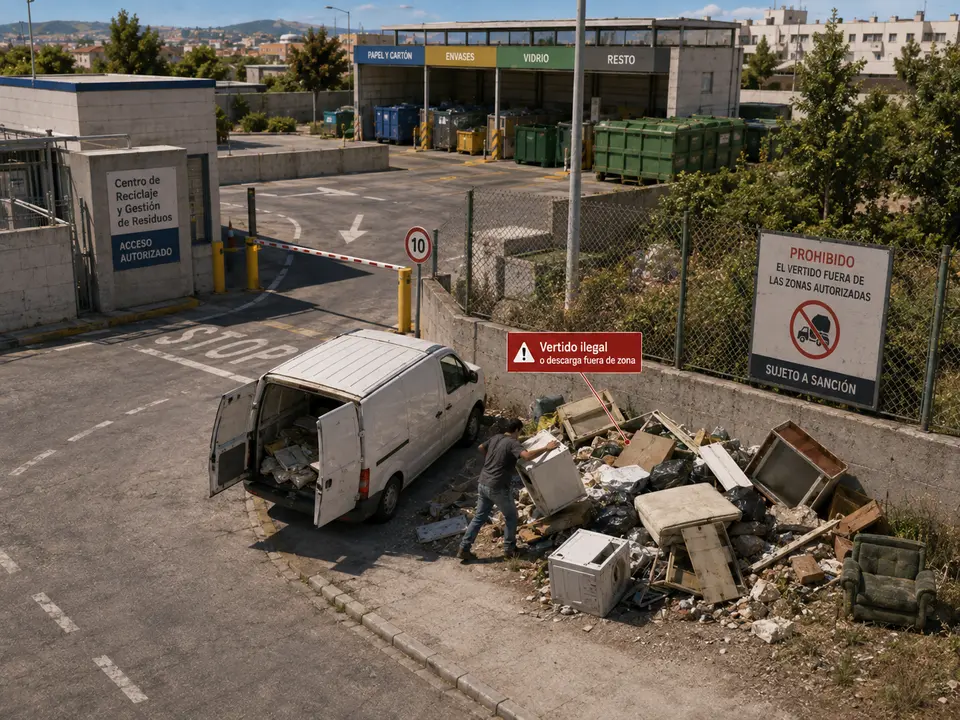
CAM-426The pile is growing on the wrong side of the fence
«Alert me if anyone unloads material outside the site, on the shoulder or against the fence, in or out of opening hours.»

CAM-62Breakdown on the shoulder
«Tell me if someone gets out of their car on the shoulder and stands next to the traffic.»
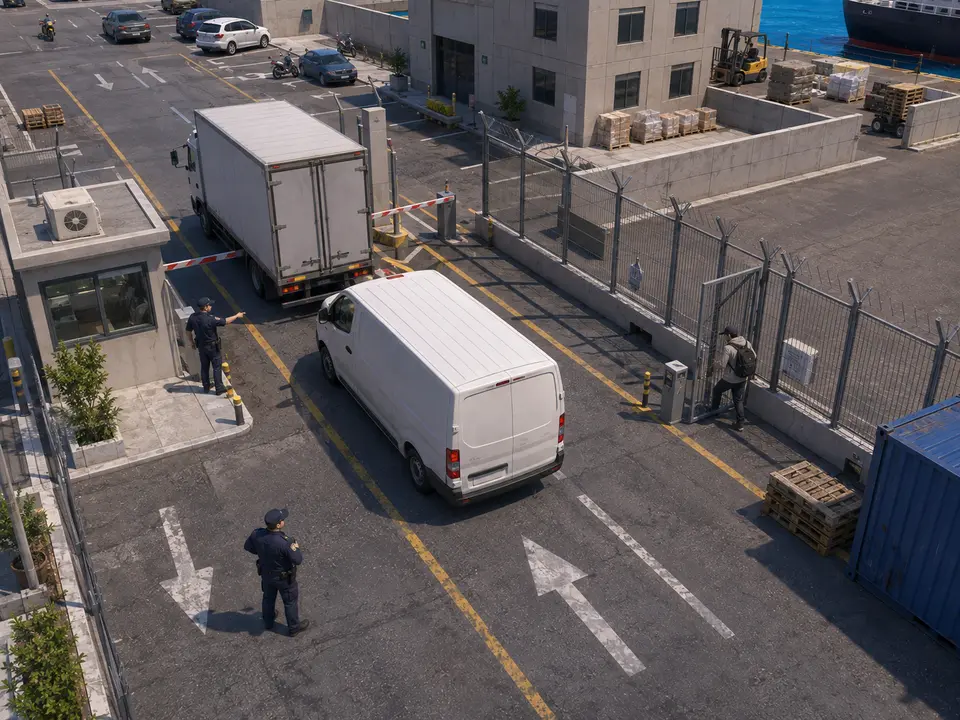
CAM-560The gate has been blocked by a stopped vehicle for eight minutes
«Tell me if a vehicle stands still for more than three minutes in the gate lane.»
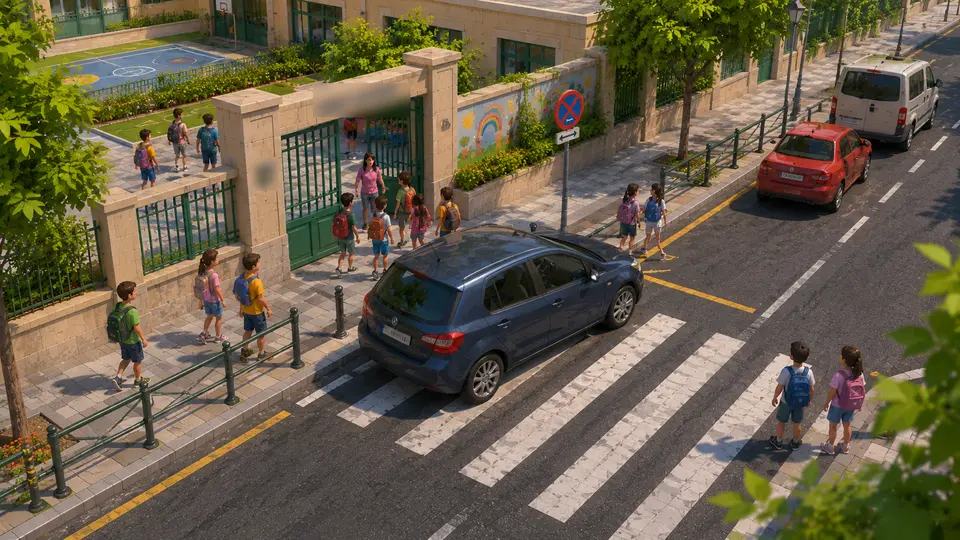
CAM-142A car stopped on the crossing
«Tell me if a car is stopped on the crossing by the gate, and how long it has been there.»
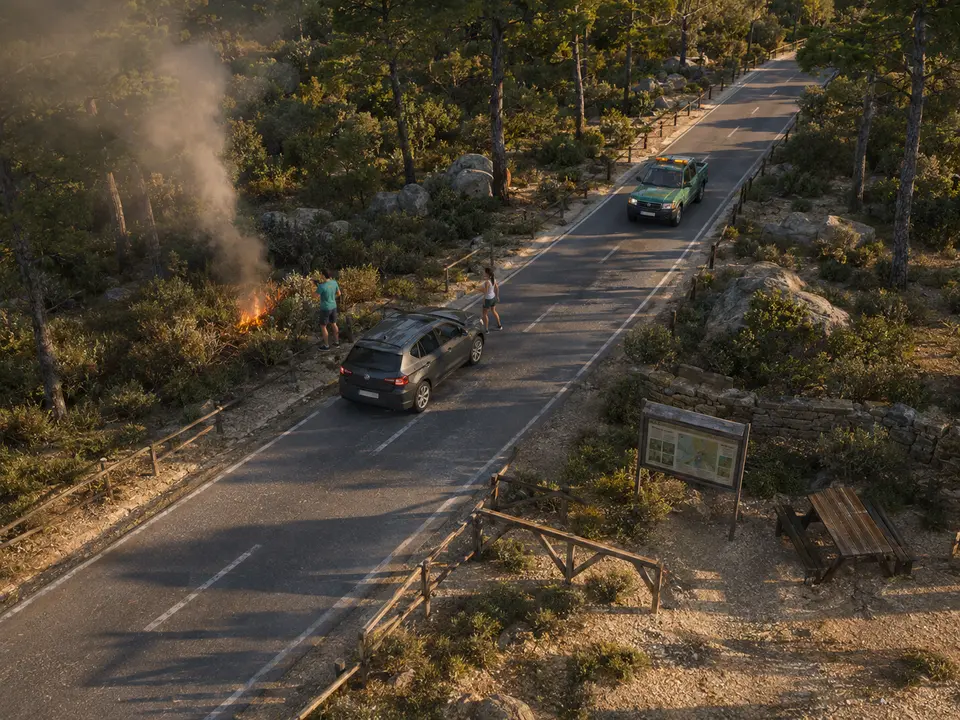
CAM-568How many cars drive up the hill, and how many park on the shoulder
«Tell me if there are more than twenty cars parked on the shoulder.»


What it doesn’t do
IRIS does not know why the vehicle is stopped. It does not tell a breakdown from a phone stop or from a service vehicle working there; exceptions are written into the rule by zone and time band.
Nor does it call the recovery truck or close a lane. It says something is standing still where nothing should be, since which minute and at which point. The rest is decided and done by a person.
Questions
- Does it tell a breakdown from an ordinary stop?
- No, and it doesn’t need to. What the rule is asked to do is simpler: make sure no vehicle stays still in a place where none should be. It doesn’t matter whether it’s a breakdown, a phone call or a stop to drop someone off; on a highway shoulder, in a gate lane or on top of a crossing, none of the three should be happening. The reason is seen by the person who opens the camera.
- How long does it have to be stopped before it alerts?
- You decide, which is why there’s no single number. In a busy gate lane, three minutes is already a problem. On a highway shoulder you want to know almost immediately, because the risk is somebody getting out of the car. Outside a school at arrival time, one minute on top of the crossing is one too many. It’s written once per zone and per time band, and from then on it applies itself.
- Does it work inside a tunnel or a parking lot?
- Yes, and it usually works better than outdoors. In a tunnel or on a parking level the light is always the same, there’s no low sun and no rain, and the framing never changes. They’re also places where a stopped vehicle matters far more: in a tunnel because there’s no way around it, and on a closed level at night because nothing should be there at all. The rule is the same; the minutes and the hours change.
- What about maintenance vehicles that work there?
- They raise an alert like anyone else, unless the rule says otherwise, and that’s a decision worth taking slowly. You can exclude a zone within a time band, or keep the alert but mark it as expected so it doesn’t sound. What we don’t recommend is switching it off entirely “because there is always someone working there”: the day the stopped vehicle isn’t the maintenance one, that camera will be off out of habit.
The real interface, step by step
A camera looks. IRIS understands what it sees.
An extract of the real screen, no voice-over and hands-free. Each round poses another situation. What sits behind it is a good deal bigger than what you see.
- It lands in the tray
- You open it
- You confirm or dismiss
Not seeing yours here?
These words are the ones we have built, not the ones IRIS understands. The list falls short on purpose: you ask for it in a sentence, and sentences don’t run out. Tell us what is in front of your cameras and we’ll tell you whether it understands it, or not yet.
And the best part
No building work, no trenches, no new cabling:the cameras are already up and already looking.
What changes is what happens to the picture. It used to be stored and never seen; now it’s understood while it happens, on the same equipment you bought years ago.
Tell us your problem and we’ll say whether IRIS understands it, or not yet.
A person answers, the same working day.