Solutions by typePersonal safety
What if the flash happens with nobody there?
The flash nobody was there to see
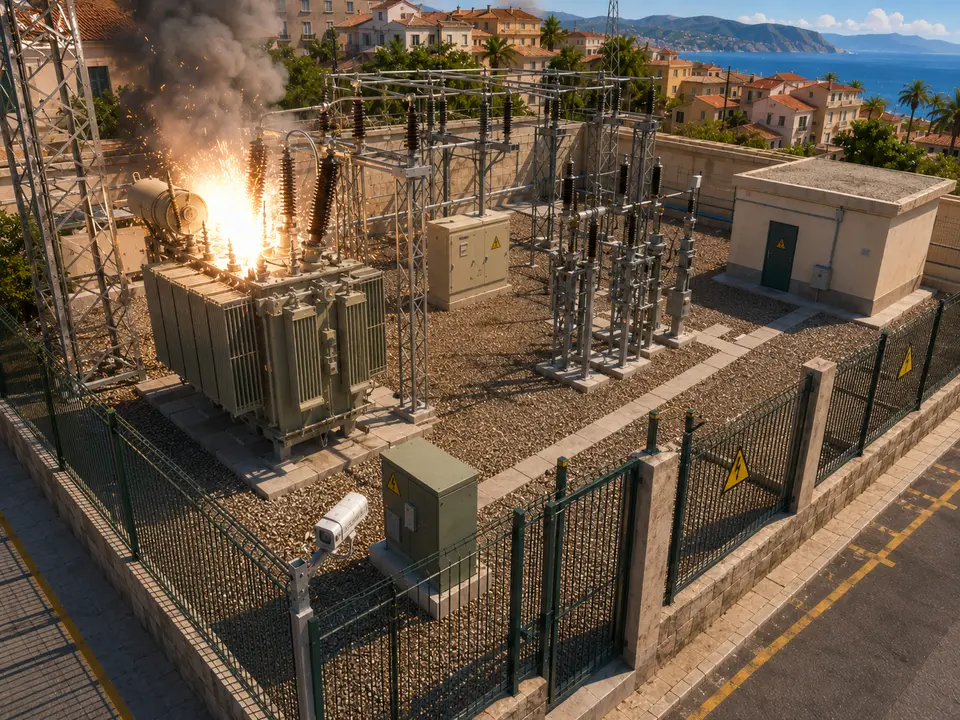
It is 04:12 and there is nobody in the yard. A flash goes off in one cell, the protections trip, and within two seconds supply is restored on its own. In the morning the log shows an alarm with no explanation and a breaker that operated. Somebody will have to decide whether that was a bird, a dirty insulator string or the beginning of a fault. And there is nothing to look at.
1 cameras across 1 sectors
What IRIS is
IRIS watches the cameras for you.
IRIS Neural is an artificial intelligence that watches the cameras you already have and understands what happens in front of them. When something important happens —or something you told it you need to keep an eye on—, it alerts you; and whatever can be counted, it counts in numbers. All day long, without anyone having to watch a screen.
You tell it what you need to watch, and IRIS does it.
Works with the cameras you already have. Nothing to replace.
A person replies, not a form.
- Your footage never leaves your premises.
- It doesn't identify people.
- Certifications →
This is how you ask for it
«If a flash or an arc goes off in the yard, I want the video with the exact second and which piece of equipment it came from, even with nobody there.»
With an alarm log and nothing else, the decision is taken blind. Either you send a crew to check forty cells, which is a full day and a planned outage, or you write the alarm down as transient and move on. Almost always the second is chosen, because almost always it is right. The problem is the day it was not.
You decide once
It is decided once, and here it is shorter than in other scenes because there are no schedules and no exceptions. Maintenance marks on the image which part of the frame is which cell and says who receives the alert. The sentence reads: if a flash appears where none should be, at any hour, then keep the video, note the exact second and say which equipment it came from.
An arc flash lasts less than a blink and releases more heat than the surface of the sun. In a high-voltage yard there is almost never anyone in front of it, and that is not the good news it sounds like: it means there is no witness when it happens. All that is left is an alarm log saying which protection tripped, but not why.
And without the why, the decision to be made in the morning is a bet. Sending a crew to inspect forty cells costs a day and a planned outage; writing the alarm off as transient costs nothing and is almost always right. The day it is not, the same cell arcs again weeks later, and this time there is a crew working beside it. Between the first and the second there were weeks of margin that nobody could use, because nobody ever saw the first.
IRIS watches that yard by night and by day. When a flash appears where none should be, it keeps the video with the exact second and says which piece of equipment it came from. With that, the crew climbs up to inspect that cell rather than all forty. It is the one scene in this section where the alert saves nobody that day: it saves the people who go up next month.
What changes
Before, a night-time flash left two things: a line in the alarm log and an argument. The maintenance manager decided on instinct whether an inspection was worth it, with nothing to look at. Now they open the video, see the flash at the exact second and see which cell it came from. The inspection stops being a bet.
Where we have seen it
CAM-346The flash nobody was there to see
«If a flash or an arc goes off in the yard, I want the video with the exact second and the equipment it came from, even if nobody is there.»

What it does not do
IRIS does not measure energy or temperature, and it does not say whether the equipment was damaged. It sees a flash where none should be and keeps the video with the exact time.
The diagnosis is made by whoever goes up to inspect the cell, with their instruments. What IRIS adds is that this person knows which cell to go to, and with what image in front of them.
Questions
- Is it useful if nobody is in the yard?
- Yes, and that is exactly the point. An arc in a high-voltage yard usually strikes with nobody in front of it, which is why there is almost never a witness. All that turns up the next day is an alarm in the log and a breaker that operated, with no explanation of why. IRIS keeps the video of the moment even with the yard empty, and that video is the difference between knowing what happened and guessing.
- Does IRIS know which equipment the flash came from?
- Yes, from its position in the image. Each cell occupies a fixed spot in the frame, and that spot is marked once when the camera is installed. From then on, when a flash appears, IRIS says which part of the yard it was in and which piece of equipment occupies that point. It reads no labels and connects to nothing in the electrical system: it knows where it happened because it knows what sits in each part of the image.
- Does IRIS measure the energy of the arc?
- No. IRIS sees a flash where none should be and keeps the video with the exact time, but it measures no joules, no degrees, and it does not say whether the equipment was damaged. That is done with instruments and by climbing to the cell. What IRIS adds comes before all of that: that an image exists at all of an event which would otherwise have left nothing but a line in an alarm log.
- Can you search the recordings for it afterwards?
- Yes. You can ask for it directly: show me every flash in the yard over the last week. IRIS returns the moments with their time and camera, and they can be watched one after another in a couple of minutes. That turns a month of recording, which nobody is ever going to watch in full, into a short list of things genuinely worth watching. And if the same piece of equipment appears three times in that list, there is no longer any argument about where to start.
Every simulation
Something has spilled
Tell me if there is liquid or foam outside its place and it is still there two minutes later.
- The sentence
- Where it applies
- What it finds
- The same rule
Not seeing yours here?
These words are the ones we have built, not the ones IRIS understands. The list falls short on purpose: you ask for it in a sentence, and sentences do not run out. Tell us what is in front of your cameras and we will tell you whether it understands it, or not yet.
And the best part
By the eighth hour of a shiftnobody watches the way they did in the first. That is not a flaw.
It is being human. A camera has no eighth hour: at four in the morning it understands what it understood at noon, and it speaks up just the same.
Tell us your problem and we will say whether IRIS understands it, or not yet.
We reply the same working day.