Solutions by typePersonal safety
What if help arrives once it’s already over?
It blew up in ten seconds
It’s 9:30 p.m. at the emergency department desk. They have been waiting three hours, and a family comes up to the glass. Two people close in, voices rise, and one hits the screen with an open hand. The receptionist steps back and looks for the security officer, who’s at the other end of the building and has seen nothing. By the time he arrives, it’ll be over.
9 cameras across 6 sectors
What IRIS is
IRIS watches the cameras for you.
IRIS Neural is an artificial intelligence that watches the cameras you already have and understands what happens in front of them. When something important happens —or something you told it you need to keep an eye on—, it alerts you; and whatever can be counted, it counts in numbers. All day long, without anyone having to watch a screen.
You tell it what you need to watch, and IRIS does it.
Works with the cameras you already have. Nothing to replace.
A person replies, not a form.
- Your footage never leaves your premises.
- It doesn't identify people.
- Certifications →
This is how you ask for it
«Tell me if there is sudden physical contact between people, and tell me which camera.»
What’s left of this isn’t a video: it’s a person who doesn’t want to go back to that desk the next day. It almost never ends up as something you can show, because nobody was watching and the recording surfaces three days later. It’s paid for in sick leave, in staff turnover, in one more guard hired just in case, and in the team’s certainty that nobody gets there in time.
You decide once
Security decides once what counts as an alert, who gets told and at what priority. In one sentence: if there’s sudden physical contact between people, or a group closes in where it used to be spread out, then open that camera at the control desk, tell the nearest team and keep the video from before. Decided once, it holds for all forty cameras, at any hour of the day.
A fight lasts less time than it takes to cross a lobby. Ten seconds, fifteen. The person on the receiving end is almost never the one who started it, and whoever could stop it is usually on another floor or looking at one of the other forty screens. In a school yard, on a platform, in the common room of a prison: it always happens exactly where nobody’s looking at that moment.
And there’s a second thing working against you: the circle. As soon as something starts, people gather around. What was a group spread across the yard becomes a closed ring that hides precisely what needs to be seen. From the post there is nothing left to see. By the time the ring opens, the scene is over and only the result on the floor remains.
IRIS alerts on movement, never on the person. Sudden gestures, bodies coming together at once, a group closing in where it used to be spread out, someone striking a screen. It identifies nobody, recognizes no faces and puts a label on nobody. It opens the right camera within seconds, with the video from just before, and lets a human look. Arriving in ten seconds and arriving in two minutes aren’t the same job, and they don’t end the same way.
What changes
Before, the operator had forty cameras in front of them and the first warning came by phone, from somebody who can’t say where they are. Now the camera arrives already open with the exact minute and the video from before, and they know whether to send one person or three. In a school something else changes: the corner that shows up three weeks running becomes a place that gets watched.
Where we have seen it

CAM-21Fight in a public space
«Tell me if there is a fight in the street, and how many people are gathering around it.»
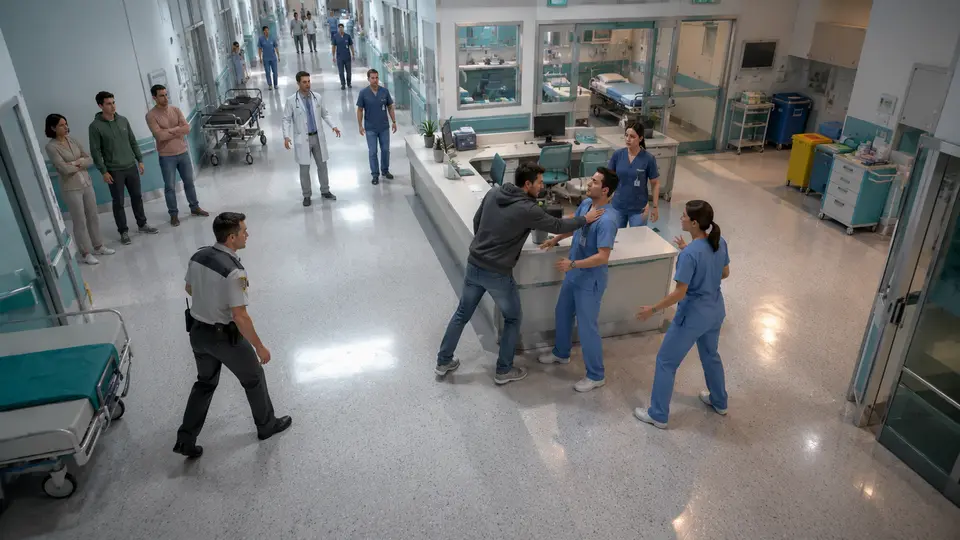
CAM-124Tension at the front desk
«Tell me when two people get very close at the desk and start moving abruptly, or when somebody bangs on the screen, so that someone gets there sooner.»
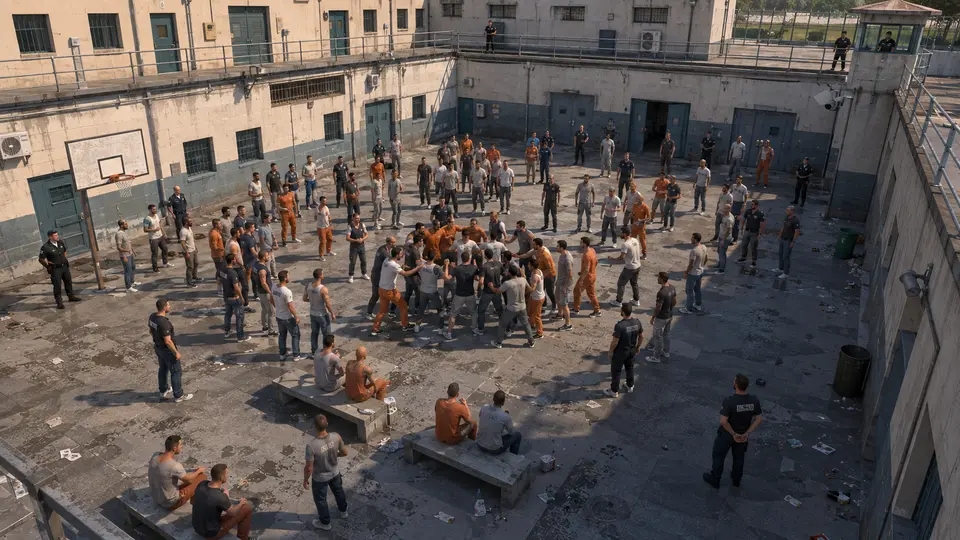
CAM-103A ring closes in the yard
«Tell me when the people in the yard stop being spread out and all bunch up in one spot, because a closed ring hides what is inside it and you can’t see in from the tower.»

CAM-133A closed circle in a corner
«Tell me if a circle closes around a child in the corners of the yard we can’t see from where we stand, and tell me if it repeats in the same place.»
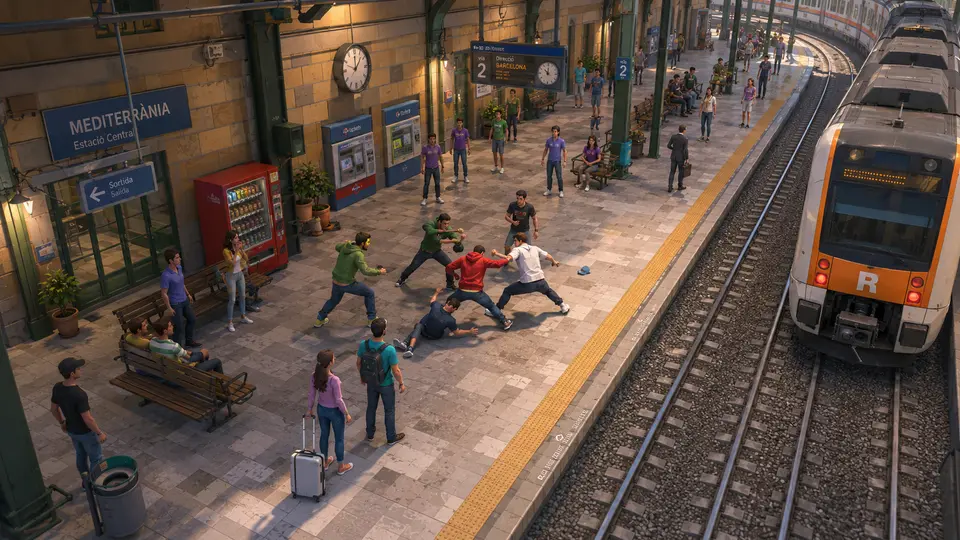
CAM-82Fight on the platform
«Tell me if there is a fight on a platform, and more urgently if a train is coming in.»
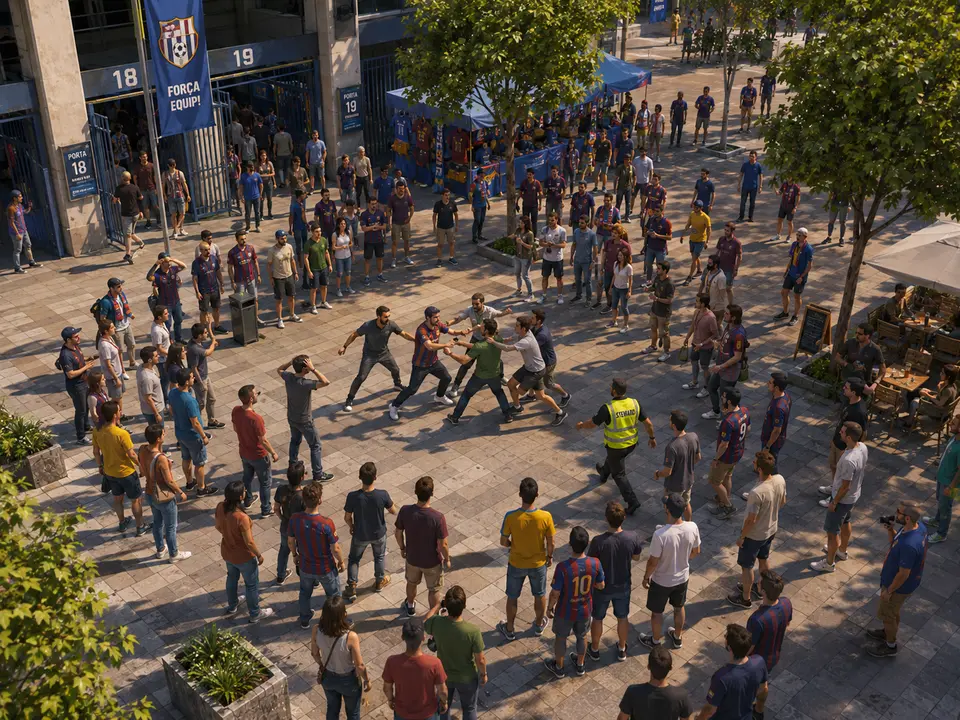
CAM-491A scuffle and a ring of people closing in
«Tell me if there is physical contact between people or a ring closing in on the plaza, and tell me which gate.»
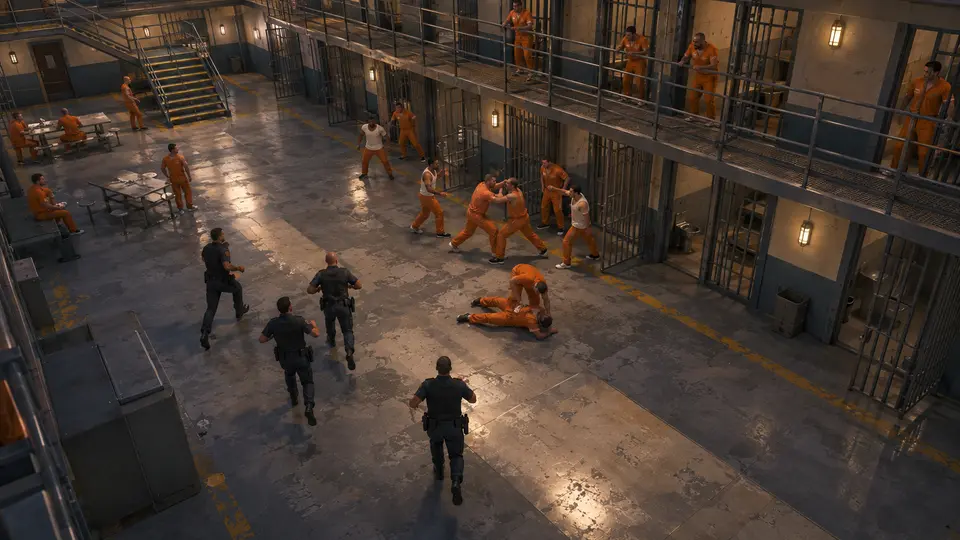
CAM-102Fight in the day room
«Tell me the moment two people come to blows in the day room, and tell me too if someone goes down and does not get back up.»
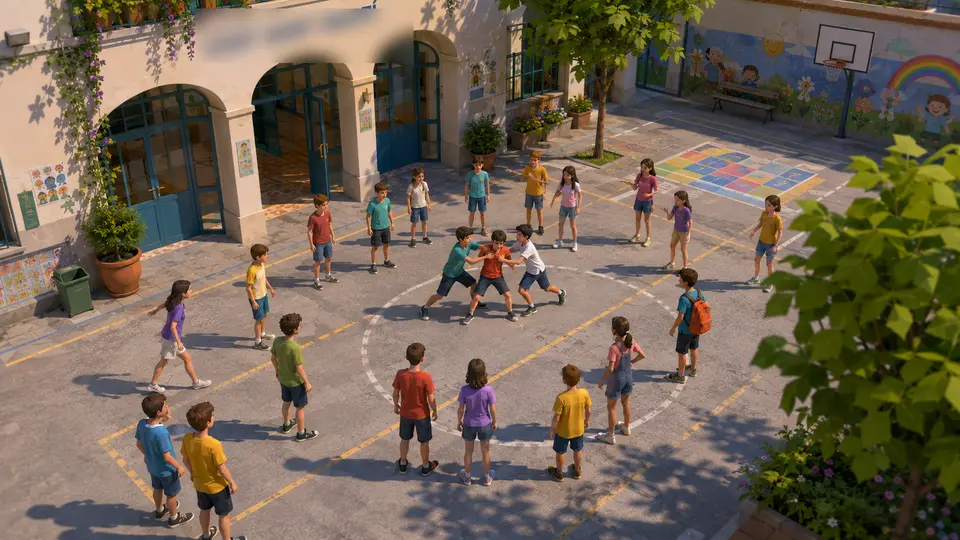
CAM-135A scuffle in the schoolyard
«Tell me when there’s a scuffle between kids in the schoolyard, and tell me at ten seconds, not once the whole ring has formed.»
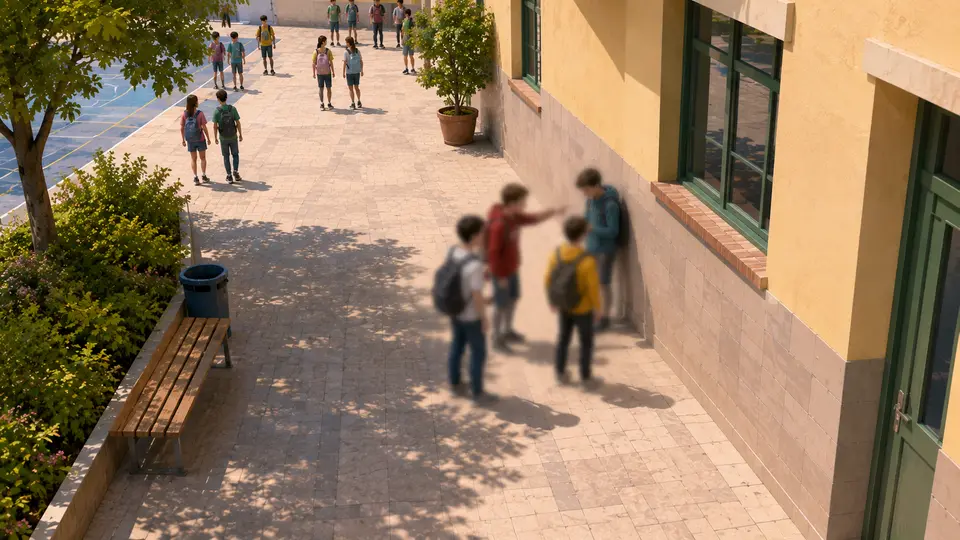
CAM-137The fight that draws no crowd
«Tell me if someone in the side walkway ends up against the wall with several others closing off the way out, even if nobody else comes near.»


What it doesn’t do
IRIS cannot tell a fight from a hard hug, from horseplay or from an emotional goodbye, and it does not read intentions. It flags that something abrupt happened there so a human looks.
And it identifies nobody: it does not recognize faces and puts a label on nobody. Who is in the right, and what happens next, is always decided by a person with the video in front of them.
Questions
- Does IRIS decide who started it?
- No, and it must not. IRIS does not identify people, does not recognize faces and puts a label on nobody. What it does is open the right camera at the right moment, with video from a few seconds earlier, so a person can see what happened and decide what to do. Your organization defines the rules and the limits; IRIS handles the repetitive part. The judgment stays human; what changes is that it can now be made in time.
- Can it tell horseplay from a real fight?
- Not always, and that should be said upfront. Play-fighting and the real thing look very similar in an image, and IRIS doesn’t read intentions. That’s why the alert isn’t an accusation: it’s look at this camera now. In a school yard, having an adult walk over and look costs very little and harms nobody. What’s expensive is the circle nobody sees for three weeks running in the same corner.
- Why does it also alert when a circle closes?
- Because the circle is exactly what hides what is inside it. In a school yard or a prison yard, people spread out is the normal state. Everyone converging on one spot at once is the sign that something’s happening there which can no longer be seen from the post, and it usually comes before the blows. What’s more, where the circle keeps forming says a lot: if it’s always the same corner, the problem isn’t about that day.
- Is the video from before the incident kept?
- Yes, and it’s usually the most useful part. The alert arrives with the preceding seconds, which are what explain what happened before the first blow: who approached whom, whether something was in the way, whether it came out of a long argument. Without that, the person deciding only sees the ending. With it, the video stops being an archive somebody digs up three days later and becomes part of the alert.
The real interface, step by step
You set the rule once. IRIS applies it every time.
You will see a summary of the interface, played step by step and hands-free. Each round starts with another case. The complete tool doesn’t fit in a demo.
- The rule gets built
- It goes to every camera
- Published, it watches alone
- And then it fires
Not seeing yours here?
These words are the ones we have built, not the ones IRIS understands. The list falls short on purpose: you ask for it in a sentence, and sentences don’t run out. Tell us what is in front of your cameras and we’ll tell you whether it understands it, or not yet.
And the best part
There’s a moment when you can still act.It’s while it’s happening, and it’s short.
After that, all you can do is tell the story. IRIS speaks up at that moment — camera, time and images — and whoever is on call decides what to do with it.
Tell us your problem and we’ll say whether IRIS understands it, or not yet.
A person answers, the same working day.