Solutions by typeMobility analysis
How long before anyone knows a vehicle is coming head-on?
Going the wrong way, and nobody knows yet
Ten past seven in the evening, on the curved ramp between two levels of the parking lot. The arrow painted on the floor points down. A red car is coming up that same lane with its lights on, and coming up fast. The curve is blind: anyone coming down won’t see it until it’s fifteen feet away. In the control room sixteen cameras share one screen, and this is one of them, bottom right.
4 cameras across 4 sectors
What IRIS is
IRIS watches the cameras for you.
IRIS Neural is an artificial intelligence that watches the cameras you already have and understands what happens in front of them. When something important happens —or something you told it you need to keep an eye on—, it alerts you; and whatever can be counted, it counts in numbers. All day long, without anyone having to watch a screen.
You tell it what you need to watch, and IRIS does it.
Works with the cameras you already have. Nothing to replace.
A person replies, not a form.
- Your footage never leaves your premises.
- It doesn't identify people.
- Certifications →
This is how you ask for it
«Alert me the moment a vehicle enters the wrong way, and tell me where it got in and which stretch it is on.»
In a parking lot that ends in bodywork and an insurance claim. On a quarry haul road, with a loaded truck coming down head-on, it ends in something else. And on a highway on-ramp the margin is seconds: whoever enters the ramp backward meets vehicles at a hundred and twenty that aren’t expecting anything ahead of them. In all three places the camera was recording from the start, and in none of them did anyone raise the alarm.
You decide once
You decide this once. You say which direction each lane, ramp and on-ramp runs, and who gets told on each stretch: the parking lot attendant, the road control center or the mine control room. IRIS checks it on every camera looking at those lanes, at any hour, and nobody has to repeat it. If the direction is reversed one day for roadworks, you change the rule and that’s that.
Wrong-way driving is one of the few cases where the value of an alert is measured in seconds. There’s no margin to review a video, to call and ask, or to wait for someone to look at the right quadrant of a screen split sixteen ways. Either the alert arrives while the vehicle is entering, or it arrives to explain what happened.
The good news is that this is one of the clearest things a camera can see. A lane’s direction isn’t an opinion: it’s painted on the ground, it’s on the sign and it’s in how everything else moves. A vehicle traveling against its lane stands out without ambiguity, which is why the alert is reliable and doesn’t turn into noise. The rule is written once, stretch by stretch, and from then on IRIS alerts with the camera open, the point where it entered and the direction it is going.
And then there’s the other part, which almost nobody asks for at first and everybody ends up using: the record. When the same on-ramp racks up eight wrong-way entries in a year, that isn’t a distracted driver anymore, it’s badly placed signage. The video stops being for the insurance claim and starts being for fixing the place. Most black spots are visible on a map long before anyone dies at them, provided someone is counting.
What changes
Before, you learned about it from another driver’s phone call, from the crash, or from reviewing the recording afterward. The operator had no way of watching that lane in that second. Now the alert comes in on its own, with the camera and the stretch, and there’s time to light a sign, call the patrol or stop traffic on the haul road. And every case is logged, so by year end there is a map of where it happens.
Where we have seen it

CAM-11Wrong-way vehicle
«Tell me if a vehicle is driving the wrong way, and on which stretch.»
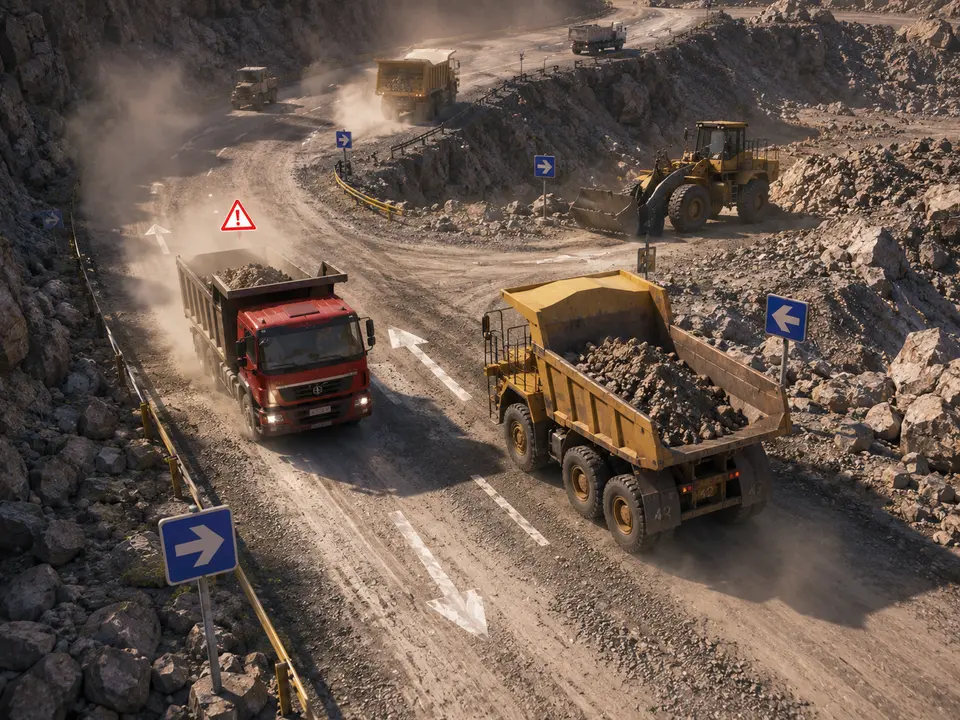
CAM-387A truck coming head-on down the wrong lane
«Tell me the moment a truck enters the haul road the wrong way, and show me where it came in.»
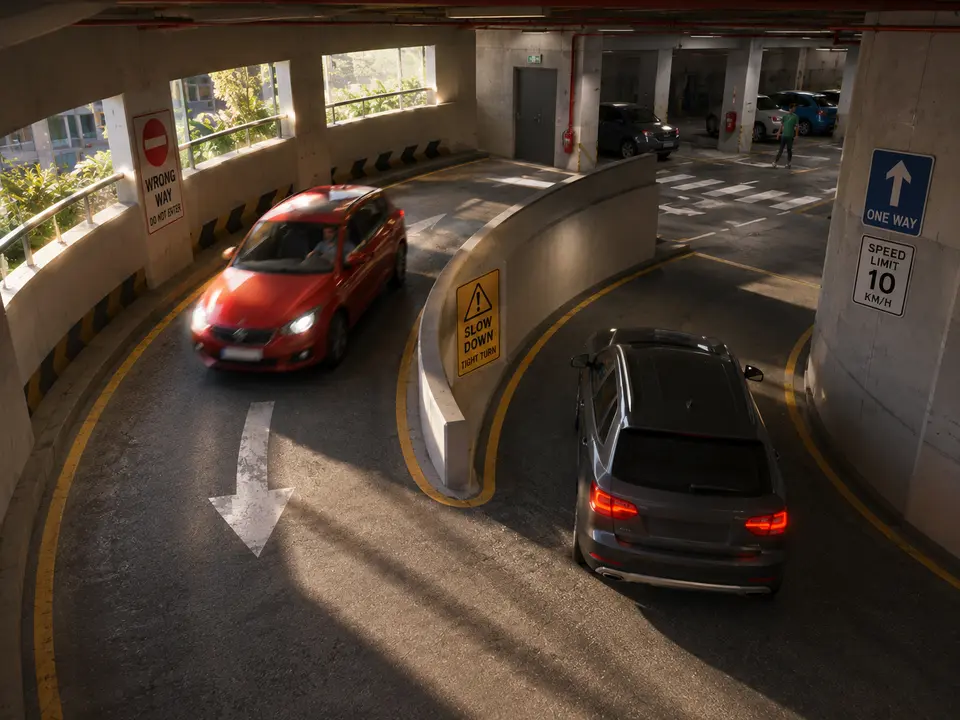
CAM-469A car coming up the ramp the wrong way
«Tell me when a car comes up the down ramp or goes above the speed we have set.»

CAM-69On-ramps in and out
«Tell me if a vehicle stops inside the hatched area or if someone enters by the exit the wrong way.»


What it doesn’t do
IRIS does not stop the car. It says the vehicle is going the wrong way and shows where it got in; the person is the one who closes a lane, makes the call and decides. It also does not know why: it could be a lapse, an obscured sign, or a service vehicle that is allowed to drive that way, which is why the exception is written into the rule. And if the lane is not fully in frame, the alert will come later than it is useful.
Questions
- How does it know which way a lane is meant to run?
- You tell it once. On each camera’s image you mark which direction is correct for that lane, ramp or on-ramp, and from then on any vehicle moving the other way raises the alert. It isn’t inferred from traffic and not learned on its own, because on a lightly used lane that would lead to mistakes. It’s defined and it stays fixed. If roadworks reverse the direction for a month, you change the definition for that month and then put it back.
- Does it produce a lot of false alerts?
- Usually not, and the reason is that the criterion here is barely ambiguous. A whole vehicle moving against its lane is a clear movement, not a nuance. What does create noise if it isn’t tuned is the edge cases: a parking maneuver, a vehicle backing up to let someone through, a car correcting a badly taken entry. That’s why the rule includes a minimum distance traveled and doesn’t fire on three feet of backing up. That tuning is done at commissioning, looking at the real camera.
- Does it work for mine trucks the same as for a highway?
- Yes, and in a mine it usually matters more. The approach is identical —a lane has a direction and something’s going against it— but the stakes differ: a loaded truck coming down a narrow haul road has nowhere to pull over, and neither does whoever is coming the other way. On a highway the speed is higher but there’s a shoulder. What’s adjusted per site is who’s alerted and how urgently, and that’s set by operations, not by the system.
- Can we see how many times it happened this year?
- Yes, and it ends up being the most used part. Every alert is kept with its time, its camera and its video, so you can ask for the list of one on-ramp and see that it repeats at the same hour or at the same point. That stops being an incident and becomes a signage problem you can fix. The video stops being just a justification for a claim and starts being the reason there is no next claim.
See it for yourself
No extra alarms here. Just what needs looking at.
Not a recorded video, not an explanatory drawing: a summary of the real screen, with a different case every time it starts. There’s a lot more behind it.
- You draw the line
- It counts by itself
- A number comes out
Not seeing yours here?
These words are the ones we have built, not the ones IRIS understands. The list falls short on purpose: you ask for it in a sentence, and sentences don’t run out. Tell us what is in front of your cameras and we’ll tell you whether it understands it, or not yet.
And the best part
Nobody covers the night shift:the camera that is already on covers it.
It doesn’t tire, it doesn’t blink and it doesn’t go for coffee. What happens at night is understood just as it would be at midday, and whoever is on duty hears about it while it’s happening.
Tell us your problem and we’ll say whether IRIS understands it, or not yet.
A person answers, the same working day.