Solutions by typeLogistics efficiency
What happens on the ramp when nobody’s watching?
A step that turns into a fall
It’s 11:05 a.m. at dock 12. The trailer has crept forward three feet and pulled away from the door: between the truck floor and the yellow dock leveler there is now an open gap, and below it five feet of empty air down to the yard. Inside the trailer a worker in a safety vest is still stacking, with his back turned. He hasn’t looked around yet. A forklift is coming toward the door with a raised pallet.
5 cameras across 3 sectors
What IRIS is
IRIS watches the cameras for you.
IRIS Neural is an artificial intelligence that watches the cameras you already have and understands what happens in front of them. When something important happens —or something you told it you need to keep an eye on—, it alerts you; and whatever can be counted, it counts in numbers. All day long, without anyone having to watch a screen.
You tell it what you need to watch, and IRIS does it.
Works with the cameras you already have. Nothing to replace.
A person replies, not a form.
- Your footage never leaves your premises.
- It doesn't identify people.
- Certifications →
This is how you ask for it
«Tell me the moment a trailer moves off the dock while the dock leveler is down or somebody is still inside.»
Three feet-and-a-half fall with a pallet on top isn’t a scare: it’s an ambulance, an incident report, an investigation and a warehouse at a standstill. And even when nobody falls, the ramp is paid for in small change every day: the line of cars backing out into the street because the entrance is slow, the box that goes down the wrong chute and turns up four hundred miles away, the car driving up the down ramp.
You decide once
You decide this once. You say which ramps are watched, when the trailer counts as having moved, how many cars are too many on the entry ramp and who gets the alert: if the trailer pulls away from the dock while the dock leveler is down, alert the supervisor with the camera open and a call to the driver. IRIS applies it at every dock and on every shift, with nobody having to keep an eye out.
A ramp is a place where things move on their own. That’s why it exists: so goods come down without anyone pushing them, so a car climbs without steps, so a trailer sits level with the warehouse floor. And that’s why it’s dangerous. On a ramp a small mistake doesn’t stay put: it rolls. A trailer that creeps forward three feet. A box that drops into the chute next door. A car that gets the direction wrong on a curve between two floors.
A ramp is also always the narrowest point. People walk in, goods come down and vehicles drive up through the same place, in single file. When something jams there, everything behind it jams too: twenty minutes of line out on the street, one stand packed while the walkway beside it is empty, twelve cars waiting at a ticket column. And whoever is inside the building, or up in the stand, can’t see it, because the problem is down on the slope. And there’s one more thing, which on ramps is almost a law: the person in danger is always the one who can’t see the danger. The worker loading inside the trailer has his back to the door. The driver pulling away can’t see whether anyone is still inside. The car climbing the down lane can’t see what is coming until it’s already on top of it. None of them is doing anything odd; they simply lack the one angle that would let them notice.
IRIS watches the whole ramp: the gap opening between truck and floor, who’s still inside the trailer, how many cars are waiting and how long the last one has been there, which way the one climbing is going. When something falls outside what you decided, it says so at once, with the camera open and the video. It doesn’t brake the truck or close the ramp: that belongs to the dock and to people. What it does is make sure the right person finds out while it can still be stopped.
What changes
Before, the only defense was that whoever was inside remembered to look and the driver didn’t pull away without warning. Now, the moment the trailer separates by a hand’s width, the supervisor has the camera open and the dock number, and the driver gets a call before the second foot. The entry line works the same way: instead of finding out when it’s already in the street, the second lane opens in time.
Where we have seen it
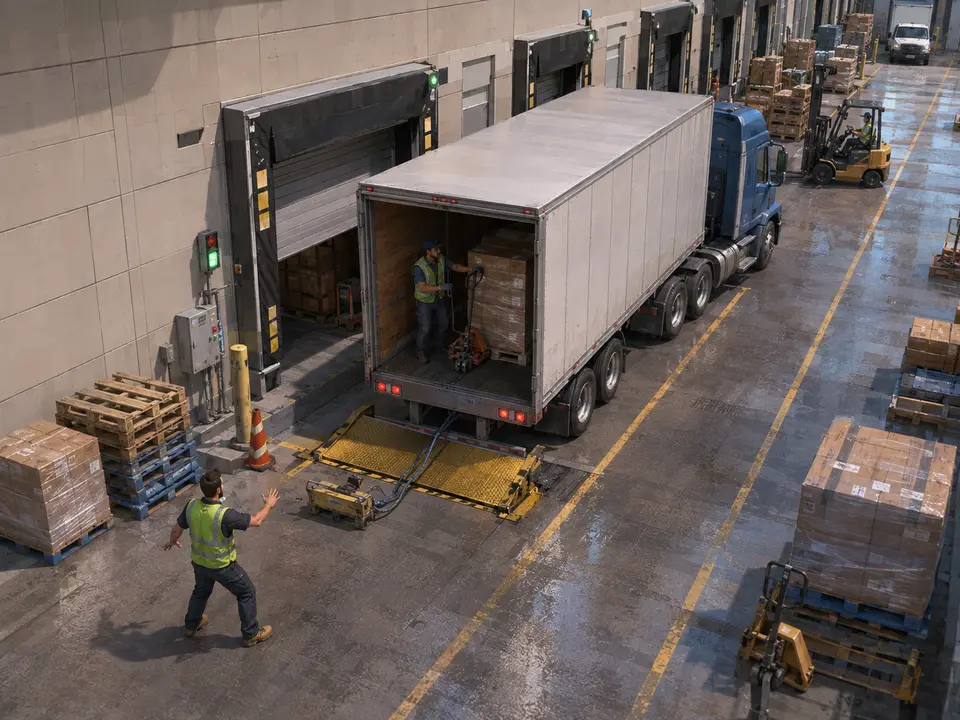
CAM-264The truck pulls away with a worker still inside
«Tell me the moment a trailer moves off the dock while the dock leveler is still down or somebody is still inside.»
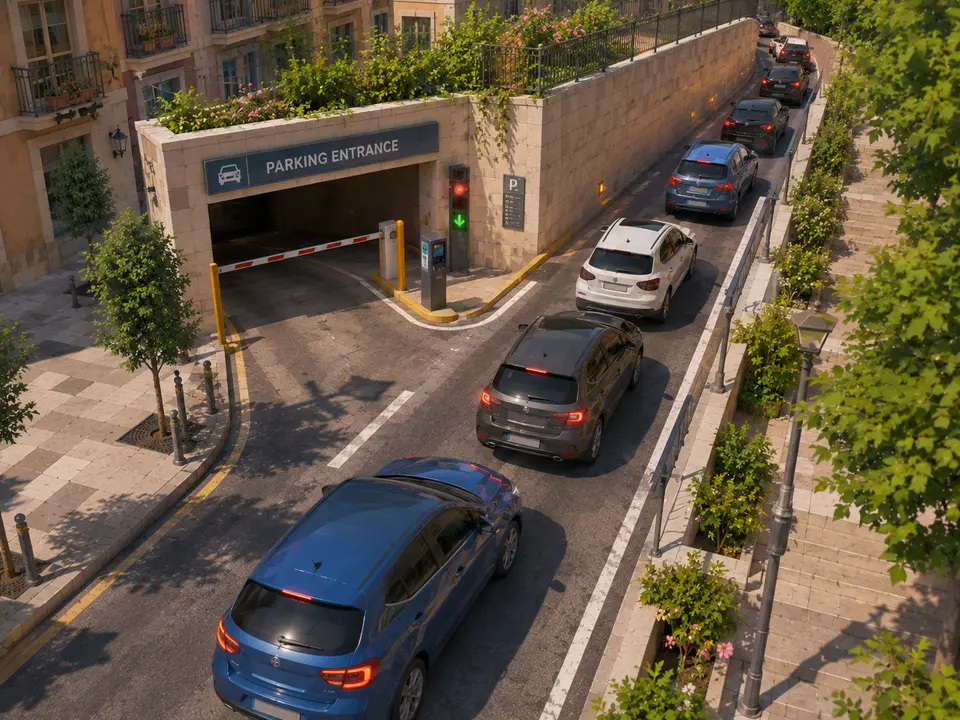
CAM-463Six cars waiting and the line is already out on the street
«Tell me when more than five cars are waiting on the ramp, and how long the last one has been there.»
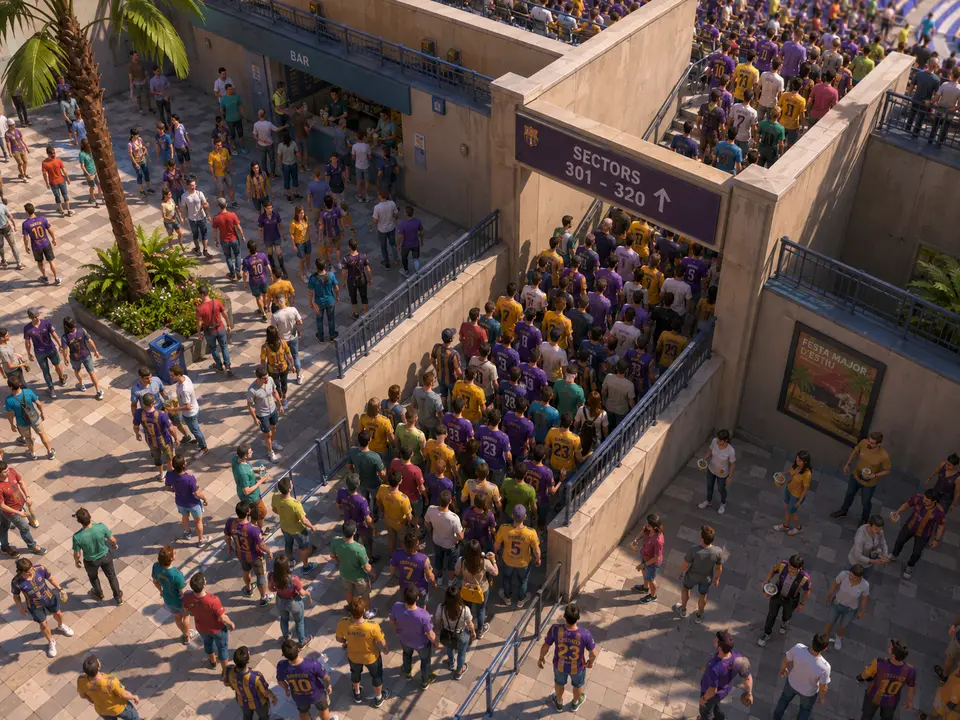
CAM-484The ramp is packed and the concourse next to it is empty
«Tell me when more people go into a ramp than come out at the top for more than two minutes and the passage next to it is empty.»
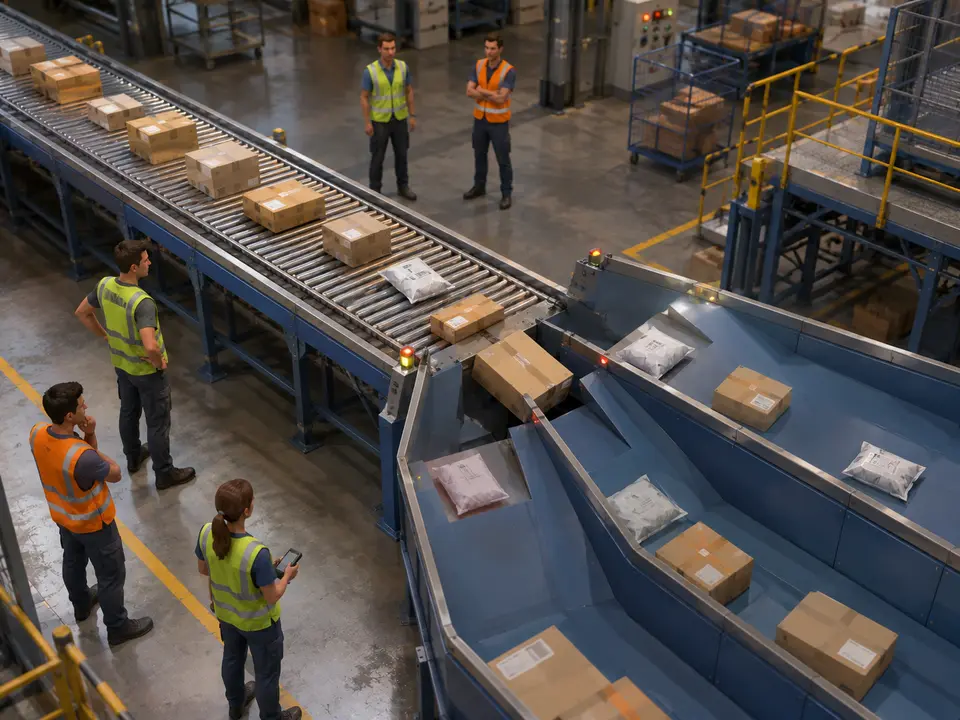
CAM-267A big box dropping into the wrong chute
«Tell me when a package drops into a chute that is not the one on its label, and show me the picture of the label.»
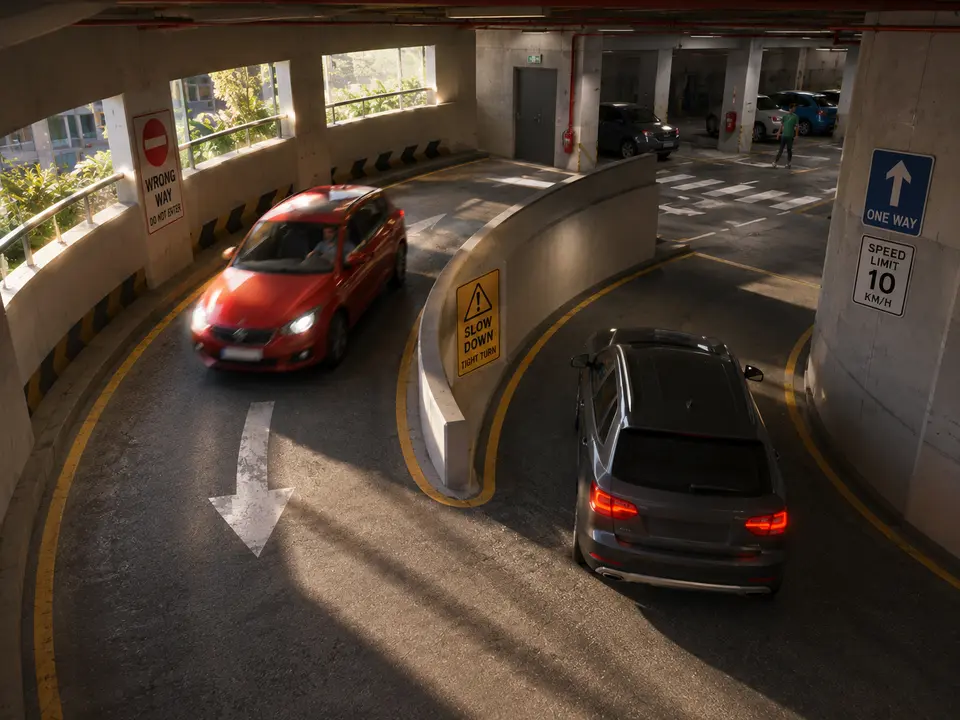
CAM-469A car coming up the ramp the wrong way
«Tell me when a car comes up the down ramp or goes above the speed we have set.»


What it doesn’t do
IRIS does not hold the truck. It is no substitute for the wheel chock, the trailer restraint or the dock light: those remain the first barrier and no camera replaces them.
And it does not know whether the person inside is one of your staff or the driver. It sees that somebody is in the trailer while the trailer moves, and that alone is reason enough to speak up. Who they are and why they were there is added by whoever watches the video.
Questions
- How does IRIS know the trailer has moved?
- Because it watches the gap. IRIS needs no sensor on the truck: it sees the line where the dock leveler ends and the trailer floor begins, and when a void appears there that wasn’t there before, the truck has pulled away. It says so from the first hand’s width, not once you can see the yard underneath. The alert carries the camera, the dock number and the video, and if somebody was still inside the trailer it says that too.
- Does it work on a parking lot ramp too?
- Yes, and it’s the same work asking a different question. In a parking lot IRIS counts how many cars are waiting on the ramp and how long the first one has been there, and alerts when they pass the number you set, so a second lane opens before the line reaches the street. And it alerts if a car drives up the down lane, which on a curved ramp between floors is one of the worst things that can happen. The first is a number; the second is an alert.
- What about a package going down the wrong chute?
- That too, because it’s the same scene: something going down where it shouldn’t. IRIS sees the package at the end of the run, sees which chute it took and compares that with the label it read. When they don’t match, it alerts and stores the image of the label, which is what the person who has to retrieve it needs. A badly diverted box costs little if it’s caught in the building and costs a whole trip if it’s caught at destination.
- Do I need a new camera at every dock?
- Not at every dock, but you do need one that sees the ramp. The dock camera is usually set up to see who comes in, not to see the edge, and from there the gap between truck and dock leveler doesn’t read. What’s needed is a side view that catches the edge and the first foot inside the trailer. If you already have it, we use what is there. If not, it’s one camera per dock area, not one per door.
Demo · IRIS at work
A new case each time. Always the same screen.
It plays by itself and shows one case from start to finish. It’s a summary: the real screen has far more functions than fit in this box.
- Cameras on the map
- You draw an area
- What passed shows up
Not seeing yours here?
These words are the ones we have built, not the ones IRIS understands. The list falls short on purpose: you ask for it in a sentence, and sentences don’t run out. Tell us what is in front of your cameras and we’ll tell you whether it understands it, or not yet.
And the best part
Whoever is on duty already has a job.Watching forty screens doesn’t fit into the shift.
No shift has time to spare. IRIS watches all forty at once and brings only what needs to be seen, with its camera and its time. What happens next is that person’s call.
Tell us your problem and we’ll say whether IRIS understands it, or not yet.
A person answers, the same working day.