CAM-264
The truck pulls away with a worker still inside
Mid-morning at dock 12. The trailer has pulled forward and come away from the door: there’s already an open gap between the truck bed and the yellow dock leveler. Inside the trailer, a worker in a safety vest is still there, pushing a pallet jack with a pallet of boxes. From the aisle, a colleague is running toward the dock with one arm raised. The door light is green. IRIS sees that the trailer has moved and that the ramp and a person are still inside.

Turn on IRIS Vision
AI-generated image
What IRIS is
IRIS keeps an eye on the plant for you.
IRIS looks at the cameras you already have on the plant floor and understands what it sees: a stopped line, someone inside a robotic cell, someone without their safety gear on, jammed parts. When something like that happens, it lets you know right away; and whatever can be counted, it counts in numbers. All day long, with no one needing to watch a screen.
You tell it what you need to watch, and IRIS does it.
In this one, the moment the trailer pulls away from the door with someone still working inside, IRIS catches it and fires off an alert — camera shot and exact time — straight to the dock office and the gatehouse. From there you're the one calling it: stop the truck right now, then pull up the footage later to figure out why nobody chocked the wheels.
Works with the cameras you already have. Nothing to replace.
A person replies, not a form.
- Your footage never leaves your premises.
- It doesn't identify people.
- Certifications →
What IRIS understands
What it recognizes in this scene
- worker inside the trailer
- trailer pulled away from the dock
- dock dock leveler still down
- open gap between trailer and dock leveler
- dock light showing green
- colleague signaling from the aisle
What this camera measures
An alert says something’s happening. The reading says how much.
- 6 sTime since the trailer moved
- 1People inside the trailer
- 3People in frame
- 22 minTime the load has been open
- 11:04Time of the movement
The figures on this screen are an example from the illustration, not any client’s measurement.
The rule
You decide once. IRIS applies it always.
If
the trailer comes away from the dock with the dock leveler down or a person inside
Then
- alert the guard post and the dock supervisor right away
- save the video from ten seconds before the trailer moved
- record how many people were inside the trailer at that moment
The instruction that set it up«Tell me the moment a trailer moves off the dock while the dock leveler is still down or somebody is still inside.»
What changes
What changes for whoever answers for the plant
This is the fall everyone in a warehouse has heard about, and it happens in three seconds. The chock isn’t always in place, the light gets switched too early, and the person inside can’t hear the engine. With the camera, the alert reaches the dock and the guard post the instant the trailer moves, not when somebody shouts. And if something does happen, the whole sequence is there for the investigation.
What people usually ask
Can IRIS stop the truck?
No. IRIS doesn’t act: it doesn’t brake a vehicle, close a door or send anyone anywhere. What it does is alert, right away, the people who can, with the camera, the dock and the picture of what’s happening. The decision and the maneuver belong to a person. All the camera achieves is that the person finds out in the first second.
Are the wheel chock and the dock light not enough?
They are the first barrier and you need them. But the chock sometimes doesn’t get placed, the light sometimes gets switched too early, and the driver sometimes doesn’t look at it. The camera replaces neither: it watches that both are being used and raises the alarm when the trailer moves anyway. It’s one more layer, not a substitute.
Does it tell the truck’s movement apart from the forklift going in and out?
Yes. The rule watches the edge of the trailer against the dock frame, not general movement in the scene. A forklift going in and out doesn’t move that edge; a trailer pulling away does. The tuning is done at commissioning, with footage from that particular dock, because every door has its own geometry and its own dock leveler.
Other cameras
- CAM-260 · A cage goes out through the wrong door
- CAM-261 · Two people, one turn of the gate
- CAM-262 · Hands on a trailer’s rear lock
- CAM-263 · The trailer is at the wrong dock
- CAM-265 · The pallet going into the truck isn’t the one for that route
- CAM-266 · Twenty-two units go out and the order says twenty-four
Every simulation
Something has spilled
Tell me if there is liquid or foam outside its place and it is still there two minutes later.
- The sentence
- Where it applies
- What it finds
- The same rule
Next step

What does a mall see beyond the visitor count?
12 cases: 4 raise an alert when something happens and 8 only measure. You see each image as it is, and then with what IRIS understands on top.
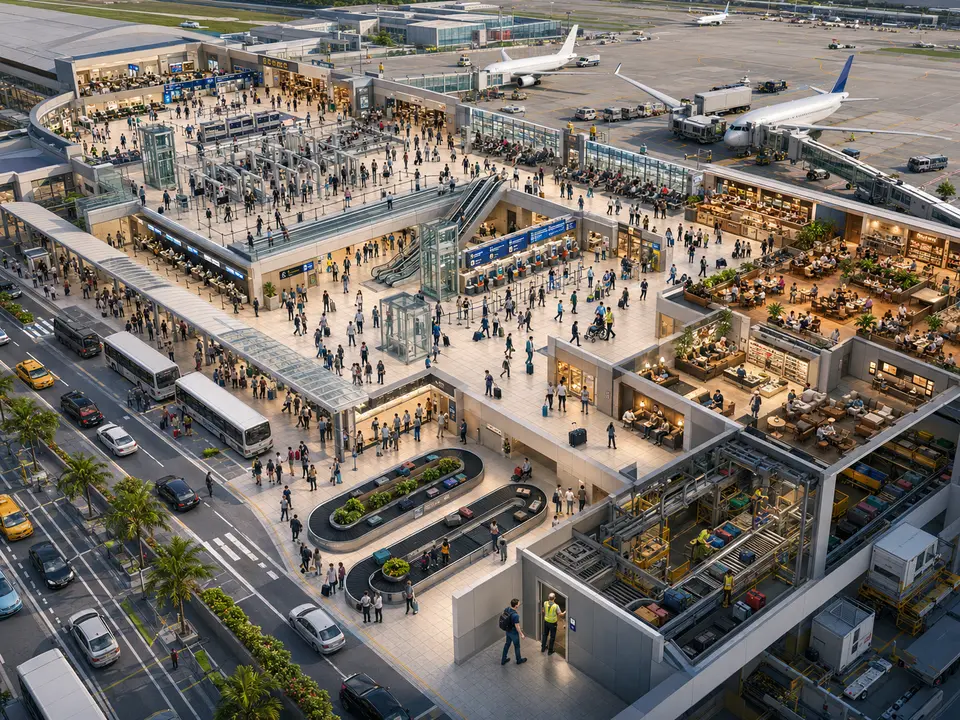
What does an airport see before the line forms?
14 cases: 7 raise an alert when something happens and 7 only measure. You see each image as it is, and then with what IRIS understands on top.


And the best part
The rule does not decide anything.It just never forgets, and it tells the person who decides.
You write once what needs watching, and it holds at three in the morning just as at noon. What to do with the alert is still a person’s decision.
Tell us your problem and we’ll say whether IRIS understands it, or not yet.
A person answers, the same working day.