Solutions by typeMobility analysis
What’s happening on the platform while the train comes in?
On a platform there isn’t a second to spare
Seven fifty-two. A train comes into the station and is still braking. In the first feet of the platform, where the driver can no longer do anything, three people are past the safety line, right on the edge, leaning out toward the tunnel to see if it’s their train. Behind them the platform is full, and the line on the exit stairs isn’t moving.
4 cameras across 1 sectors
What IRIS is
IRIS watches the cameras for you.
IRIS Neural is an artificial intelligence that watches the cameras you already have and understands what happens in front of them. When something important happens —or something you told it you need to keep an eye on—, it alerts you; and whatever can be counted, it counts in numbers. All day long, without anyone having to watch a screen.
You tell it what you need to watch, and IRIS does it.
Works with the cameras you already have. Nothing to replace.
A person replies, not a form.
- Your footage never leaves your premises.
- It doesn't identify people.
- Certifications →
This is how you ask for it
«Alert me if people are past the yellow line at the head of the platform while a train is coming in.»
In a station all the risk concentrates in three feet: the one between the edge and the track. What anywhere else would be a harmless bit of carelessness here has no way back. And the margin isn’t set by the operator, it’s set by the train: once it’s coming in, there’s no time to make an announcement or send staff to the end of the platform. Either the alert comes earlier, or it comes for the report.
You decide once
You decide this once, and it’s decided by whoever signs off station safety. You say where the safety line runs on each platform, which stretch is the braking zone, what must always be reported and how urgently, and to whom: the station manager, the control post, or both. IRIS applies it on every platform, at seven in the morning and eleven at night, on every train.
The platform is the place with the most cameras and the least time in the whole network. There’s one at each end, one in the middle and one at the foot of the stairs, and they all share a split screen with six other stations. The person in front of that screen is good at their job. What they can’t do is be looking at the right quadrant at exactly the right minute, and here the right minute lasts as long as it takes the train to come in.
So the platform doesn’t have one rule but four living side by side. Someone past the yellow line with a train arriving. A fight in the middle of the platform, which also pushes people toward the edge. A platform so full that nobody can step aside anymore. And the one that allows no nuance: a person down on the track. All four are the same idea at different urgencies, which is why each one alerts the person it should and not everybody equally.
What changes here isn’t that there are more cameras. It’s that the alert no longer depends on the coincidence of watching. The camera at the end of the platform still sees exactly what it saw yesterday. The difference is that now, when someone stands where they shouldn’t with a train arriving, that turns into an alert with the image open, rather than a video someone will retrieve tomorrow for the report.
What changes
Before, the station manager heard about almost everything from a colleague on the intercom, from a passenger raising the alarm or from the emergency help point. They would look at the screen and hunt for which quadrant it was happening in. Now the right camera opens by itself with the alert and the exact time, and the time that used to go into searching goes into deciding what to do.
Where we have seen it
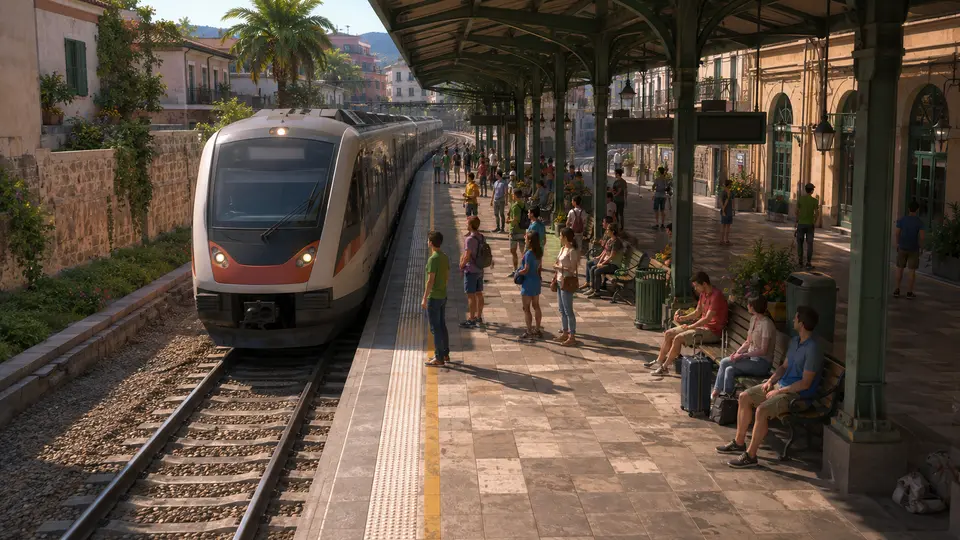
CAM-84Passengers in the braking zone
«Tell me if people are past the yellow line at the head of the platform while a train is coming in.»
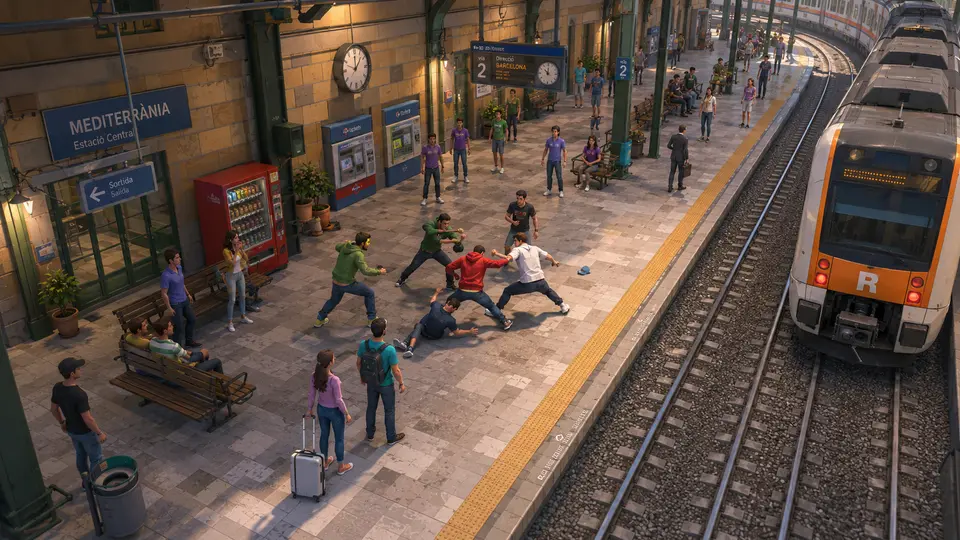
CAM-82Fight on the platform
«Tell me if there is a fight on a platform, and more urgently if a train is coming in.»
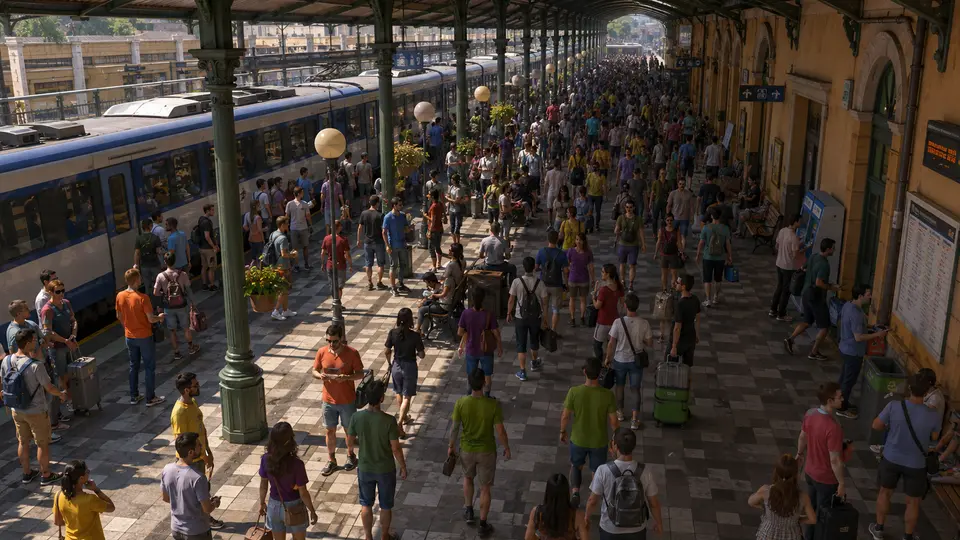
CAM-83Platform over capacity
«Tell me when a platform fills up so much that people can no longer step back from the edge.»
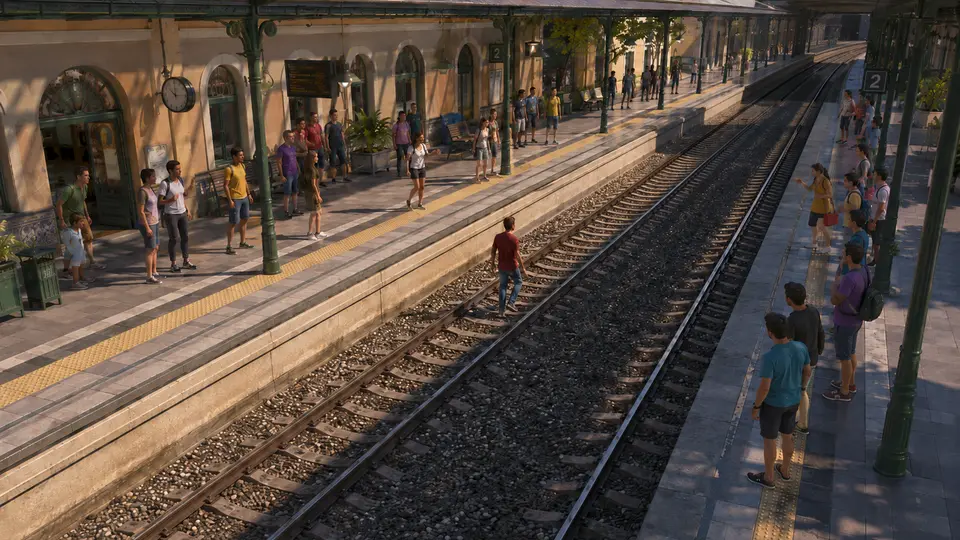
CAM-81Person on the track
«Tell me right away if anyone gets down onto the track, on any platform, at any hour.»


What it doesn’t do
IRIS does not stop the train. It alerts whoever can, and leaves the image open; the decision to brake, close or evacuate is always a person’s. It identifies nobody: no face recognition, not in a fight and not on the track. And it does not know why someone got down there, whether they dropped something or something is wrong. It sees a person where there cannot be one, and that is what it says.
Questions
- Does it detect someone on the track even when the platform is packed?
- Yes, because the track is a separate zone from the platform and is watched separately. The rule isn’t “there is a person,” but “there is a person below platform level, between the rails,” and that doesn’t depend on how many people are up top. It’s also the rule that allows the least margin: it waits for no confirmation, accumulates no seconds and is grouped with nothing else. It alerts immediately, with the camera and the point on the platform, because here a minute’s delay isn’t a delay, it’s something else.
- Can it alert before the train arrives?
- Yes, and that’s exactly what it’s for. The rule combines two things: people past the line, and a train entering the braking zone. As soon as both hold, the alert goes out, and at that point there is still margin for an announcement or for staff to move. Without that combination the alert is useless: people near the edge with no train is the normal scene in any station, and alerting on that a hundred times a day is the surest way to make nobody read any alert.
- Do we need to install new cameras on the platform?
- Not necessarily. Stations usually already have cameras at both ends and in the middle of the platform, and those are the ones needed. What’s checked one by one is the framing: to see whether someone is past the line, the line has to be visible in the image, and to see the track, the track has to be in frame. When a camera doesn’t suffice for a given rule, we say so before signing, not after.
- And fights? Aren’t they confused with people messing about?
- It can happen, which is why the platform alert doesn’t rely on that alone. What triggers the rule isn’t an isolated gesture, it’s sudden movement between people that also draws a ring around them and pushes others toward the edge. Even then, the one who looks at the image and decides whether it’s a fight or a group of friends is always a person: the alert opens the camera, it doesn’t declare what is happening. IRIS labels nobody and points at nobody.
Demo · IRIS at work
A new case each time. Always the same screen.
It plays by itself and shows one case from start to finish. It’s a summary: the real screen has far more functions than fit in this box.
- Cameras on the map
- You draw an area
- What passed shows up
Not seeing yours here?
These words are the ones we have built, not the ones IRIS understands. The list falls short on purpose: you ask for it in a sentence, and sentences don’t run out. Tell us what is in front of your cameras and we’ll tell you whether it understands it, or not yet.
And the best part
Finding something in yesterday’s videoshould take as long as asking for it.
No more scrubbing back through six hours with your finger on the mouse. You type what you’re after, in plain words, and the matching moments come up. Same cameras as always.
Tell us your problem and we’ll say whether IRIS understands it, or not yet.
A person answers, the same working day.