Solutions by typeLogistics efficiency
What if it leaves damaged and I find out from the claim?
It left damaged and I hear about it at the far end
It’s 10:40 a.m. On the check table, right before loading, sits a cardboard box with a burst lid, swollen board and a ring of water around it. A worker in gloves lifts the torn flap and looks at it. Behind him fifteen more packages wait on the rollers, and the truck leaves at eleven. The box is going on board, because nobody has said it shouldn’t. The camera watched it come into frame and told no one.
4 cameras across 3 sectors
What IRIS is
IRIS watches the cameras for you.
IRIS Neural is an artificial intelligence that watches the cameras you already have and understands what happens in front of them. When something important happens —or something you told it you need to keep an eye on—, it alerts you; and whatever can be counted, it counts in numbers. All day long, without anyone having to watch a screen.
You tell it what you need to watch, and IRIS does it.
Works with the cameras you already have. Nothing to replace.
A person replies, not a form.
- Your footage never leaves your premises.
- It doesn't identify people.
- Certifications →
This is how you ask for it
«Alert me if a package reaches the dispatch table torn, crushed or wet, and keep the photo for me.»
The package reaches the customer broken and comes back as a claim. That’s where it gets expensive: nobody knows whether it broke in the warehouse, on the dock or out on delivery, so you pay for the goods, pay the return freight and lose an afternoon arguing with the carrier. And with no photo and no timestamp, the winner isn’t whoever is right: it’s whoever argues better. That cost sits in no budget line.
You decide once
You decide what damage pulls a package out of the flow — crushed board, open flap, damp patch — which tables are watched and who gets the alert. That gets written once, with your dispatch lead in the room and real boxes on the table. From then on IRIS applies it to every package on every shift, including Saturday at nine at night when one person is running the table alone.
The person who suffers here isn’t the security manager: it’s whoever signs off the claims. In a warehouse shipping two thousand packages a day, packaging control depends on somebody looking, and at the end of a shift people look less. Not because they’re careless, but because the table is full and the truck is waiting.
The day it goes wrong always looks the same. A customer calls three days later with an open box and a photo taken on their own dock. The warehouse has no photo of that box: it has a signed packing slip and the memory of someone who moved four hundred packages that day. The carrier says it left like that, the warehouse says it left intact, and since nobody can show anything, you pay and close the file.
IRIS watches the dispatch table and sees what can be seen: crushed board, a torn flap, the sheen of a soaked box. When one of those turns up, the package is tagged with its photo and its minute before it goes on the truck, and a person decides whether it ships, gets repacked or stays. This isn’t quality control. It’s making sure the argument three days from now starts with an image on the table.
What changes
Before, the dispatch lead learned about a broken package from a customer email, then rebuilt the story blind: who loaded, which truck, whether it rained that day. Now the alert arrives while the package is still on the table, with the photo and the time, and the call is made there and then: pull it, repack it, or ship it with the damage on record. If the claim ever comes, the answer already exists.
Where we have seen it
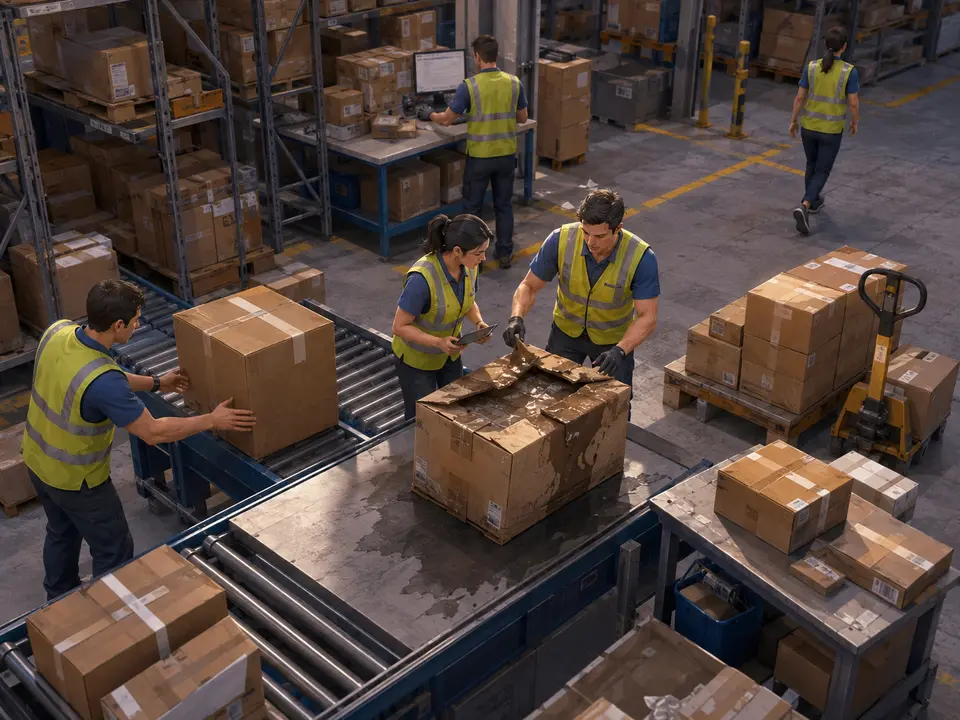
CAM-268A burst, soaked box about to go on the truck
«Tell me if a package reaches the dispatch table torn, crushed or wet, and keep the photo for me.»
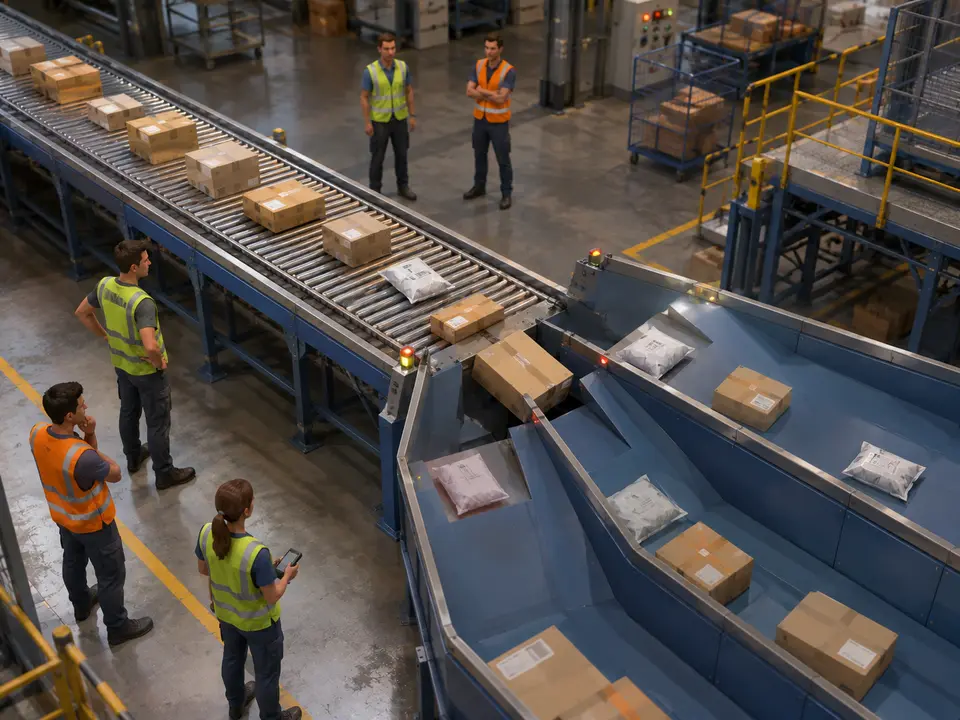
CAM-267A big box dropping into the wrong chute
«Tell me when a package drops into a chute that is not the one on its label, and show me the picture of the label.»

CAM-32Burst water main
«Tell me if water is building up on the road, and how far it has spread.»
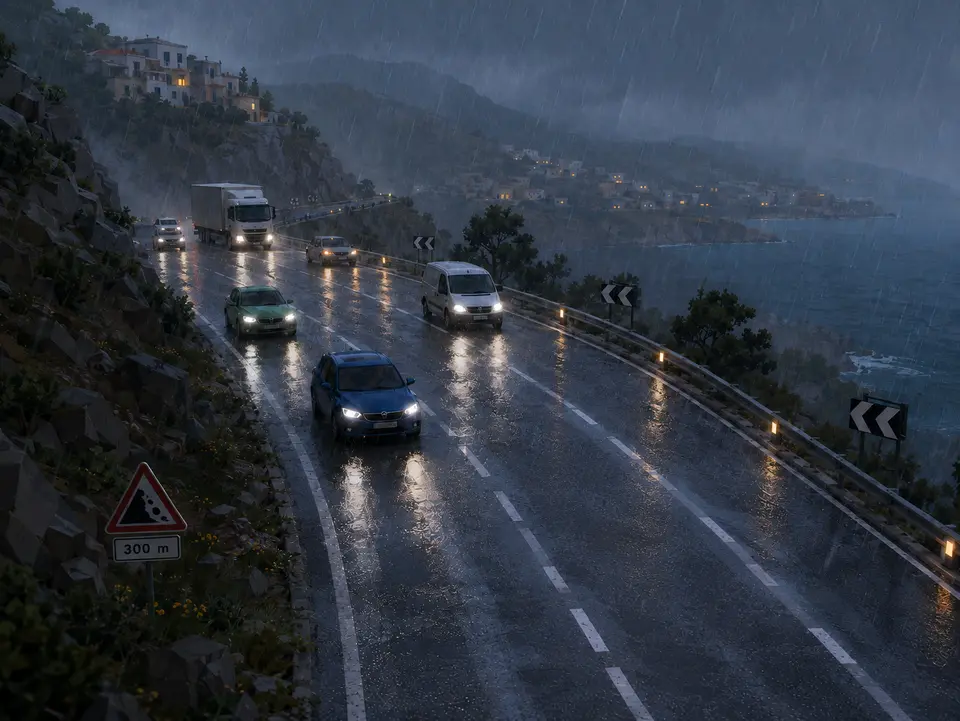
CAM-67Heavy rain at dusk
«Tell me when the stretch is wet and visibility drops, so I can lower the speed before someone has a fright.»


What it doesn’t do
IRIS sees the outside of the package, not the inside. An intact box with smashed contents goes straight through, and that has to be said before anything is sold. It also does not decide whether a package ships: a person does that, looking at the photo. And it does not say who broke it, because it identifies nobody: it says when the damage appeared and on which camera.
Questions
- Does IRIS know if the contents are broken?
- No. The camera sees the wrapping: crushed board, an open flap, a flattened corner, a damp patch. Nobody sees the contents until the box is opened. It still helps, because almost all transport damage leaves a mark on the outside. What IRIS adds is that the package is photographed and timestamped before it goes on the truck, instead of surfacing three days later at the customer’s, when nobody can say where it broke.
- Can it tell a wet box from a dirty one?
- Partly. It sees the stain, the sheen of soaked board and the way water deforms it, and on that basis it pulls the package out for a person to look at. Whether it’s rainwater, oil off a pallet or dry dust is decided by whoever opens it, not by the camera. We’d rather a few extra packages get checked than let a soaked one through because the system tried to be clever. The camera does not decide what ships: it puts the package in front of someone in time.
- Is it any use when claiming against the carrier?
- Yes, when the damage shows on the outside. You keep the image of the package, the time and the point in the warehouse where it stood, so you can show whether it left here intact or already arrived at the dock that way. It doesn’t replace the quality report or the carrier’s incident note: it supplies the photo and the minute those papers always lack. And it cuts both ways, because it also proves a package left in good shape.
- Do we need a new camera on every table?
- Not necessarily. If a camera already covers the check table with the whole box inside the frame, that’s usually enough. What matters isn’t how many pixels it has: it’s where it points. A high camera looking down the full aisle won’t see a torn flap. If the existing framing doesn’t work, we say so before installing anything rather than after, because an alert that can’t be given is worse than no alert at all.
Demo · IRIS at work
We won’t just tell you. We’ll show you.
It’s a summary of the real screen: it plays by itself, step by step, and shows only the path of one case. The actual tool has far more than fits in here.
- The alert fires
- It lands in the tray
- You open it
- You confirm or dismiss
Not seeing yours here?
These words are the ones we have built, not the ones IRIS understands. The list falls short on purpose: you ask for it in a sentence, and sentences don’t run out. Tell us what is in front of your cameras and we’ll tell you whether it understands it, or not yet.
And the best part
Behind one camera you can put a person.Behind four thousand you can’t put anyone.
Adding a camera costs little; adding another pair of eyes doesn’t. So the cameras keep growing and the attention doesn’t. IRIS watches all four thousand at once and flags what matters today.
Tell us your problem and we’ll say whether IRIS understands it, or not yet.
A person answers, the same working day.