Solutions by typeMobility analysis
Why has everything stopped, and who found out?
Nothing is moving, and nobody has said so
Six thirty in the morning at the departures curb. Three lanes and not one of them moving. Cars double-parked, a taxi across the middle, an SUV with the hatch open unloading suitcases in no hurry. Behind it a line has built back to the roundabout. Inside the terminal nobody knows yet: the desks are calm, and the people missing from them are walking in from the jam.
8 cameras across 7 sectors
What IRIS is
IRIS watches the cameras for you.
IRIS Neural is an artificial intelligence that watches the cameras you already have and understands what happens in front of them. When something important happens —or something you told it you need to keep an eye on—, it alerts you; and whatever can be counted, it counts in numbers. All day long, without anyone having to watch a screen.
You tell it what you need to watch, and IRIS does it.
Works with the cameras you already have. Nothing to replace.
A person replies, not a form.
- Your footage never leaves your premises.
- It doesn't identify people.
- Certifications →
This is how you ask for it
«Alert me if a car has been stopped in the drop-off lane for over ten minutes and others are waiting for space.»
A jam at the curb breaks nothing, so nothing records it. But it’s paid in full half an hour later: passengers reaching security with no margin, flights boarding late, angry people at the desk and a tow truck arriving after the car has gone. The next day it happens again at the same hour, because nobody wrote down that it happened or why.
You decide once
You decide this once. You say which stretch is a short-stop zone, how many minutes are tolerated, what hours it applies and who gets called when it’s exceeded. IRIS checks it continuously, on every camera covering the curb, at six in the morning and at eleven at night. Nobody has to be watching that screen for it to fire: the rule is already written.
Congestion isn’t an incident. It’s what comes just before one, and that’s the problem: it breaks nothing, triggers nothing and appears in no log. A food counter with an eleven-minute line. A sorting belt with packages riding on top of each other. Four turnstiles and only one letting people through. None of the three is a breakdown. All three cost money for every minute they last, and in all three a camera has been recording from the start.
What IRIS changes isn’t the camera: it’s who finds out. The camera was already there and already seeing it. What was missing was someone in front of that screen at that exact minute, which is precisely what can’t be sustained with hundreds of cameras and a shift of two. IRIS watches the same place always, applies the rule you wrote and brings the situation to whoever can move it, with the camera open and the time already on the clock.
And the accumulated time is half the value. Knowing there is a line isn’t much use. Knowing that line has been eleven minutes, and three minutes ago it was six, is very useful: it says which way it is heading. With that, the manager doesn’t arrive to put out a fire, they arrive before it catches. They open another counter, send someone to the turnstiles, or clear the taxi off the curb while there’s still room to do it.
What changes
Before, whoever ran the operation heard about jams through complaints: a phone call, an angry customer, a flight boarding late. You reacted once the bill was already paid. Now the alert arrives while the jam is forming, with the camera and the minutes it has run, and there’s time to open another position or move somebody. The difference isn’t technical: it’s arriving earlier.
Where we have seen it

CAM-580The curb jams before the terminal does
«Tell me if a car has been stopped in the drop-off lane for more than ten minutes and others are waiting for a gap.»

CAM-525The hand is going nowhere and the dealer’s spot is empty
«Tell me if the dealer’s spot stays empty for more than two minutes with an unfinished hand on the felt.»
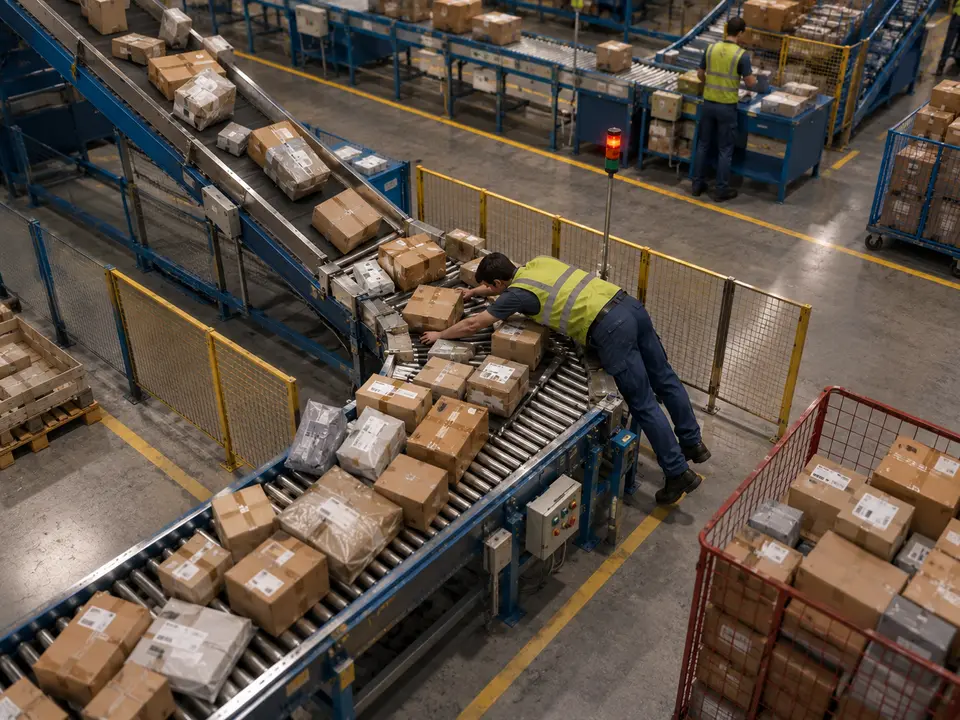
CAM-275Jammed conveyor, two arms in among the rollers
«Tell me if somebody puts their hands into the conveyor without stopping it first, and show me the video from when the jam started.»

CAM-541The line isn’t moving and there are barely any free tables left
«Tell me if the wait at any unit goes over eight minutes or if there are fewer than ten free tables.»
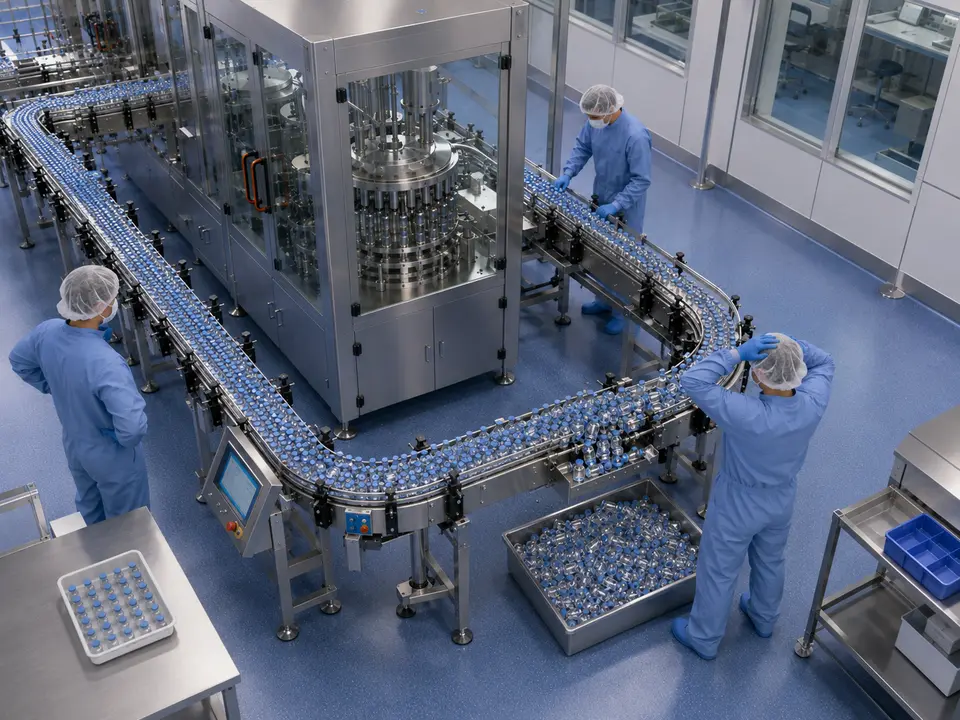
CAM-299The line has stopped and the reject tray is overflowing
«Tell me when the vials stop moving for more than a minute, and tell me how many have gone into the reject tray.»

CAM-83Platform over capacity
«Tell me when a platform fills up so much that people can no longer step back from the edge.»
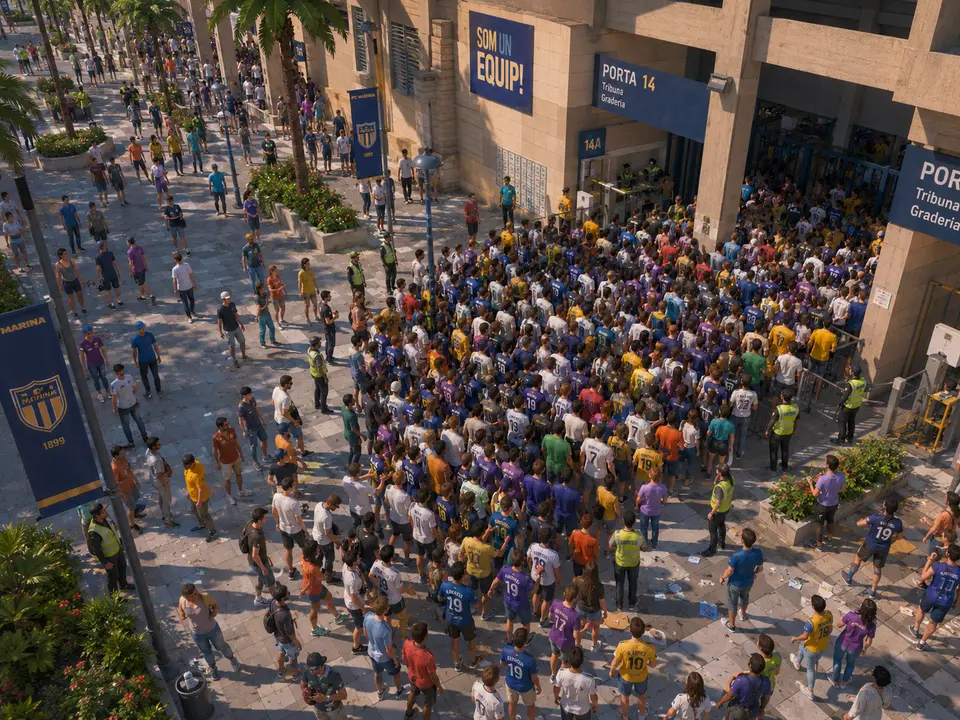
CAM-483Less room per person than three minutes ago, and nobody moves
«Tell me when each person in front of a gate has less than three square feet of room and the group has not moved for two minutes.»
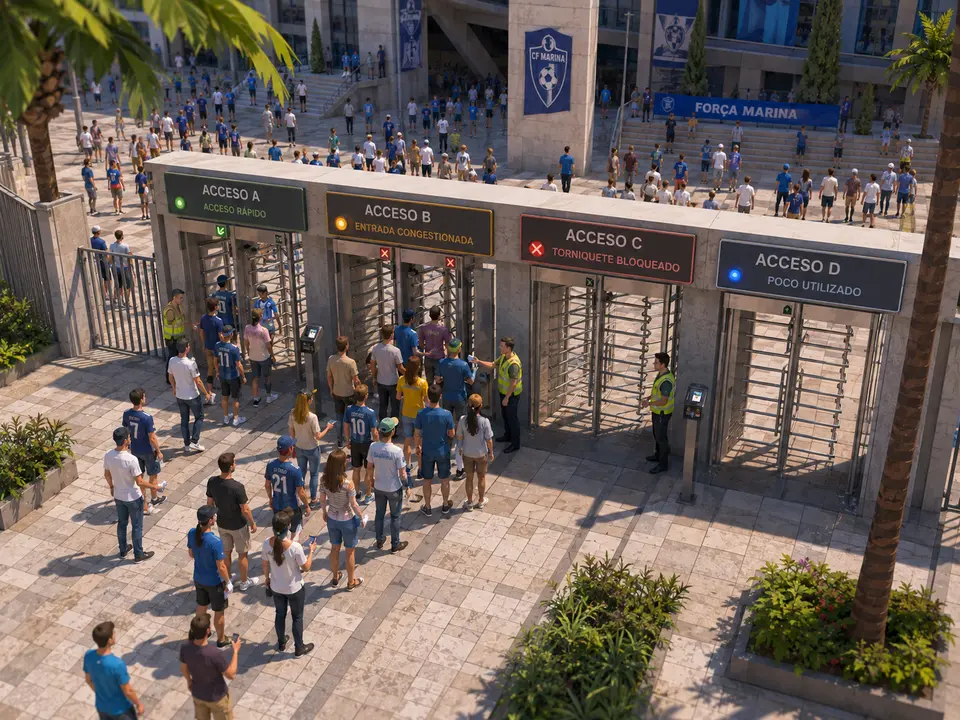
CAM-481One gate standing idle while the next one jams
«Tell me when a gate has gone five minutes without a single person through and the one next to it has more than twenty people waiting.»


What it doesn’t do
IRIS does not clear the jam. It says one exists, since when, and shows where; from there a person decides. It also does not know why the belt stopped or whether something is wrong with the taxi driver: it sees that nothing is moving. And it puts a label on nobody: a car stopped eleven minutes at the curb is almost always someone saying goodbye, not a security problem.
Questions
- Isn’t an alert above a certain number of cars enough?
- No, and that’s the most common mistake. A bare threshold fires on anything: a traffic light, a bus stopping where it’s meant to, thirty seconds of ordinary line. What makes an alert useful is duration and context. Not “there is a car stopped,” but “there is a car stopped for more than ten minutes in the drop-off lane and others are waiting for space.” That second condition is what separates a normal situation from one that needs attention, and it’s the one you write once.
- Can we find out how long yesterday’s congestion lasted?
- Yes. Every situation is kept with its start time, its duration and the video of the moment, so you can look at a whole week and see that the food court jams every Saturday between two and three. That’s no longer an alert, it’s operational data, and it’s what changes staff schedules or justifies a refit. The video stops being an archive to search through and becomes a memory you can ask what happened.
- Does it work for a package belt as well as a curb?
- Yes, because the problem is the same: something that should be moving and isn’t. What changes is what you look at —packages instead of cars, vial trays instead of suitcases— and how long you tolerate it, which on a curb is minutes and on a production line can be one. What doesn’t change is how you ask for it, or who decides how long is too long: that’s each site’s operation, not us.
- Do we have to replace the cameras we already have?
- Not necessarily. IRIS is built to use the cameras already installed where the integration and available feeds allow it. This doesn’t need a special camera: it needs the place where the jam forms to be in frame, and to be in frame whole. If the camera only catches half the line, the time it measures is the time of half a line. That’s checked before anything is promised, and if a view doesn’t work we say so.
Demo · IRIS at work
We won’t just tell you. We’ll show you.
It’s a summary of the real screen: it plays by itself, step by step, and shows only the path of one case. The actual tool has far more than fits in here.
- The alert fires
- It lands in the tray
- You open it
- You confirm or dismiss
Not seeing yours here?
These words are the ones we have built, not the ones IRIS understands. The list falls short on purpose: you ask for it in a sentence, and sentences don’t run out. Tell us what is in front of your cameras and we’ll tell you whether it understands it, or not yet.
And the best part
There are nights of thick fogwhen the image gives you nothing. We don’t dress that up.
Backlight, heavy rain, a streetlight that has blown. IRIS works with what the camera puts in front of it; when there’s no image, it says so instead of inventing an answer.
Tell us your problem and we’ll say whether IRIS understands it, or not yet.
A person answers, the same working day.