Solutions by typeInfrastructure integrity
How much time do I have from the moment a battery starts smoking?
A battery starts smoking and the detector says nothing
It’s 6:50 p.m. in the warehouse. In the charging row, one battery has begun sending up a column of white smoke that rises straight to the roof. The two operators who were beside it have already stepped back. Thirty feet up, the detector has still seen nothing: the smoke has to reach it, and that journey takes minutes. The very minutes in which this gets decided.
5 cameras across 5 sectors
What IRIS is
IRIS watches the cameras for you.
IRIS Neural is an artificial intelligence that watches the cameras you already have and understands what happens in front of them. When something important happens —or something you told it you need to keep an eye on—, it alerts you; and whatever can be counted, it counts in numbers. All day long, without anyone having to watch a screen.
You tell it what you need to watch, and IRIS does it.
Works with the cameras you already have. Nothing to replace.
A person replies, not a form.
- Your footage never leaves your premises.
- It doesn't identify people.
- Certifications →
This is how you ask for it
«Alert me the moment you see smoke in the battery charging area, even if no detector has gone off.»
A battery fire isn’t an ordinary fire: it reignites, water alone doesn’t put it out, and it fills the building with smoke that forces an evacuation even where nothing’s burning. If the alert arrives once the roof detector has gone off, you aren’t putting out the start of a fire: you’re clearing a warehouse. Then come the days of downtime, the loss adjuster and the conversation about what was seen and when.
You decide once
It’s decided once, with the safety officer and the warehouse manager: which areas are battery areas, in what hours, who gets the alert by day and who by night, and what happens in the first two minutes. That conversation is the hard part, and it only happens once. After that IRIS watches those areas all the time, on every camera that covers them, and applies what was agreed at six in the evening exactly as at four in the morning.
The battery charging area holds more energy per square foot than anywhere else in a building, and it’s almost always an aisle at the back with a row of chargers. The same is true in a data center energy room, in a yard of storage containers, or on the sorting belt of a recycling center, where a scooter battery arrives hidden among bags of household waste.
The roof smoke detector works, but it works late by design: it waits for smoke to climb thirty feet and gather. A camera sees the first column the moment it appears, because it’s looking straight at it. The camera isn’t cleverer: it’s closer. And in a battery fire, the first minutes are the difference between an extinguisher and an evacuation.
IRIS watches those areas continuously and alerts as soon as smoke or a glow appears where there should be none. It says which camera, which spot and at what time, and opens the video at the instant it started. Whoever gets the alert has nothing to search for: they see what is happening and decide. IRIS doesn’t trigger suppression and doesn’t cut the charge: the building’s systems and the people do that.
And there’s a second thing the picture gives that no detector gives: where. In an energy room at four in the morning, knowing there is smoke doesn’t help much; knowing it is coming out of the grille of the third module in the rack, and seeing the orange glow behind it, changes what you do in the next minute. The same in a container yard: “there is a fire in the yard” isn’t the same as “the door of the front container has been blown off and there is flame in the gap.” The alert arrives with the spot already marked, and whoever responds doesn’t lose the first minute finding it.
What changes
Before: the first warning came from a person walking past, or from a roof detector once smoke already filled the building.
Now: the alert comes from the aisle itself, with the picture in front of you, and reaches the supervisor’s phone and the control desk at the same time. Whoever decides to evacuate decides while looking, not while hearing a siren and asking where.
Where we have seen it
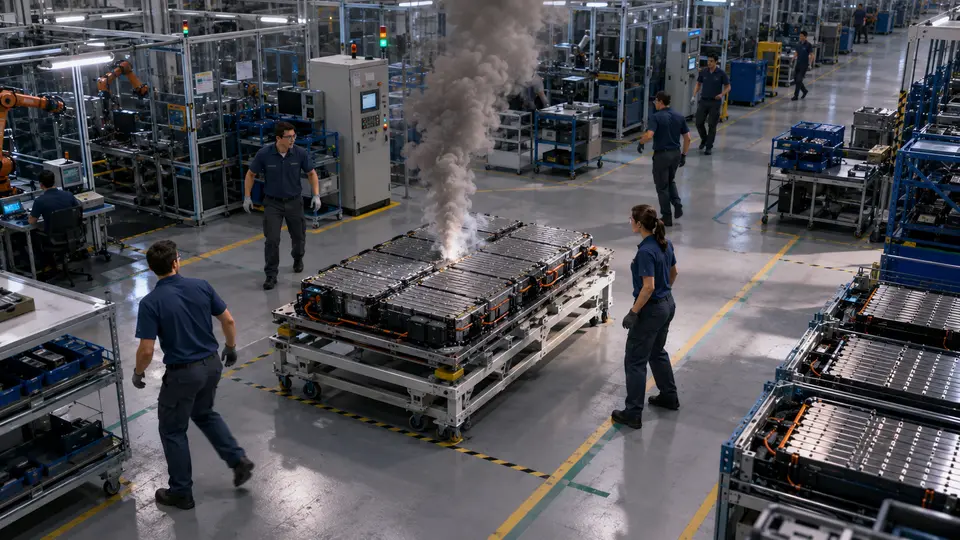
CAM-231Smoke coming off a battery pack in the middle of the aisle
«Tell me the moment smoke comes off a pack in the cart area, however little, and put the camera in front of me.»
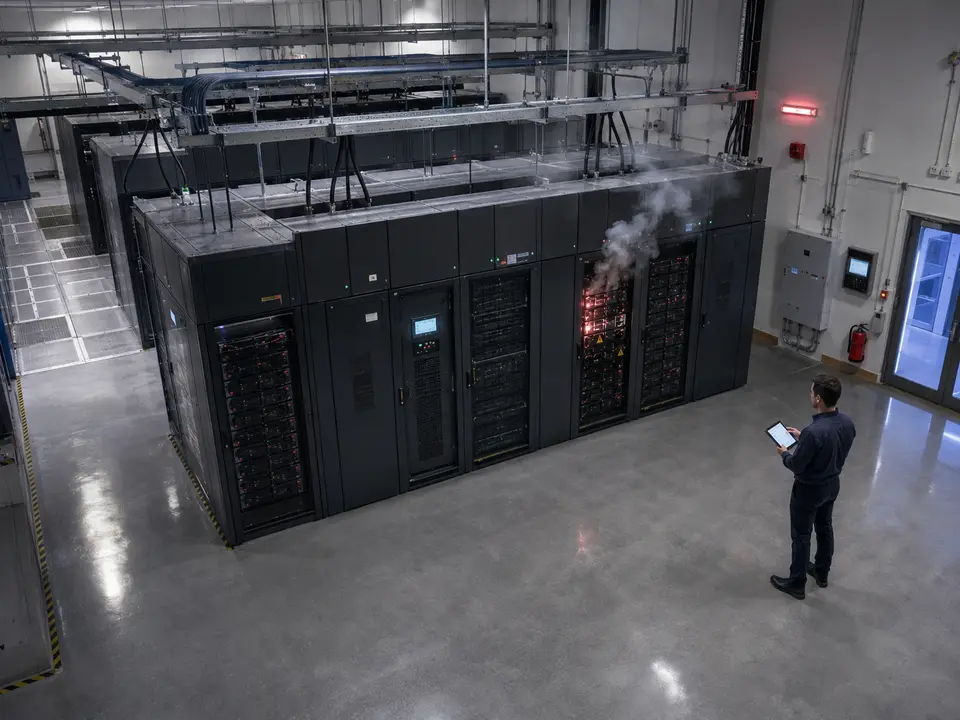
CAM-558Smoke coming out of one module in the battery block
«Tell me if smoke or a glow appears in the power room, and tell me which module it is coming from.»
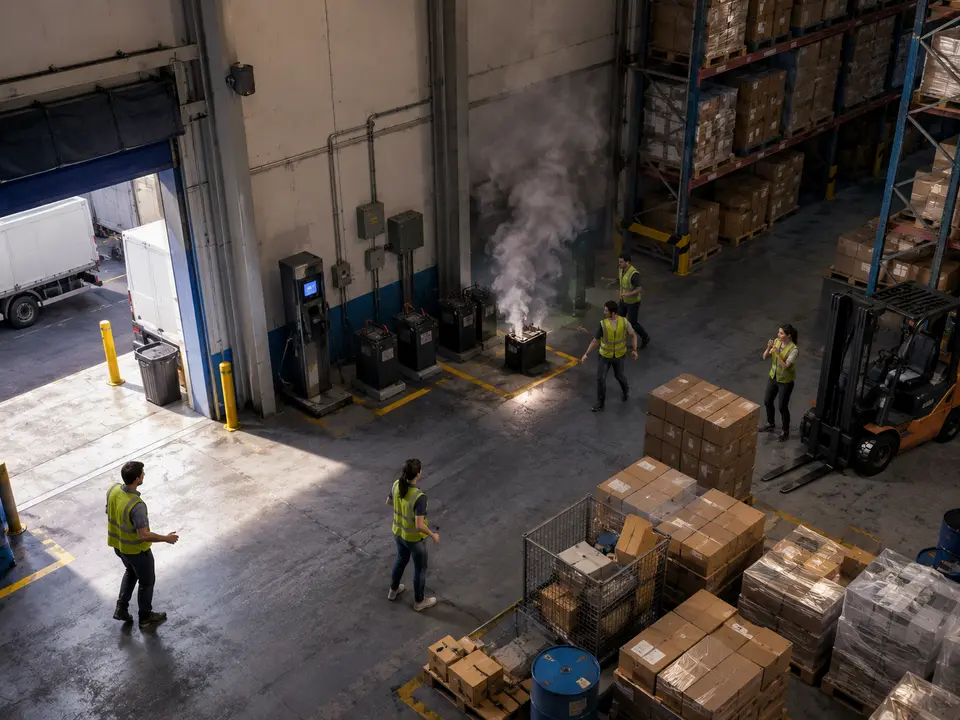
CAM-276Smoke coming off a battery in the charging space
«Alert me the moment you see smoke in the battery charging space, even if no detector has gone off.»
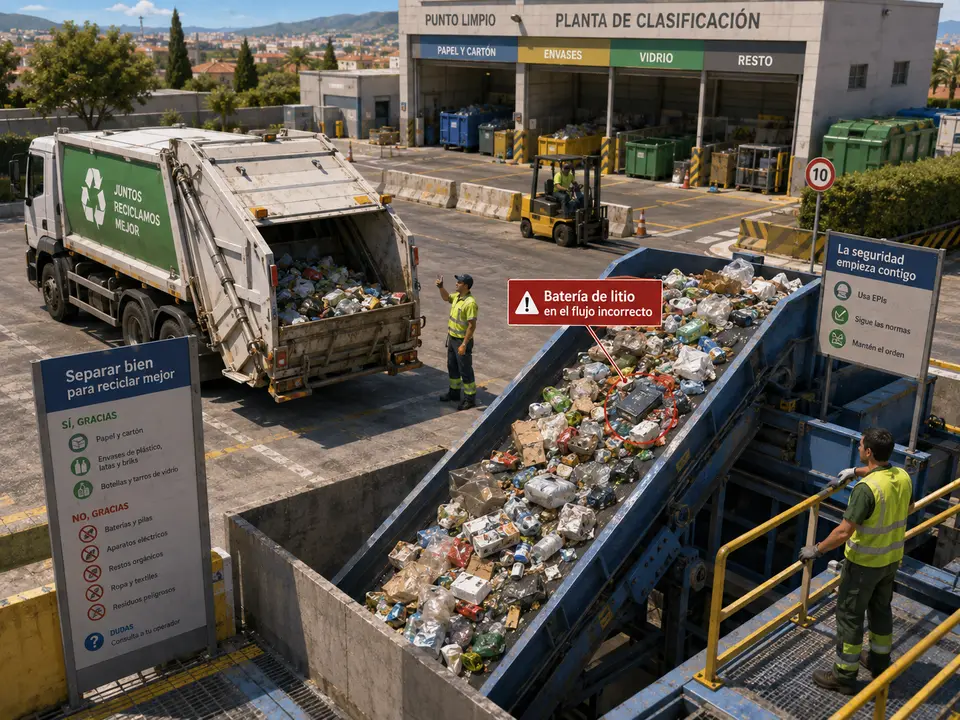
CAM-420A lithium battery is riding the belt toward the shredder
«Alert me the moment you see a battery, a phone or a scooter on the sorting belt, before it reaches the shredder.»
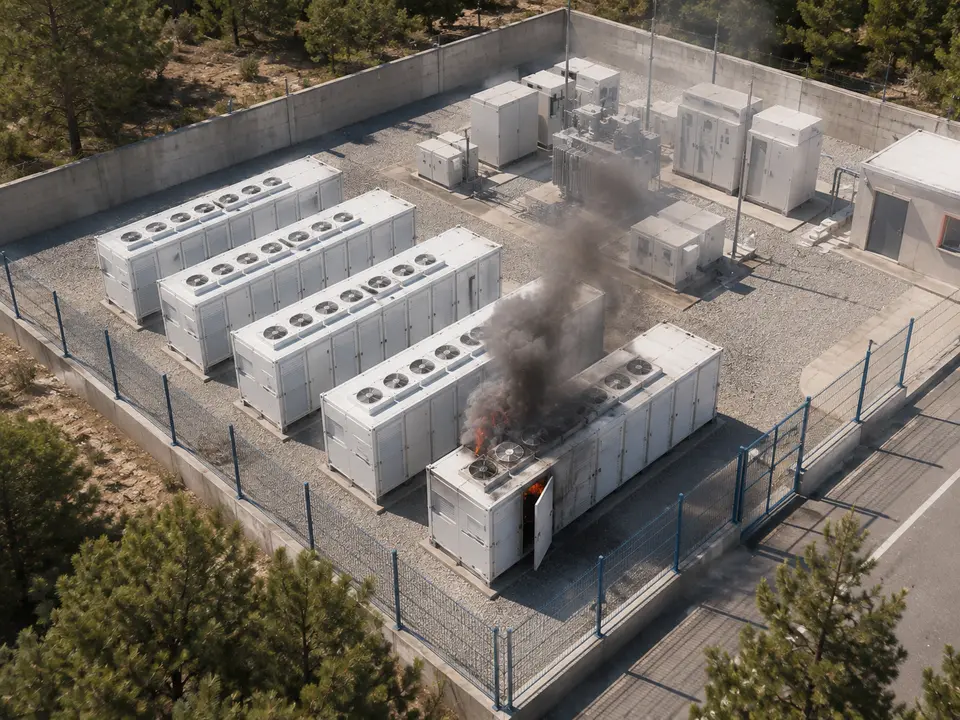
CAM-353Black smoke pouring out of a battery container
«Alert me right away if smoke or flame comes out of a battery container, or if a door opens on its own.»


What it doesn’t do
IRIS puts nothing out. It does not trigger suppression, does not cut the charge and does not replace the detectors or the fire system: regulation requires that equipment and still does.
It also cannot see the problem before it is visible. A cell heating up inside gives no image until smoke appears, it swells or it vents. If what you want is the earlier thermal warning, that is a temperature probe, not a camera.
Questions
- Are the fire detectors not enough on their own?
- Not always, which is why you have both. A roof detector waits for smoke to rise and gather, and in a tall building or one with air currents that takes time. A camera facing the charging row sees the first column as it appears. IRIS doesn’t replace the fire installation and doesn’t claim to: it gets there earlier with an alert so somebody can look, and the system does its job if things escalate.
- Can it tell smoke from steam or dust?
- Largely yes, because it doesn’t just look at a patch: it looks at how it behaves. A column rising from a fixed point and growing doesn’t look like the steam cloud of a wash-down or the dust a forklift kicks up. Even so, there are places where steam does confuse it, and the honest thing is to say so: the rule gets tuned against real scenes from that building until the alert is useful. Promising it never gets it wrong would be a lie.
- Does it work for an outdoor battery yard?
- Yes, and it’s one of the places where it counts most, because nobody’s inside. In a container yard what is watched is smoke, flame and also a door that opens by itself, which is often the first thing you see. The alert reaches the standby crew with the camera and the video, and they decide from outside whether to approach or make the call. Nobody has to open a door to find out what is behind it.
- Does it work on a waste belt, with a battery among the trash?
- Yes, and it’s a different case: there’s no smoke yet, there’s an object that shouldn’t be there. What you’re looking for is a battery, a phone or a scooter riding among the bags toward the shredder. IRIS alerts while it’s still on the belt, with the camera and the spot, so somebody can stop it in time. It won’t catch everything, because whatever is buried isn’t visible, and that’s why we put it that way and not another.
Every simulation
Something has spilled
Tell me if there is liquid or foam outside its place and it is still there two minutes later.
- The sentence
- Where it applies
- What it finds
- The same rule
Not seeing yours here?
These words are the ones we have built, not the ones IRIS understands. The list falls short on purpose: you ask for it in a sentence, and sentences don’t run out. Tell us what is in front of your cameras and we’ll tell you whether it understands it, or not yet.
And the best part
What holds on camera oneholds on camera four thousand, with nothing to copy by hand.
A rule is stated once and applies everywhere. And it says the same thing on Sunday night as on Tuesday morning, whoever is on call.
Tell us your problem and we’ll say whether IRIS understands it, or not yet.
A person answers, the same working day.