Venues and trade showsIntrusion detection
CAM-488
A van stopped at the barrier and someone climbing the fence
Late afternoon at the venue’s access control. A dark van has been sitting on the crossing, in front of the barrier and right against the guard booth, tailgate toward the camera. On the right, on the restricted-area fence, a person is gripping the top rail with one foot on the wall. The guard on the sidewalk is looking the other way. Behind them, the public is arriving at the gates.

Turn on IRIS Vision
AI-generated image
What IRIS is
IRIS keeps an eye on every gate so you don't have to.
IRIS is an artificial intelligence that watches the cameras you already have at the venue and understands what's happening at the gates and in the stands. When a line forms at an entrance, a section nears capacity, or something you've asked it to watch happens, it alerts you — and whatever can be counted, like the crowd in each area, it counts in numbers. All day long, with no one needing to stare at a screen.
You tell it what you need to watch, and IRIS does it.
Take this scene: IRIS flags that a van has been sitting somewhere it shouldn't for several minutes, and that someone's climbing the restricted-area fence, catching both while they're happening. It hands over the camera feed and the exact stretch of fence. From there, staff decide to send someone straight to that spot instead of walking the whole perimeter.
Works with the cameras you already have. Nothing to replace.
A person replies, not a form.
- Your footage never leaves your premises.
- It doesn't identify people.
- Certifications →
What IRIS understands
What it recognizes in this scene
- person crossing the fence line
- vehicle stopped at the barrier
- control booth
- restricted-area fence
- guard on foot
- public arriving at the gates
What this camera measures
An alert says something’s happening. The reading says how much.
- 3 min 40 sTime the vehicle has been stopped
- 1People who have crossed the fence line
- 14Vehicles through the barrier this hour
- 2Security staff in frame
- 19:48Time of the alert
The figures on this screen are an example from the illustration, not any client’s measurement.
The rule
You decide once. IRIS applies it always.
If
a person crosses the venue fence line or a vehicle stays stopped in front of the barrier for more than two minutes
Then
- alert the security post with the camera and the stretch of fence
- save the video from the moment the vehicle stopped
- keep the alert open until somebody closes it on the ground
The instruction that set it up«Tell me if anyone crosses the fence line, or if a vehicle stays stopped in front of the barrier for more than two minutes.»
What changes
What changes for whoever runs security at the venue
Twenty to seven, the crowd already arriving at the gates. The guard on the sidewalk is looking the other way, and behind him two things are happening at once: a van has been stopped on the crossing for almost four minutes, where nobody stops, and somebody is climbing the fence into the restricted area. A perimeter is watched by walking rounds, and a lot of minutes fit between two rounds. IRIS reports both while they’re happening, with the camera and the exact stretch of fencing, so the team goes to one spot instead of walking the whole line. What’s needed there isn’t another screen: it’s a person, and quickly.
What people usually ask
Does IRIS read the van’s license plate?
It can, if the venue installs a camera for that and has it covered in its data processing record. But that isn’t what solves this scene. What solves it’s simpler: there’s a vehicle stopped where nobody stops, and it’s been there for almost four minutes. That alert arrives either way, plate or no plate.
Does it tell a climber apart from a technician working on the fence?
Not on its own, which is why the venue writes the rule. It can ask for no alerts during maintenance hours, or on the stretch where there are works that week. Outside that, crossing a fence is crossing a fence. IRIS describes the fact, never the intent: it puts no label on anybody, it says somebody went over the fence at a given time.
Does it store who the person on the fence was?
No. IRIS identifies nobody and recognizes no faces. It stores the video of that stretch and the time, which is what gets somebody there now and what leaves proof of what happened afterward. Putting a name to whoever is in that image isn’t the camera’s job: it belongs to whoever is entitled to do it.
Other cameras
- CAM-480 · The line tells you when the gates should open
- CAM-481 · One gate standing idle while the next one jams
- CAM-482 · Twenty-four arrive a minute, the search line clears nine
- CAM-483 · Less room per person than three minutes ago, and nobody moves
- CAM-484 · The ramp is packed and the concourse next to it is empty
- CAM-485 · Twenty thousand people leaving at once, all through the same gate
See it for yourself
We won’t just tell you. We’ll show you.
It’s a summary of the real screen: it plays by itself, step by step, and shows only the path of one case. The actual tool has far more than fits in here.
- You ask
- IRIS searches
- It shows you
Next step
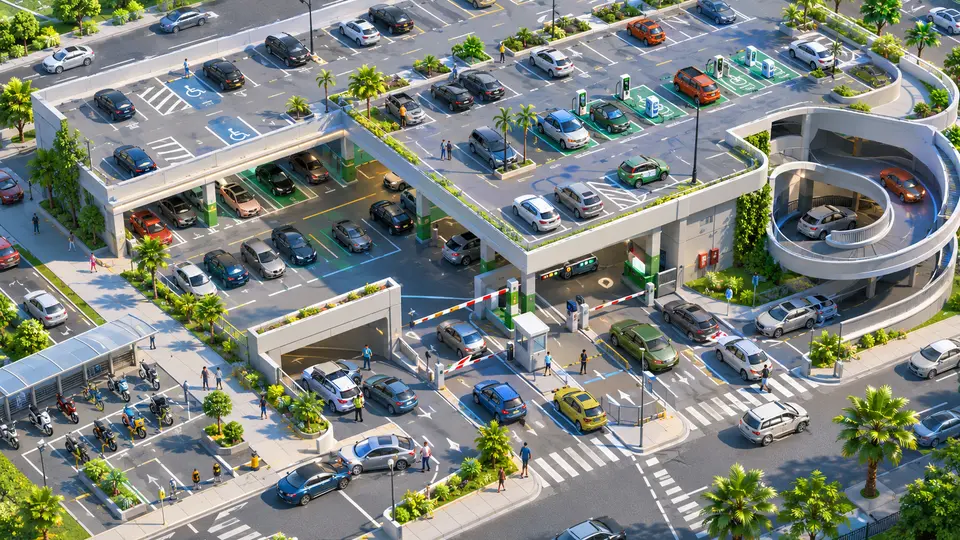
How many spaces are open right now?
15 cases: 9 raise an alert when something happens and 6 only measure. You see each image as it is, and then with what IRIS understands on top.

What does a venue with twenty thousand people inside see?
15 cases: 11 raise an alert when something happens and 4 only measure. You see each image as it is, and then with what IRIS understands on top.


And the best part
A recollection can’t be checked.A number can, and it comes out the same every day.
The number doesn’t depend on who was on shift or how they remember it. It’s measured the same way every day, and that’s why people counting is approved by the Centro Español de Metrología. That approval is Spanish and it isn’t equivalent to any U.S. certification: we say so up front and not at the end.
Tell us your problem and we’ll say whether IRIS understands it, or not yet.
A person answers, the same working day.