Solutions by typeIntrusion detection
How many people got in without going through the turnstile?
A turnstile that stops counting isn’t one
It’s 7:50 a.m. on the line of turnstiles. One of them has been left with its leaves open while the ones beside it keep opening and closing with every ticket. People do what anyone would do: they go through the open one without validating, because that’s the one with no line. Nobody has forced anything. The turnstile hasn’t reported any fault: it’s still green, still powered, not complaining, letting everyone through, one after another, at forty a minute.
8 cameras across 6 sectors
What IRIS is
IRIS watches the cameras for you.
IRIS Neural is an artificial intelligence that watches the cameras you already have and understands what happens in front of them. When something important happens —or something you told it you need to keep an eye on—, it alerts you; and whatever can be counted, it counts in numbers. All day long, without anyone having to watch a screen.
You tell it what you need to watch, and IRIS does it.
Works with the cameras you already have. Nothing to replace.
A person replies, not a form.
- Your footage never leaves your premises.
- It doesn't identify people.
- Certifications →
This is how you ask for it
«Tell me if a turnstile stays open while the ones beside it are working, and tell me as well if anyone comes in outside the line of turnstiles.»
That turnstile will stay like that until somebody walks past and notices, and that may be midday. Four hours of people coming in without validating. The fare is lost, yes, but something worse is lost: the station’s occupancy figure for that morning is wrong and nobody knows it, and the list of who came in is worthless too. And when someone does notice, nobody knows since what hour it had been like that, so you can’t even estimate how many people went through. A turnstile is there for two things and that day it did neither.
You decide once
You decide this once. You say which line of turnstiles is watched, how many minutes open are tolerated before an alert, whether crossing outside is flagged always or only at certain hours, and who gets called. IRIS applies it at every gate and on every shift, including concert days and the first train of the morning, which is exactly when nobody’s free to look. And if a turnstile is deliberately left open for a mass exit at the end of an event, that slot is marked and it bothers nobody.
A turnstile is a physical promise: through here, one at a time, and only after validating. Everything downstream trusts that promise. The list of who came in. The station’s occupancy count. The evacuation plan of the factory. The day’s takings. And that promise is a machine standing in a hallway that thousands of people pass through every day, pushing, dragging suitcases and shouldering the leaf when it doesn’t give.
It fails in two directions, and in neither of them does it complain. It gets stuck open and lets everyone through: nobody validates, nobody protests and the turnstile stays green. Or it goes stiff, jams and builds a line while the one next to it is empty, and then somebody climbs the railing by the pillar because the concert starts in ten minutes. Both are invisible from a control room: nothing changes color on any screen.
And the price isn’t the same everywhere. In a station you lose the fare and, worse, you lose that morning’s occupancy figure. At a venue, whoever comes in around the line is on no list and is very much inside. In a food plant, the turnstile of the hygiene airlock is what separates the hallway from the packing hall: if it stays open, people come in without a hairnet and without passing the wash basin, and that isn’t a security problem, it’s a product problem. On a construction site, the turnstile is what says how many people are inside the fence, which is the number you need the day the alarm goes off.
IRIS looks at the line of turnstiles for what it is: a place where people pass. It counts how many cross at each one. When one stops adding people while its neighbors keep counting, it says so and says since when. When one builds a line while the one beside it is free, it says that too. And when somebody comes in around the line — over the railing, past the pillar, through the exit door the wrong way — that arrives as an alert, with the camera open, while that person is still thirty feet away.
What changes
Before, a stuck turnstile was discovered because somebody walked past and saw it, or because at the end of the month the numbers didn’t add up and there was no longer any way to know which day it was. Now it comes out at the time, with the number of the turnstile and how many minutes it’s been like that, and someone goes down to unblock it before the line forms. And the station’s occupancy figures stop having holes nobody could explain, because every hole now has an hour and a camera behind it.
Where we have seen it
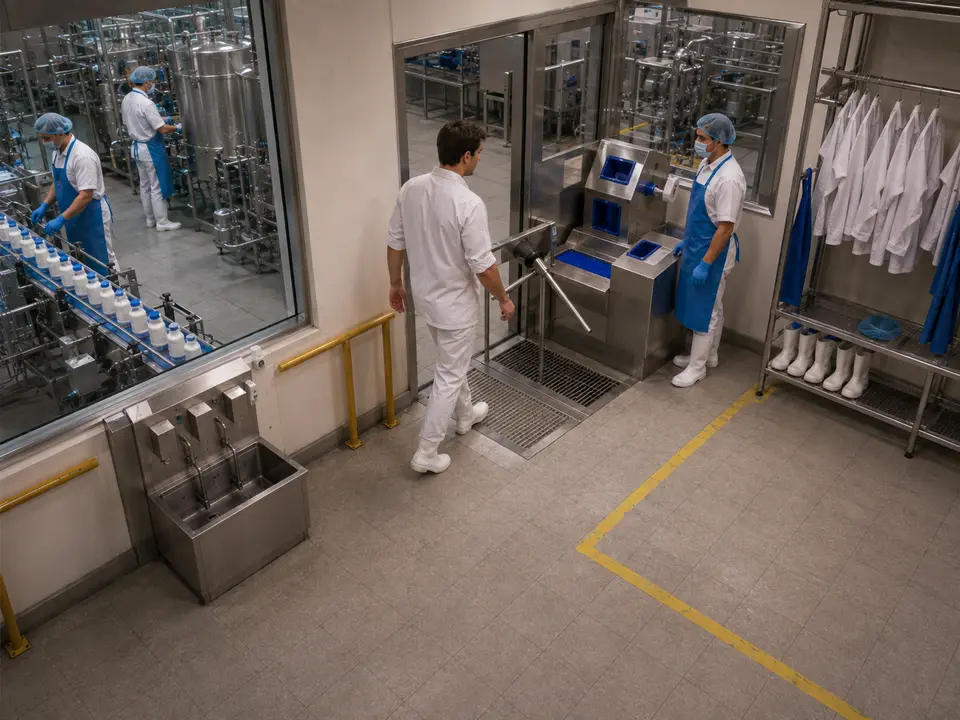
CAM-212Into the clean area with no hairnet
«Tell me if somebody goes through the turnstile into the hall with no hairnet, no coat or without using the wash trough, and tell me at the door, not inside.»
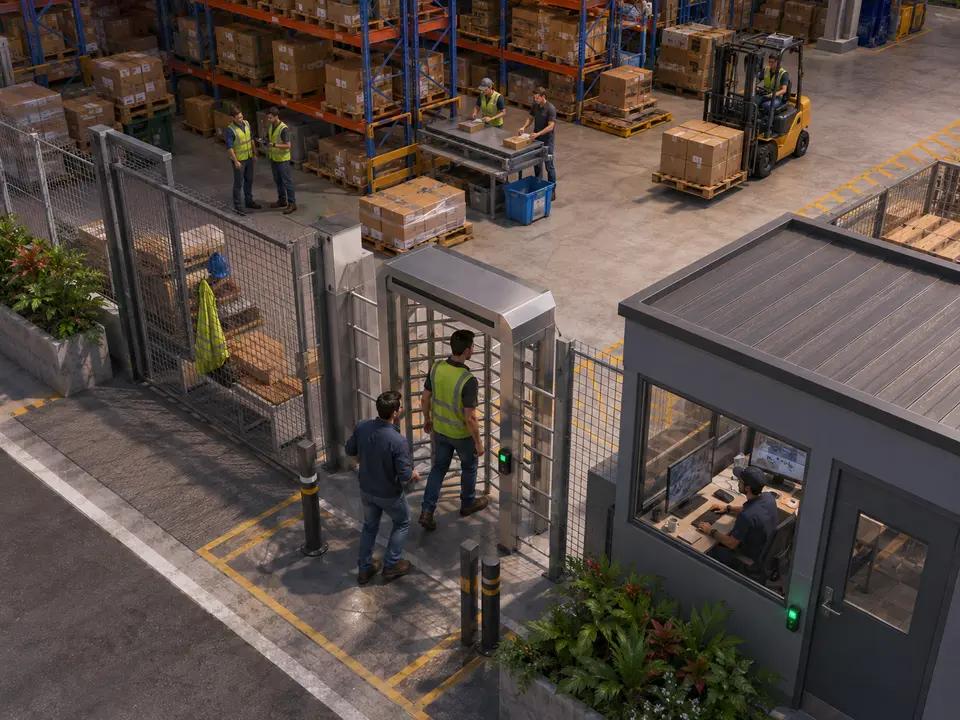
CAM-261Two people, one turn of the gate
«Tell me when two people go through the gate on a single badge read, and show me the video of the pass.»
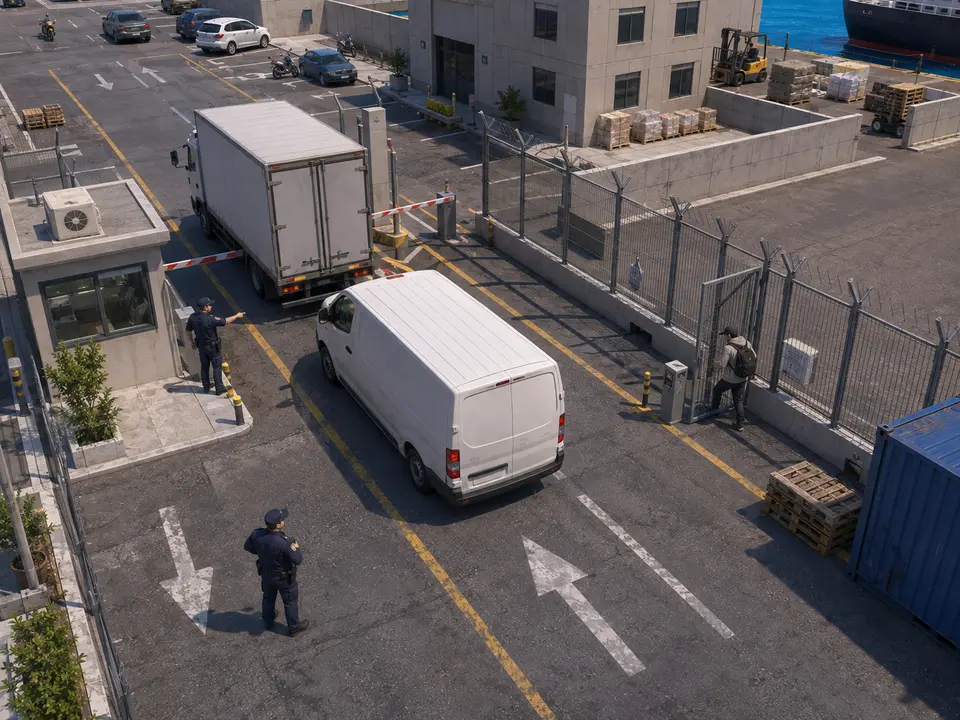
CAM-561How many people are inside the compound right now
«Tell me if the turnstile stops adding people during the shift change.»
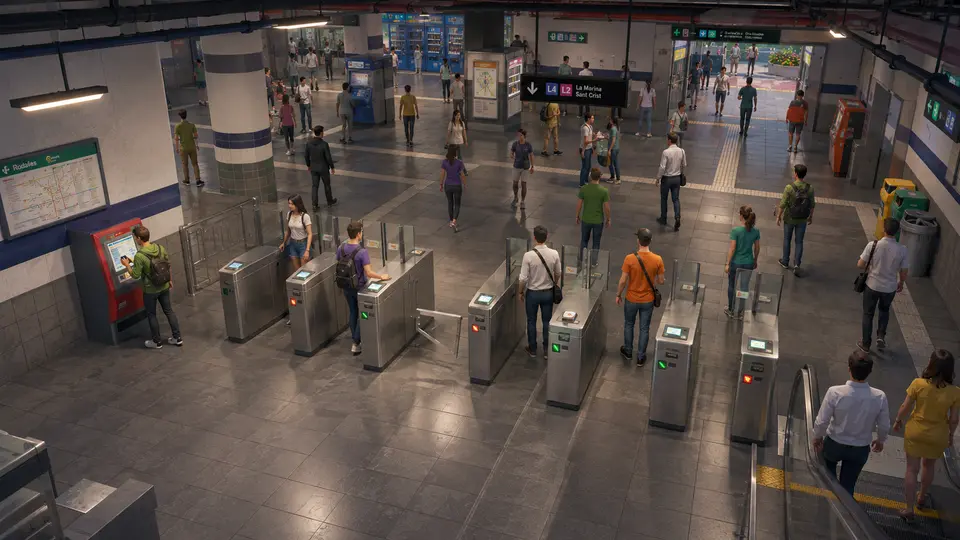
CAM-88Ticket gate stuck open
«Tell me if a gate stays open while the ones next to it are working, and how long it has been like that.»
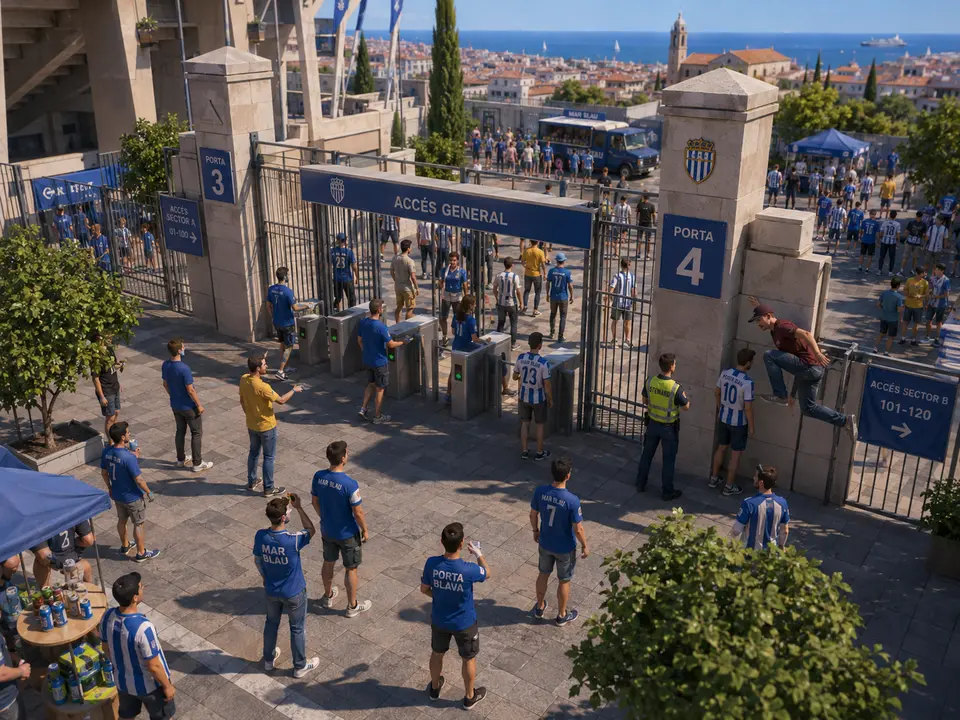
CAM-487One person climbs the fence while everyone else uses the turnstile
«Tell me if somebody comes in outside the turnstiles, or if two people go through on a single validation.»
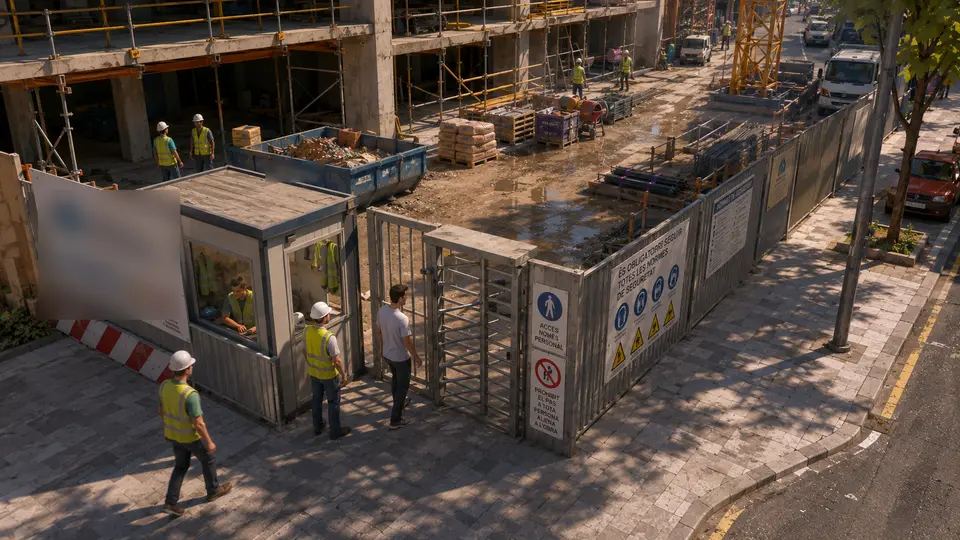
CAM-51Walking into the site with no hard hat
«Tell me if somebody turns up at the turnstile with no hard hat or no vest, and tell me there, at the gate, not once they have been inside the site for half an hour.»
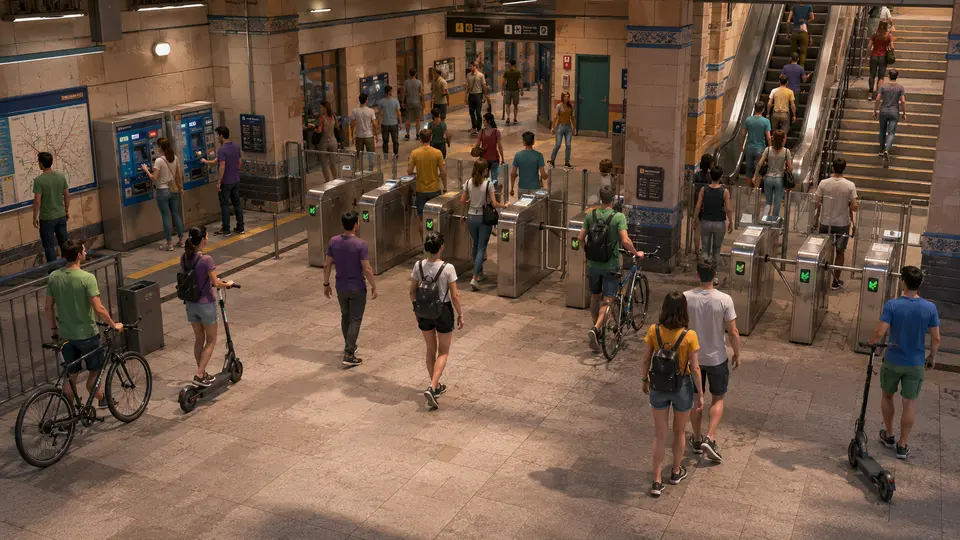
CAM-89Bikes and scooters through the gates
«Tell me if bikes or scooters come in through the gates, and how many go through each day.»
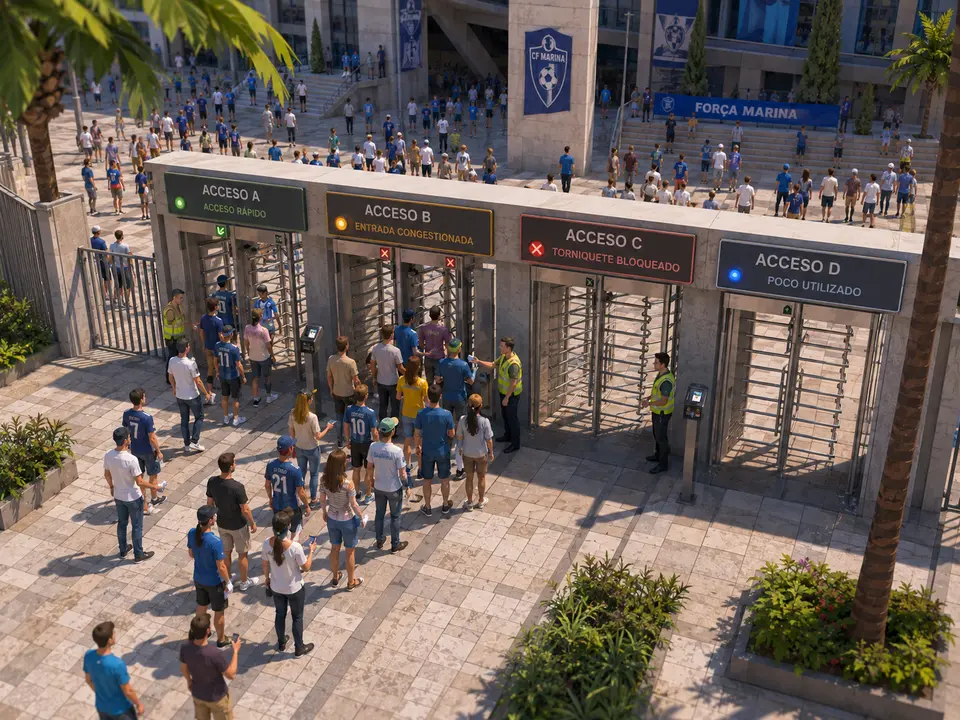
CAM-481One gate standing idle while the next one jams
«Tell me when a gate has gone five minutes without a single person through and the one next to it has more than twenty people waiting.»


What it doesn’t do
IRIS does not read the ticket or the badge. It does not know whether the person who went around the turnstile had a valid fare or not; it knows they came in without going through where you go through. That is for whoever has the validation system in front of them.
And it closes nothing. IRIS does not drop a bar or lock a door: it alerts, and a person decides. On a line of turnstiles that is in any case the only sensible option, because a door that closes by itself with people in front of it stops being access control and becomes an evacuation problem.
Questions
- Does it notice a turnstile is stuck without being wired to the system?
- Yes. IRIS doesn’t need to talk to the machine: it looks at how many people cross at each turnstile. One that stops adding people while its neighbors keep counting is stopped, and that can be seen from the image with no new cable. If the validation system can also be read, the check gets finer still, because passes are compared with validations. But to know that an access has gone twenty minutes without anyone through it, the camera is enough.
- Does it pick out somebody vaulting the railing beside it?
- Yes, and it tends to be the most useful alert on busy days. IRIS sees a person crossing the access line at a point that isn’t a turnstile: over the railing, through the gap by the pillar, or through the exit door the wrong way. It says so with camera, hour and video, so somebody in the control room has it while that person is still thirty feet away. Who that person is, it does not know and does not say: it says where and when they crossed.
- Is this an alert or is it a number?
- Both, and they aren’t asked for in the same way. The alert is asked for by speaking: a sentence saying when you want to be told. The number is asked for by drawing: a line on the image across the mouth of each turnstile, and from then on IRIS counts how many people cross it by hour and by day. A line can’t be described with a sentence, it has to be drawn, and that’s why the number is repeatable and auditable. On a line of turnstiles you almost always want both.
- Does it work for a site or factory turnstile, not just transport?
- Yes, and there the reason is usually different. On a site or in a plant the turnstile doesn’t take money: it counts how many people are inside the fence right now, which is the number you need the day of an evacuation. A stuck turnstile makes that count wrong from that minute on, and nobody finds out until the next evacuation exercise. Same detection, different reason: in a station you lose revenue, on a site you lose the list of who’s inside.
Every simulation
Something has spilled
Tell me if there is liquid or foam outside its place and it is still there two minutes later.
- The sentence
- Where it applies
- What it finds
- The same rule
Not seeing yours here?
These words are the ones we have built, not the ones IRIS understands. The list falls short on purpose: you ask for it in a sentence, and sentences don’t run out. Tell us what is in front of your cameras and we’ll tell you whether it understands it, or not yet.
And the best part
Whoever is on duty already has a job.Watching forty screens doesn’t fit into the shift.
No shift has time to spare. IRIS watches all forty at once and brings only what needs to be seen, with its camera and its time. What happens next is that person’s call.
Tell us your problem and we’ll say whether IRIS understands it, or not yet.
A person answers, the same working day.