Solutions by typeInfrastructure integrity
Who reports the rockfall before the first car arrives?
The ground moved and the road is still open
It’s 5:40 a.m. on the access road to the dam. Earth and blocks have come down off the cut slope and cover the right-hand lane up to the center line; loose stones are still rolling. No vehicle has passed, so nobody knows. The first one up will come in the dark, with the bend ahead and the debris on the exit. The camera on the pole has been recording the fall since the first second.
4 cameras across 4 sectors
What IRIS is
IRIS watches the cameras for you.
IRIS Neural is an artificial intelligence that watches the cameras you already have and understands what happens in front of them. When something important happens —or something you told it you need to keep an eye on—, it alerts you; and whatever can be counted, it counts in numbers. All day long, without anyone having to watch a screen.
You tell it what you need to watch, and IRIS does it.
Works with the cameras you already have. Nothing to replace.
A person replies, not a form.
- Your footage never leaves your premises.
- It doesn't identify people.
- Certifications →
This is how you ask for it
«Alert me if material falls onto the access road, even with no vehicle passing, and tell me how much of the road is left clear.»
Here the consequence isn’t a bill: it’s who gets there first. If the maintenance crew gets there, the lane is closed, it’s cleared and a morning is lost. If a car gets there, everything changes. The same goes for a sinkhole in the city: until somebody signs it, it’s still an open roadway with a hole in it, with pedestrians walking up to the edge to look and cars stopped on both sides.
You decide once
The organization decides once which stretches are watched, how much roadway has to stay clear for it to remain passable, whether the alert closes the road or only calls out the crew, and who gets called at dawn. That’s agreed between maintenance and the control room. IRIS then applies it on every slope with a camera, at any hour, and alerts just the same when there isn’t a vehicle for miles.
A rockfall is almost always discovered one of two ways: because somebody sees it while driving past, or because somebody runs into it. The second one is the bad one. And on mountain roads, dam access roads and quarries, the gap between the material coming down and the first vehicle passing can be twenty minutes or five hours, depending on the hour and the day. Nobody controls that number.
With a sinkhole in a city something similar happens, and faster. The sidewalk drops, the hole appears, and within two minutes there are cars stopped on either side, a worker leaning over and pedestrians walking to the edge to look. What’s urgent there isn’t only the hole: it’s the people approaching an edge that is still collapsing. That’s the part almost nobody sees in time.
IRIS watches the slope and the roadway. It sees that material has come down where there was none, it says how much road is left clear, and it warns if there are people or vehicles near the edge. It sends the camera, the time and the video of the fall, so whoever decides to close the road decides while looking at the scene and not from a confused phone call. IRIS closes nothing: the control room does that.
And there’s a question that gets asked afterward and today almost never has an answer: was this slope like that last month? A slope inspection is a mental snapshot taken by whoever walked past, and between one inspection and the next nothing’s written down. With the same camera that reports the fall you can put the image from thirty days ago beside it and see whether the crest has a different profile, whether there are new cracks, or whether the vegetation has moved. It doesn’t replace the inspection: it gives it something to look at before going up.
What changes
Before: the warning came from a driver, with an approximate location and a size exaggerated or played down depending on the fright.
Now: it comes from the camera, with the exact point, the time of the fall and an image you can show to whoever has to decide. The crew sets off knowing what they’ll find and what to bring, instead of going out to take a look.
Where we have seen it
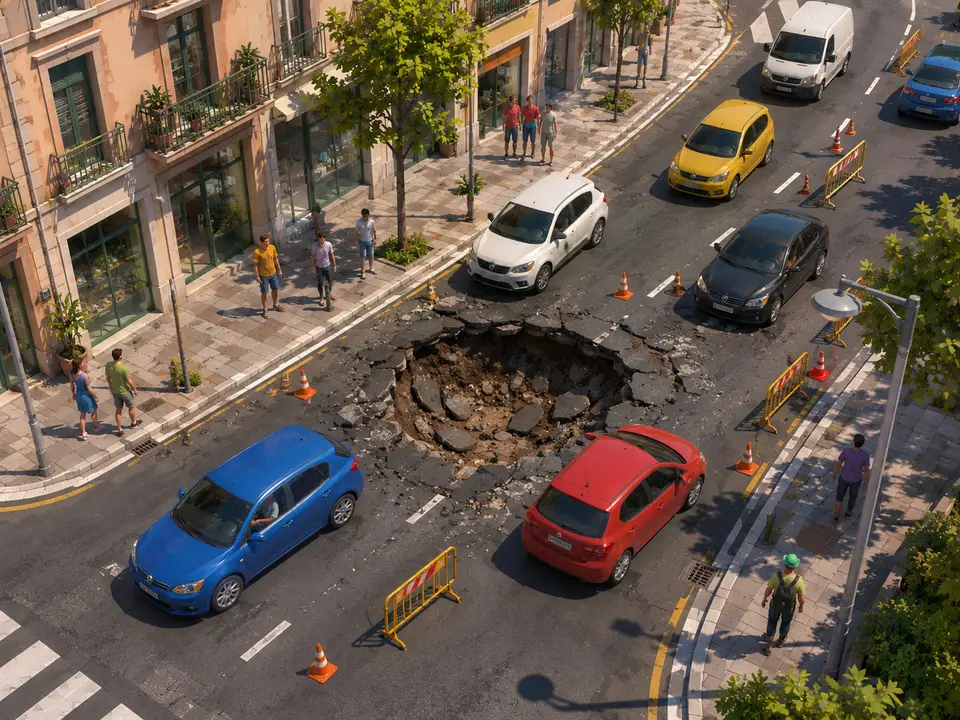
CAM-31Sinkhole in the roadway
«Alert me as soon as the sidewalk collapses, and tell me if vehicles or people are near the edge.»
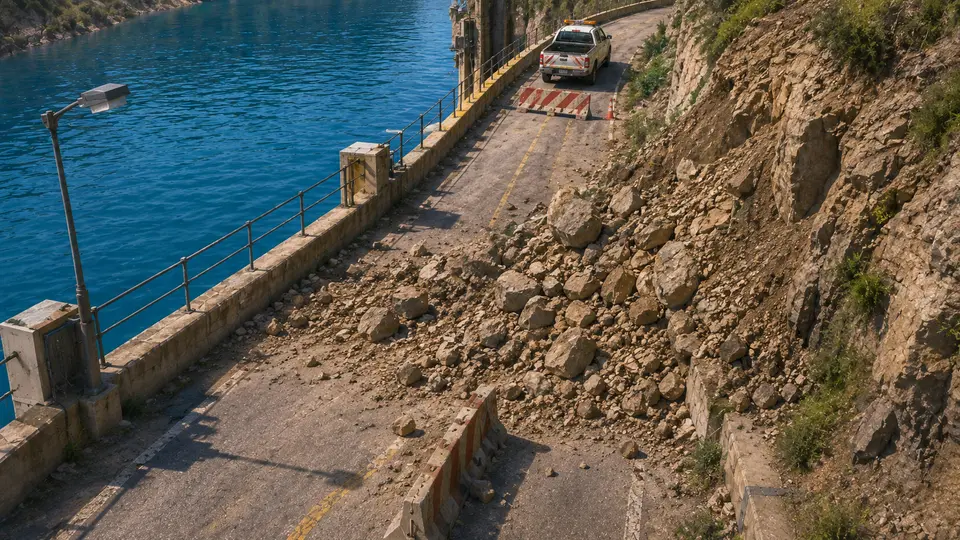
CAM-149Rockfall on the access road
«Tell me if material falls onto the access road, even if no vehicle goes past, and tell me how much of the roadway is left clear.»
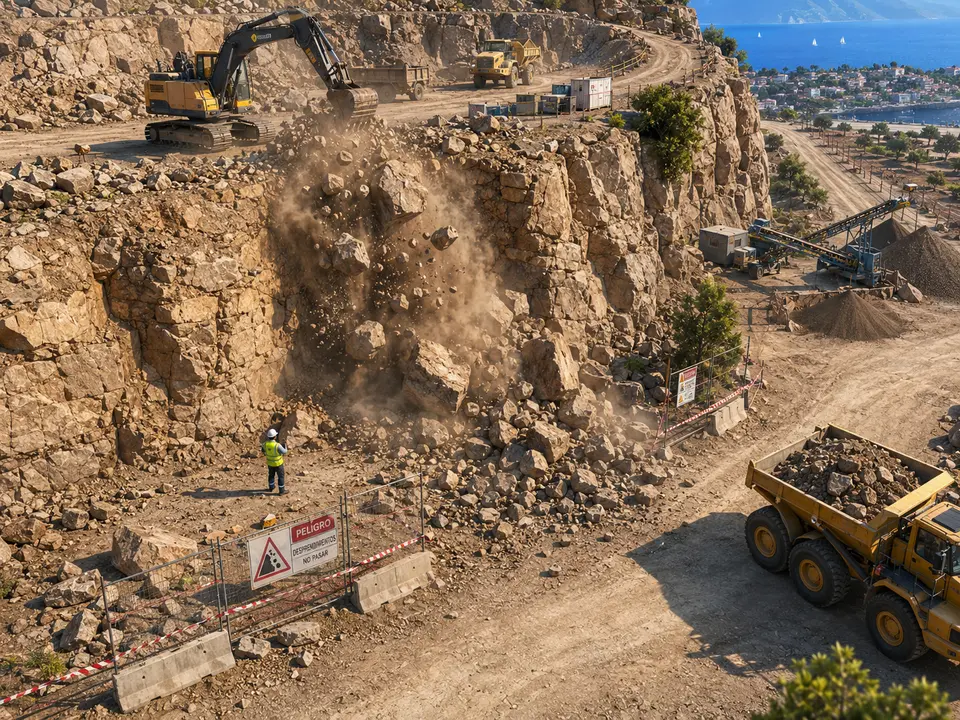
CAM-390The face is coming down with someone underneath
«Tell me if material comes off the face, and whether anyone was underneath at that moment.»
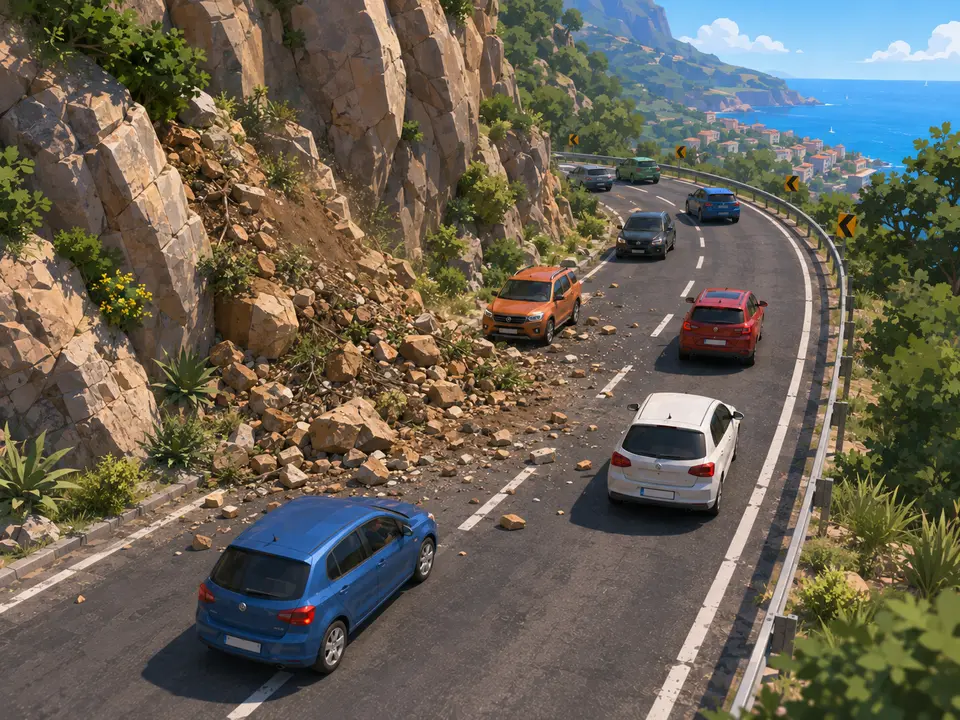
CAM-65Landslide onto the road
«Tell me if material comes down from the slope onto the road, and show me if the slope looks different from the last inspection.»


What it doesn’t do
IRIS does not predict rockfalls. It sees what has already come down, not what is about to: that is what monitoring instruments, inclinometers and slope inspections are for, and they are still needed.
It does not measure volume either, and it does not say whether the ground is still stable. It can show how much road is left clear and compare how that slope looked before, and that is already a lot for deciding fast, but the technical assessment is made by a geotechnical engineer.
Questions
- Can it warn before it falls?
- No. A camera sees what has already happened, not what is going to, and promising otherwise would be selling smoke. What it can do is show how that slope looked in earlier checks and whether its appearance has changed, which helps the inspection. To anticipate movement you have geotechnical instrumentation and periodic surveys, and IRIS neither replaces them nor wants to.
- Does it alert even when no car goes past?
- Yes, and that’s precisely the point. Detection doesn’t depend on there being traffic: it depends on the slope or the roadway having changed. That’s why it works at five in the morning on an empty road, which is when you gain the most margin. If there are vehicles or people nearby at that moment, the alert says so too, because a covered lane and a covered lane with people beside it aren’t the same thing.
- Does it work inside a quarry?
- Yes, and there the alert changes meaning: the first thing you need to know isn’t how much rock came down, it’s whether anyone was underneath. IRIS watches the face and alerts when material breaks away, saying whether there were people or machines at the foot at that moment. It identifies nobody: it says that somebody is there, where, and on which camera, so the supervisor can go straight there instead of counting heads over the radio.
- Can it tell a rockfall from a truck that tipped soil?
- Largely yes, because what it looks at is how the material appears. A tipping has a truck in front of it, a maneuver, and a heap growing in a planned spot. A rockfall appears all at once off the slope, spreads out in a fan and leaves dust. Even so, some scenes do look alike, which is why the rule is tuned with real footage from that stretch. One alert too many beats finding out with a car in it.
Demo · IRIS at work
A new case each time. Always the same screen.
It plays by itself and shows one case from start to finish. It’s a summary: the real screen has far more functions than fit in this box.
- Cameras on the map
- You draw an area
- What passed shows up
Not seeing yours here?
These words are the ones we have built, not the ones IRIS understands. The list falls short on purpose: you ask for it in a sentence, and sentences don’t run out. Tell us what is in front of your cameras and we’ll tell you whether it understands it, or not yet.
And the best part
What happens outside the framedoesn’t exist for IRIS. No camera sees the whole world.
So the first thing we do is check what each camera covers and write it down: from here you can understand this, and not that. A dull hour that saves a lot of misunderstandings.
Tell us your problem and we’ll say whether IRIS understands it, or not yet.
A person answers, the same working day.