Solutions by typeIntrusion detection
What if there’s someone inside the fence tonight?
Nobody was supposed to be here
Five thirty on an ordinary Tuesday afternoon. The yard of an urban substation, fence intact and gate closed. Someone walks across the gravel, between the transformer and the row of cells. They have forced nothing and haven’t climbed in front of any camera. They’re inside an enclosure where the correct number of people, at this hour, is zero.
10 cameras across 6 sectors
What IRIS is
IRIS watches the cameras for you.
IRIS Neural is an artificial intelligence that watches the cameras you already have and understands what happens in front of them. When something important happens —or something you told it you need to keep an eye on—, it alerts you; and whatever can be counted, it counts in numbers. All day long, without anyone having to watch a screen.
You tell it what you need to watch, and IRIS does it.
Works with the cameras you already have. Nothing to replace.
A person replies, not a form.
- Your footage never leaves your premises.
- It doesn't identify people.
- Certifications →
This is how you ask for it
«Tell me if there is anyone inside the fence, whatever the hour. No rule beyond that is needed.»
There are two bills here, and the theft isn’t the worse one. Inside that fence there are twenty-five thousand volts with nothing covering them, and whoever went in doesn’t know it. If something happens to him, the problem stops being a security matter and becomes yours: your site, your fence, your liability. And if nothing happens to him, he comes back another day better prepared, because now he knows the way in.
You decide once
You decide this once, and it’s the shortest rule in the whole vocabulary: nobody’s inside. You say which enclosure it is, which time slots have scheduled work and who gets called when there’s none. IRIS watches the whole site every night, without depending on anyone being in front of a monitor at three in the morning. When a crew goes up with a work order, that window opens and closes itself when they finish.
There are enclosures where the correct number of people is zero. A substation, a pumping station, a welding cell with three robots free to move, a schoolyard at midnight. They aren’t restricted zones: they’re empty. And that’s why this is the shortest rule there is: no schedule to check, no clothing, no behavior. Either there is someone inside or there’s nobody.
The trouble is that “empty” is exactly what nobody watches. A camera pointed at a place where nothing happens for months is a camera nobody opens. And the day something does happen it turns out the video was there, but nobody was looking at it. That sentence comes back word for word in every report of this kind.
And the empty enclosure has many faces. The yard of an urban substation, which nobody enters without a work order. A welding cell with three robots free to move and a person inside the fence, white hard hat on, who never asked for the machines to be stopped. The red-painted area around a valve skid, which nobody enters without permission and which somebody has just walked into. The service hallway of a prison block during the hours when that stretch has to be empty. The pedestrian gate of a school in the middle of the morning, with the yard full of children behind the railings. Five places with nothing in common and a single sentence: here, right now, there was supposed to be nobody.
IRIS watches that emptiness and only speaks when it stops being empty. There’s a person inside the fence: camera, hour, live video and an alert to the person who has to decide, while it’s happening. It does not know who it is, and it never decides what anybody is doing there: it says there is a person where there should be none. Many times it’ll be a technician who turned up without warning, and that call takes ten seconds. That’s precisely why it works.
What changes
Before, an empty site was watched by a guard doing a round every four hours and by video that was only opened after a theft. Now, the minute someone steps on the gravel somebody knows and can call. What changes is what can be done: with an alert at three in the morning there is still time for nothing to happen; with the morning report, all you can do is start writing up what already did.
Where we have seen it

CAM-233A person inside the fence with three robots live
«Tell me if somebody enters the welding cell while it is still available to move.»
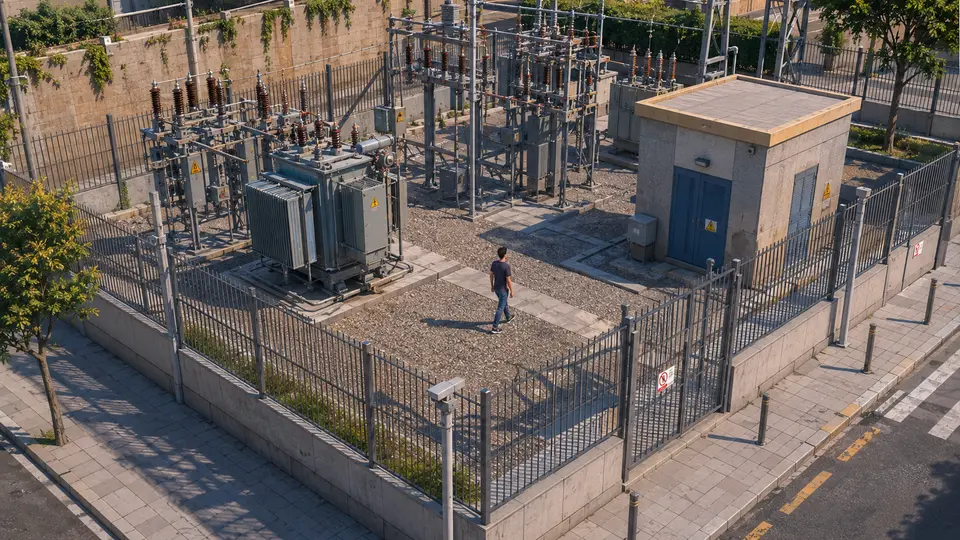
CAM-187Someone inside the fence
«Tell me if there is anybody inside the fence, at any hour. That is the whole rule.»
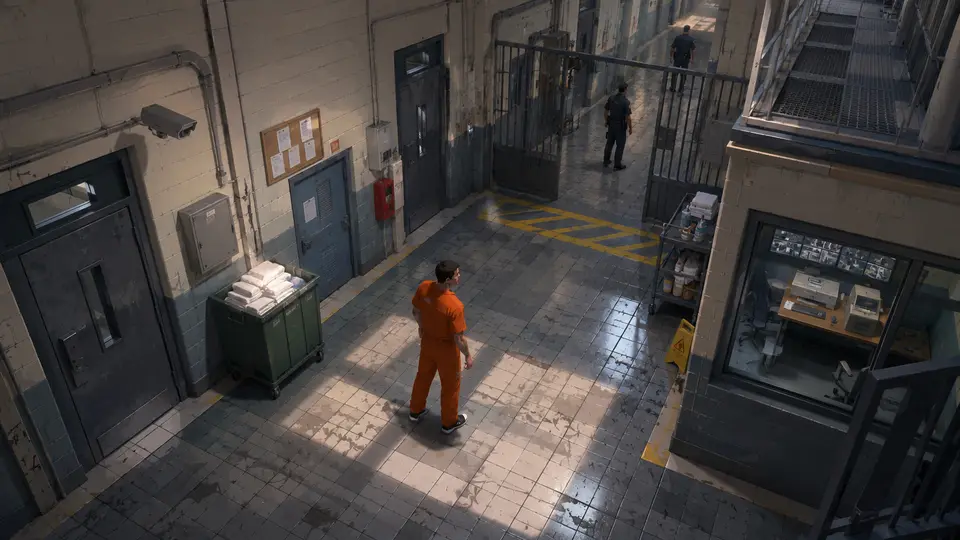
CAM-111Someone in an area that should be empty
«Tell me if there is anyone in the service corridor during the hours when that stretch has to be empty.»
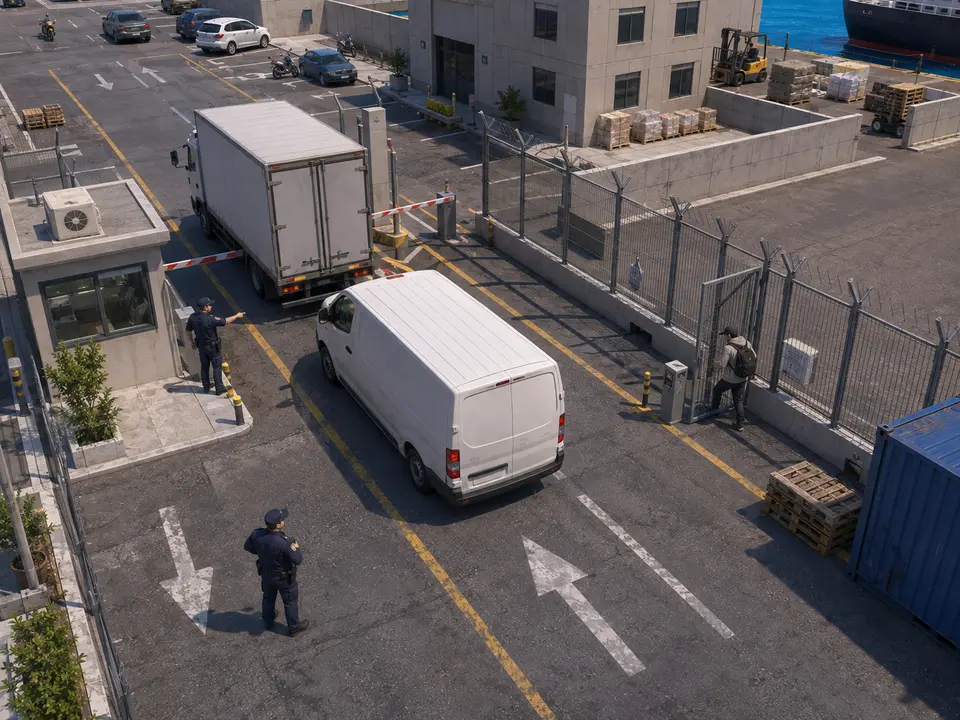
CAM-561How many people are inside the compound right now
«Tell me if the turnstile stops adding people during the shift change.»
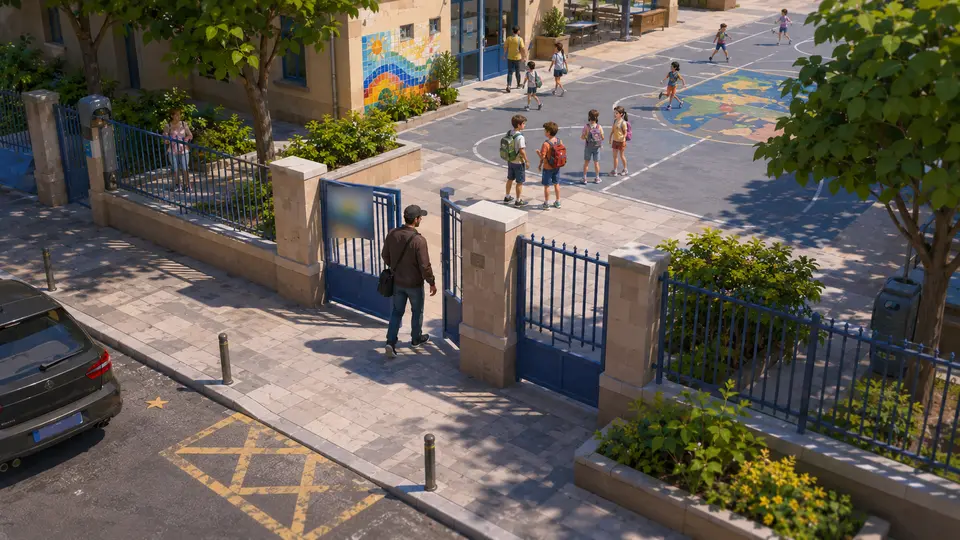
CAM-138Someone comes in outside access hours
«Tell me if someone comes through the gate outside the arrival and pick-up slots we have set, so that someone from the front desk can go down and see what is going on.»
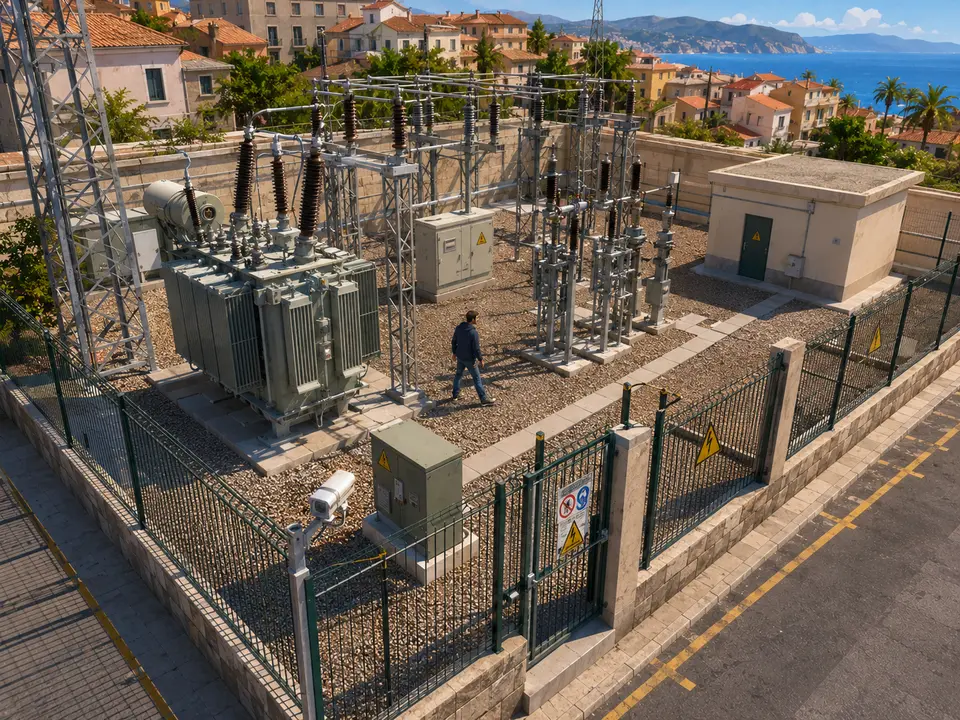
CAM-340Someone is walking through a compound that is always empty
«Tell me the moment there is a person inside the fence, at any hour, even if they have not touched anything.»
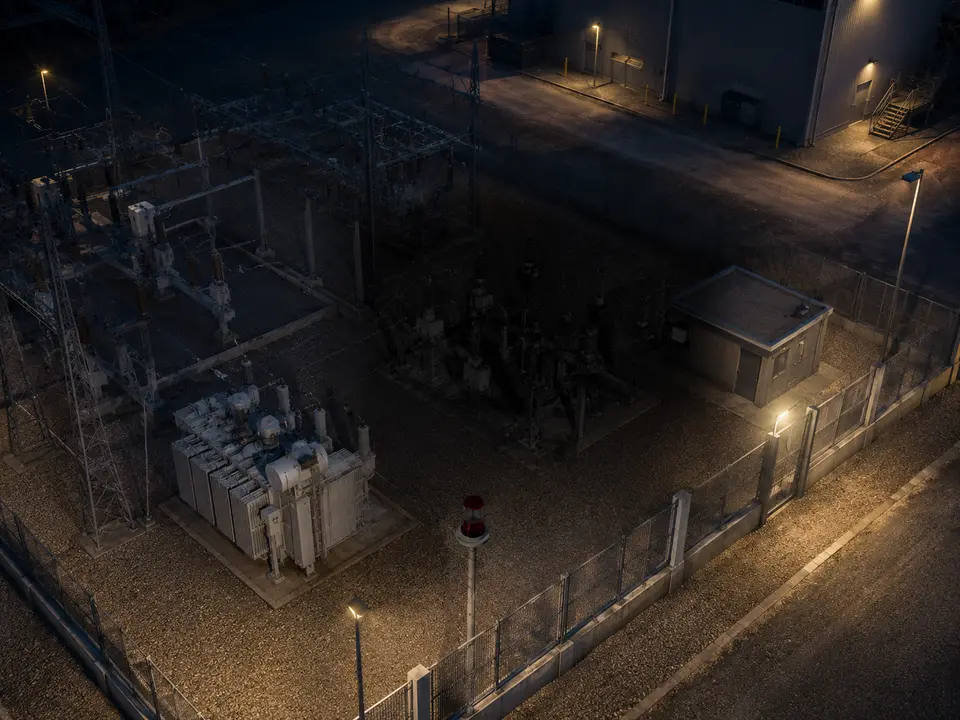
CAM-357Tonight the substation is in the dark
«Tell me if at night there is less light than usual inside the compound, or if the red beacon is not lit.»


What it doesn’t do
IRIS does not know whether that person is allowed to be there. It sees that someone is inside and it alerts. Whether it is a technician with a work order or somebody who should not be there is settled by the calendar you gave it and, in the end, by whoever picks up the phone.
And it only sees what the camera sees. In heavy rain, fog, or a site with no light at all, the image gets worse and so does the detection. Any perimeter is tested at night and in bad weather before it counts as covered.
And it does not prevent entry. IRIS does not close a gate, does not set off a siren on its own and does not replace the fence: it alerts, and a person decides. A site with cameras still needs the fence it had.
Questions
- Does it alert on animals or a plastic bag blowing past?
- No, and that’s the difference from a motion detector. A classic sensor alerts on anything that moves: a cat, a branch, a plastic bag, the shadow of a cloud. IRIS tells apart what it’s that moved and only alerts when what’s inside the fence is a person or a vehicle, depending on what you asked for. That’s what makes it possible to really watch an empty site: if it alerted twenty times a night, within a week nobody would read the alerts.
- What about the hours when people do go in to work?
- They get marked, and then it doesn’t alert. You say which slots have scheduled work in that enclosure, or a specific window is opened the day a crew goes up. Outside those hours the rule goes back on its own to the usual one: nobody’s inside. It can also be left the other way around in places where work is never unannounced, which is the case in many substations: alert always, at any hour, and whoever receives it checks whether it was scheduled.
- Does it protect the person who gets in, not just the equipment?
- Yes, and in many places it is the main reason. Inside a substation there is live voltage in the open air, and inside a robot cell there are machines that move on their own: whoever gets in without knowing that runs a risk they don’t understand. The alert arrives just as fast whether the person inside is there to take copper or is a teenager who climbed in out of curiosity, and in the second case it can prevent something far worse than a theft. Same detection, two different reasons.
- Do we have to light up the whole site?
- It doesn’t have to be lit throughout, but the camera does have to see. Many outdoor cameras have night vision and that’s enough in a good share of cases; in others, light has to be added or the camera moved. What can’t be done is to promise it works in the dark without having tried it at that site, at that hour and in that light. It’s checked at night before the site counts as covered, camera by camera.
Every simulation
Something has spilled
Tell me if there is liquid or foam outside its place and it is still there two minutes later.
- The sentence
- Where it applies
- What it finds
- The same rule
Not seeing yours here?
These words are the ones we have built, not the ones IRIS understands. The list falls short on purpose: you ask for it in a sentence, and sentences don’t run out. Tell us what is in front of your cameras and we’ll tell you whether it understands it, or not yet.
And the best part
You already record.The hard part was always watching it.
Years of video that only get opened once something has gone wrong. IRIS understands those same images as they arrive, so the answer no longer lives only in the archive.
Tell us your problem and we’ll say whether IRIS understands it, or not yet.
A person answers, the same working day.