Solutions by typeProduction efficiency
What if someone walks into the room without what they should be wearing?
Into the clean area without the required kit
Six in the morning at the hygiene airlock between the hallway and the packing room. On the left, the stainless washbasin with three taps, unused. On the right, the rack of clean coats and the white boots on the shelf. A worker with their head uncovered, no coat and no hairnet, crosses the turnstile into the clean area. Behind the window, the line is full of bottles. At this hour the airlock is full of people in a hurry.
3 cameras across 2 sectors
What IRIS is
IRIS watches the cameras for you.
IRIS Neural is an artificial intelligence that watches the cameras you already have and understands what happens in front of them. When something important happens —or something you told it you need to keep an eye on—, it alerts you; and whatever can be counted, it counts in numbers. All day long, without anyone having to watch a screen.
You tell it what you need to watch, and IRIS does it.
Works with the cameras you already have. Nothing to replace.
A person replies, not a form.
- Your footage never leaves your premises.
- It doesn't identify people.
- Certifications →
This is how you ask for it
«Tell me if anyone crosses the turnstile into the room without a hairnet, without a coat or without using the washbasin, and tell me at the door, not inside.»
The kit isn’t removed inside the room: it’s never put on at the door, and the door is where everything’s decided. When nobody looks up at the right second, the badly dressed entry is discovered later: in a video review, or when a deviation is opened and the batch is in doubt. And if what crossed was a raw-product gurney into the cooked area, it’s never discovered in the finished product at all.
You decide once
The plant decides which garments are required at each door, where the floor line marking the limit is, what hours it applies and who gets told. If someone reaches the air shower door without a mask or without shoe covers, alert the room supervisor before they cross, with the missing item and the image. IRIS applies it at every entrance, on every shift, four in the morning included, and keeps the monthly count.
In a hygiene airlock at six in the morning, nobody’s doing anything wrong. In a cleanroom changing area at six fifteen it is the same: two people fully dressed — cap, mask, gloves, shoe covers — and a third heading for the door with their face uncovered and their street shoes not covered. And in a ready-meals room there are two colored markings on the floor, one for raw and one for cooked, and someone crossing with a gurney of meat trays because it’s the short way around.
A badly dressed entry in pharma ends in a deviation and a batch in doubt. A raw-to-cooked crossing is never seen in the finished product: the tray comes out fine, it packs fine, and the problem shows up weeks later in a complaint or an analysis.
IRIS looks at the door, not at the person. It sees which garments the person arriving is wearing and which are missing, and it sees that a gurney has moved from the raw side to the cooked side. The alert goes out while that person is still in front of the door, with the missing item and the time, because inside it is only good for writing the report. IRIS doesn’t lock the turnstile or bar the door, and that’s deliberate: a system that locks up on its own ends up shutting out the people who needed to get in, and within days somebody disconnects it.
What changes
Before, a badly dressed entry was caught if somebody happened to look at the right second, and if not it turned up three days later in a video review. Now the alert fires at the door itself, with the time and the missing item, and there’s time to stop that person before they set foot in the clean area. And at month end there is a number: how many incomplete entries, on which shift and at which door.
Where we have seen it
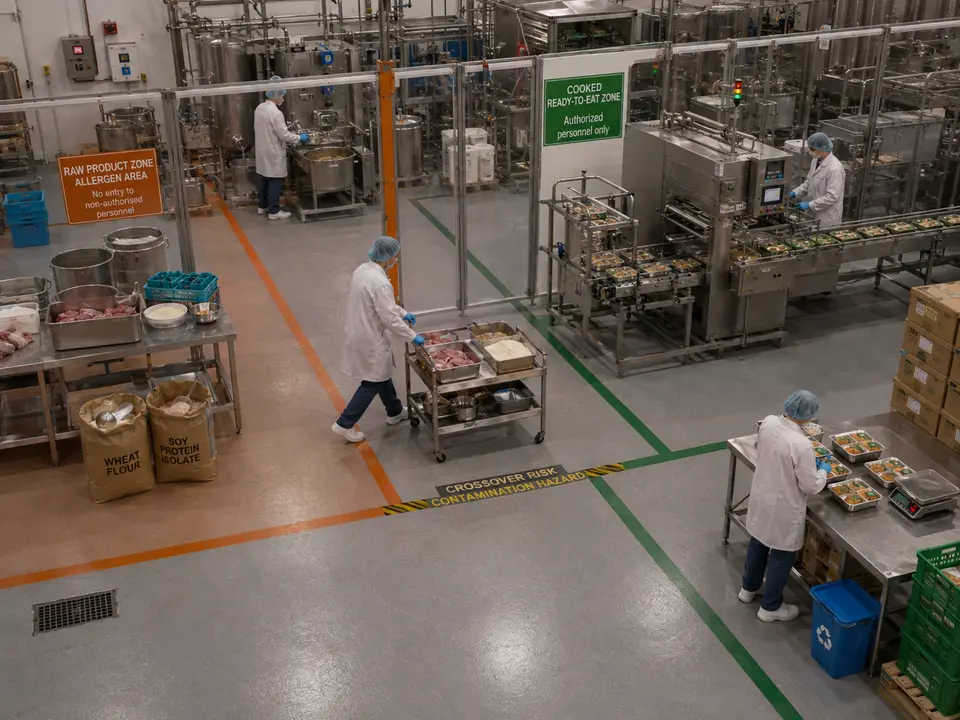
CAM-207A raw cart crossing into the cooked zone
«Tell me if anyone takes material from the raw side into the cooked packing side, even if they only cross for a second.»
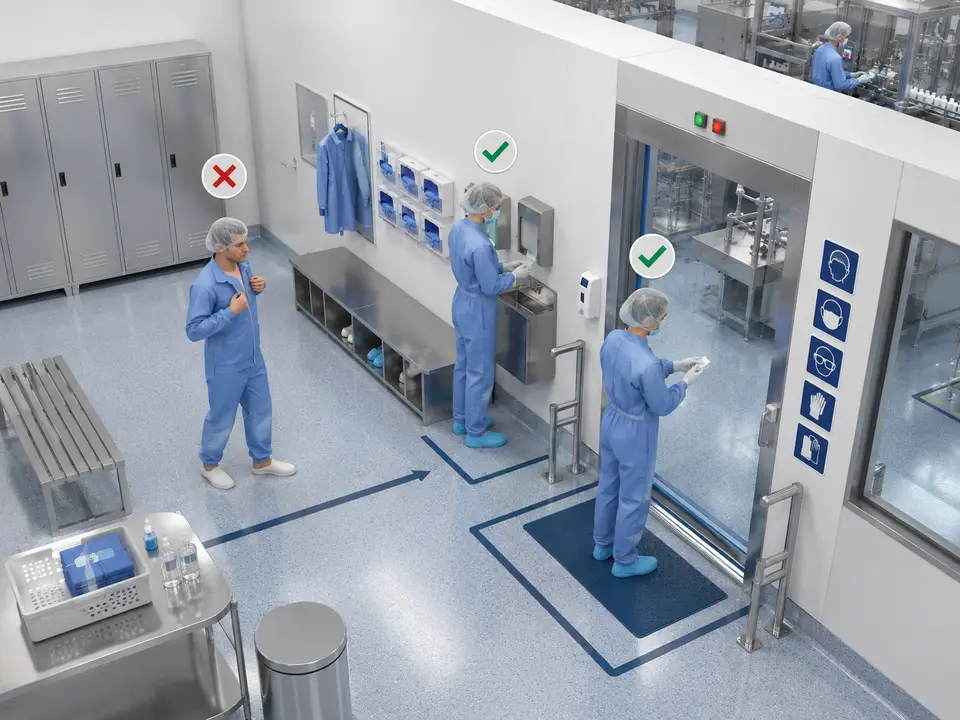
CAM-280Through the gowning room with no mask and street shoes on
«Tell me if somebody reaches the air shower door without a mask or without overshoes, before they go through.»
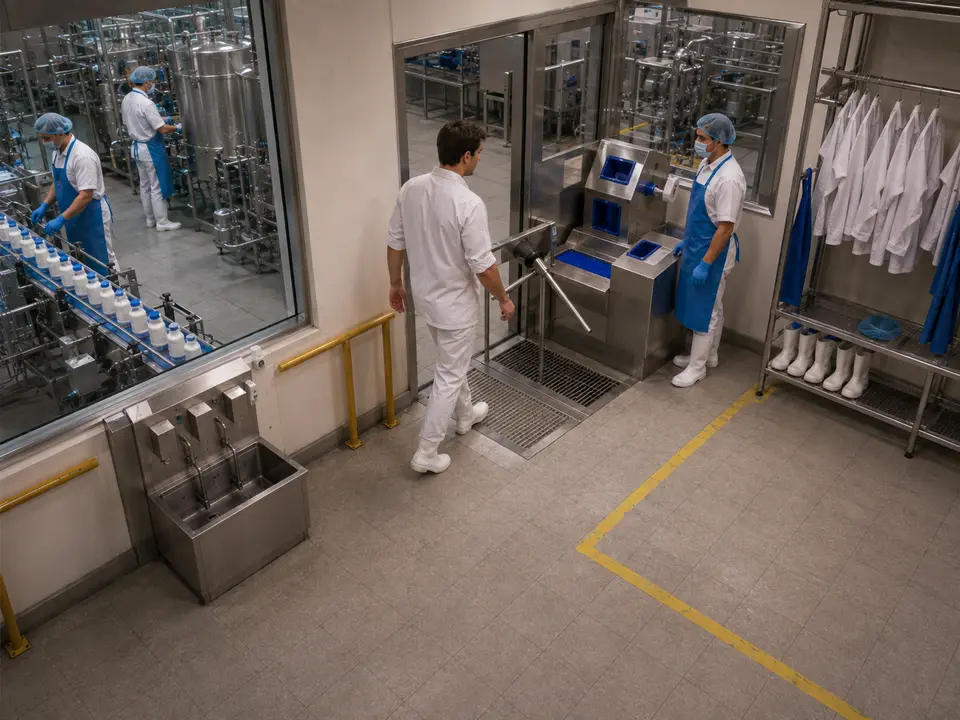
CAM-212Into the clean area with no hairnet
«Tell me if somebody goes through the turnstile into the hall with no hairnet, no coat or without using the wash trough, and tell me at the door, not inside.»


What it doesn’t do
IRIS checks only the garments visible in frame: cap, mask, goggles, gloves, coat and shoe covers. What cannot be seen is not checked. It does not know whether the coat came sterile out of the autoclave, or whether the gloves were disinfected before entry.
And it identifies nobody: it detects that SOMEONE crossed without a hairnet, not WHO.
Questions
- Does IRIS know who went in without a hairnet?
- No. IRIS identifies nobody. It detects that SOMEONE crossed the turnstile without a hairnet; it does not detect WHO that person is, does not recognize their face, does not compare it against any database, does not cross-reference it with clock-in records and does not store who they are. The alert says somebody went in without the item, with the camera and the time. It’s there to correct it in the moment, not to penalize a named person. In a changing area, that distinction matters twice over.
- Does the alert arrive before the person crosses the door?
- Yes, if the camera watches the area in front of the door, which is how this rule is installed. It rests on a floor line marked by the plant, and the alert goes out while the person is standing at the door, not once they’re inside. IRIS predicts nothing: it sees what that person is wearing at that moment. Inside, the same alert is only good for writing the report, which is why the camera goes before the door and not after it.
- Can a camera check every item of clothing?
- No. Only those visible in frame: cap, mask, goggles, gloves, coat and shoe covers. What can’t be seen isn’t checked. A camera doesn’t know whether the coat came sterile out of the autoclave or whether the gloves were disinfected before entry. That’s held up by the plant’s procedure and controls. IRIS provides the visual check and the exact minute, and works alongside those controls, not in their place.
- Does it work for separating raw from cooked, or allergen lines?
- Yes. The rule is the same with different zones: allergen material entering a line that doesn’t carry it, utensils moving from one area to another, a gurney coming back the wrong way. The plant defines which routes must not mix and in which direction, and IRIS flags it when they do cross, even if the crossing lasts a second. What the camera doesn’t say is whether anything got contaminated: that’s settled by lab analysis and decided by quality.
The real interface, step by step
A camera looks. IRIS understands what it sees.
An extract of the real screen, no voice-over and hands-free. Each round poses another situation. What sits behind it is a good deal bigger than what you see.
- It lands in the tray
- You open it
- You confirm or dismiss
Not seeing yours here?
These words are the ones we have built, not the ones IRIS understands. The list falls short on purpose: you ask for it in a sentence, and sentences don’t run out. Tell us what is in front of your cameras and we’ll tell you whether it understands it, or not yet.
And the best part
Ten cameras or four thousand:not one of them goes unwatched.
The day IRIS starts, they all start: the ten in a school or the four thousand in a whole network. And it only raises its hand when the thing you asked for happens.
Tell us your problem and we’ll say whether IRIS understands it, or not yet.
A person answers, the same working day.