Solutions by typePersonal safety
What if the operator never sees them?
On foot where the cab can’t see
It’s 8:05 a.m. on the tipping floor of a waste plant. A loader is filling, a haul truck is waiting its turn and a tracked machine is slewing on the spot. Someone on foot crosses between the three of them, a sheet of paper in hand, looking for the supervisor. Not one of the three cabs can see them. It takes eleven seconds to come out the other side. All eleven go fine.
5 cameras across 4 sectors
What IRIS is
IRIS watches the cameras for you.
IRIS Neural is an artificial intelligence that watches the cameras you already have and understands what happens in front of them. When something important happens —or something you told it you need to keep an eye on—, it alerts you; and whatever can be counted, it counts in numbers. All day long, without anyone having to watch a screen.
You tell it what you need to watch, and IRIS does it.
Works with the cameras you already have. Nothing to replace.
A person replies, not a form.
- Your footage never leaves your premises.
- It doesn't identify people.
- Certifications →
This is how you ask for it
«Tell me if someone on foot enters the yard while machines are maneuvering.»
This happens fifteen times a day and is written down nowhere. Nobody notes it because nothing happened, and the operator never even learns he was six feet from someone. When it finally does happen, the cost isn’t up for debate: a person in the hospital, the plant stopped, the labor inspectorate on site and an investigation that starts by asking for that day’s video. The video exists. Nobody had ever watched it.
You decide once
The plant decides once where the machine area begins, when it’s live and what happens when someone walks into it. If a person on foot is inside the yard, at any moment, and machinery is working, then the alert sounds in the cabin, that camera opens and it’s recorded with the time. The rule is written once, in a half-hour meeting, and it applies just the same on Monday morning as at seven on a Saturday evening.
An excavator has a blind spot the size of a car. Three people fit behind a loaded haul truck and show up in neither the mirrors nor the backing up camera. The operator isn’t reckless: he simply can’t see what is there. And the person on foot knows it, and crosses anyway, because circling is two hundred yards and he has a docket to hand over.
The day it goes wrong there is no screech of brakes. In a quarry, a haul truck backs up toward the edge of the bench. On a tipping floor, a loader slews with the boom full. On a site, a tracked machine shifts six feet to reposition. Six feet are enough. The accident doesn’t happen at speed: it happens in a slow maneuver, with someone behind who assumed he had been seen.
IRIS watches the whole yard from above, and from there is no blind spot. It sees when machines are working and when a person on foot enters that same space, and it says so while the person is still crossing, not afterward. It also keeps count: how many times a day someone walks across that yard, at what hour and along which line. With that, the walkway gets painted where people actually walk, instead of where it looked tidy on the drawing.
What changes
Before, the way to know whether people were crossing where they shouldn’t was to stand at the gate one morning and watch. It was done twice a year and produced a report full of impressions. Now every crossing is counted, with its time and its path, and by the end of the month the plan shows that nearly all of them go through the same point: the shortcut to the parts store. That’s where the barrier goes, not at the far end of the yard.
Where we have seen it
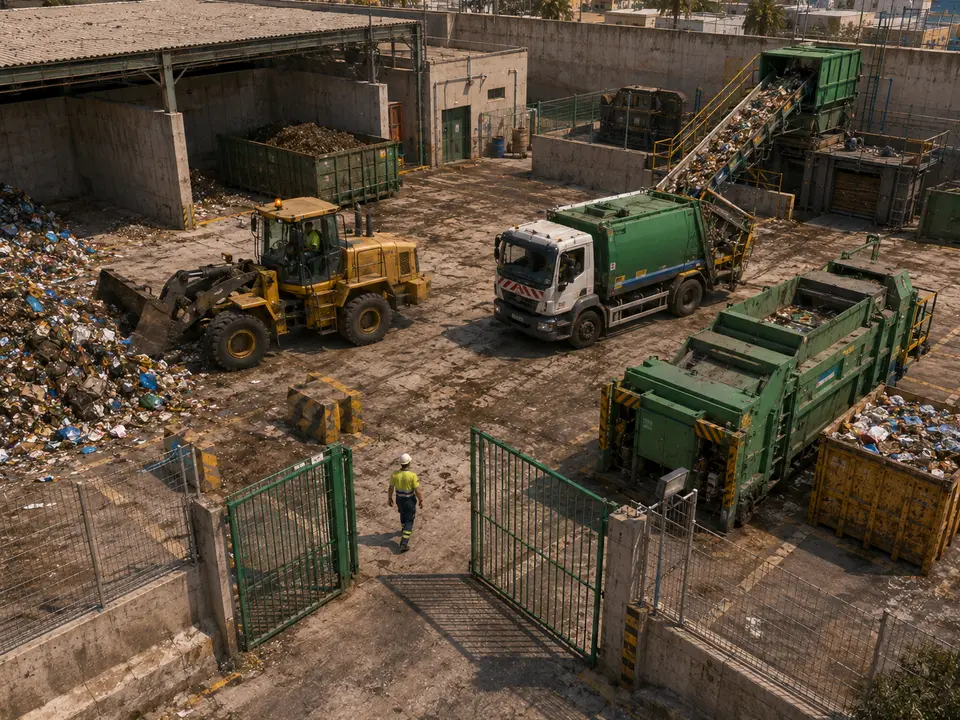
CAM-180Person on foot among machines
«Tell me if anyone walks into the yard while machines are maneuvering.»
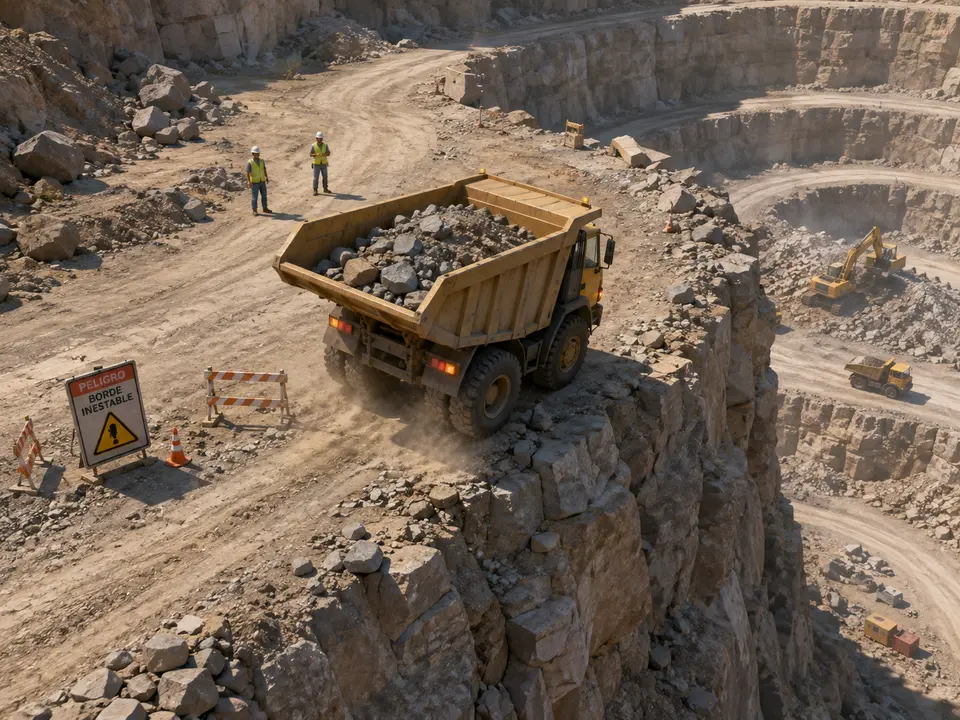
CAM-389A dump truck backing up to the very edge of the bench
«Tell me when a truck backs up past the edge markers, before it tips.»
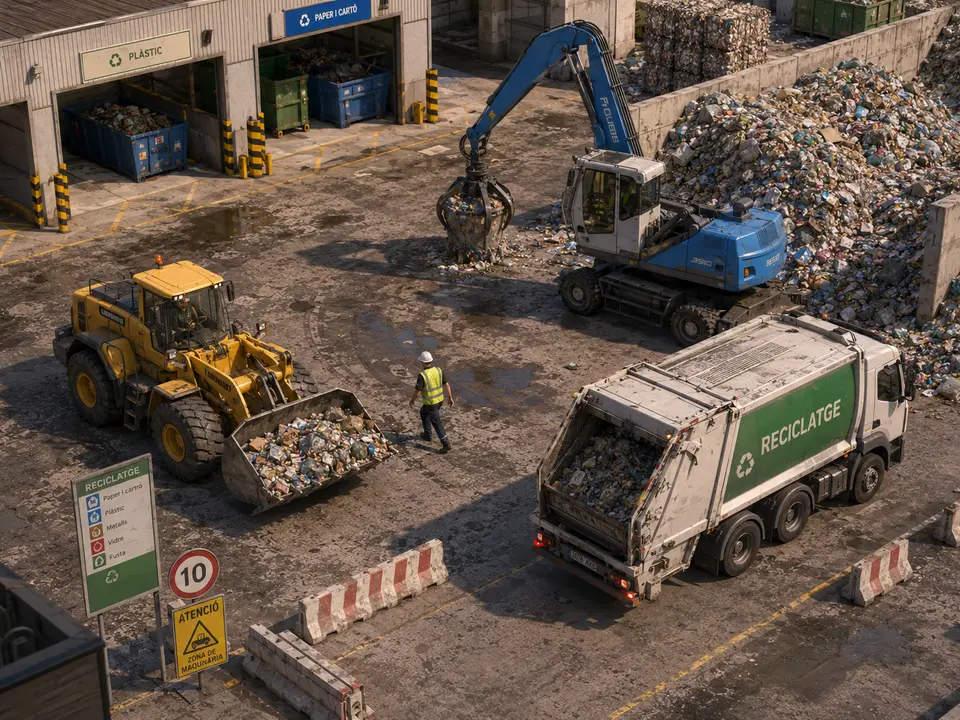
CAM-429A worker on foot between three machines that can’t see them
«Alert me if there is a person on foot on the tipping floor while the machinery is working.»
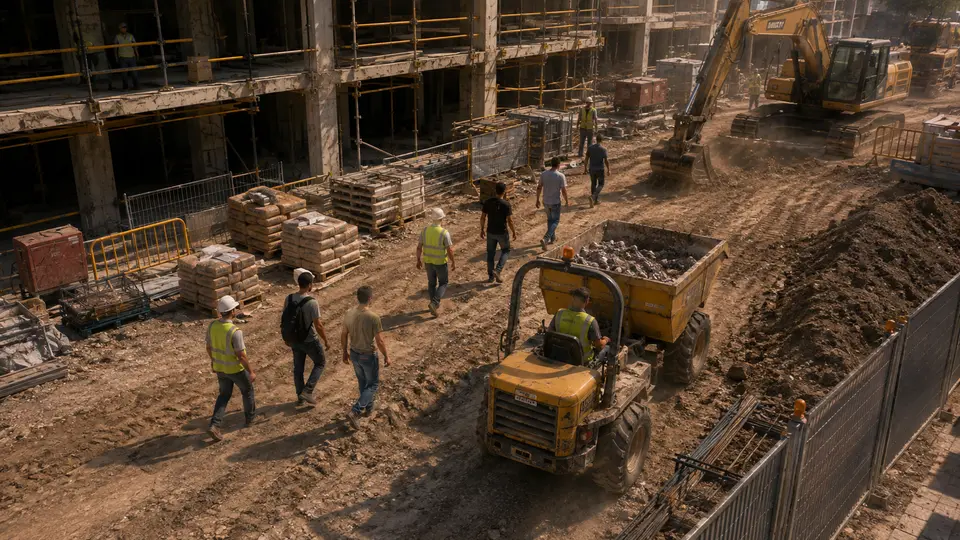
CAM-52Bare-headed among the machines
«Tell me when somebody walks across the area where the machines are working without a hard hat on, and tell me while they are crossing — there is no second chance there.»
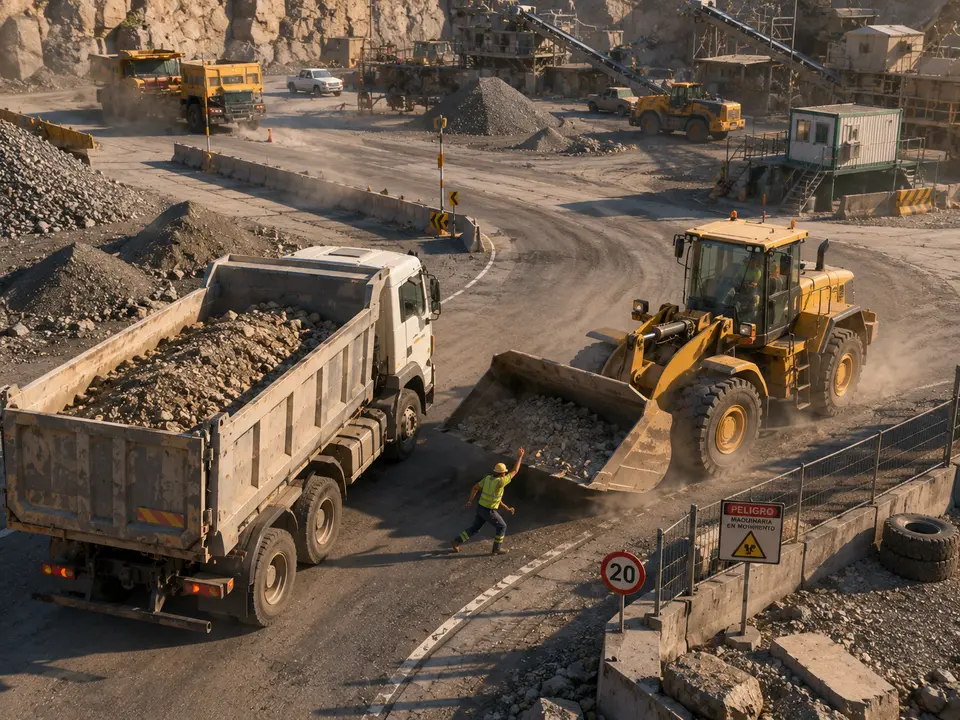
CAM-388A worker on foot between a truck and a loader
«Tell me the moment anyone is on foot in the machine area of the yard, even briefly.»


What it doesn’t do
IRIS does not measure the exact distance between person and machine, and does not know whether the operator saw them. It sees that both are in the same yard while the machine is working.
And it does not act on the machine: it does not brake, it does not cut power and it does not decide. The alert goes to a person, and braking is decided by whoever is driving. That line is deliberate.
Questions
- Can IRIS stop the machine?
- No. The alert goes wherever you send it: to the control room, to a phone, to a beacon or to a screen in the yard itself. What IRIS does not do is touch the machine: it does not brake, it does not cut power and it does not decide. It alerts, and whoever is driving decides. That line is deliberate, because a machine that stops by itself at the wrong moment is a risk too, sometimes a bigger one.
- Does it work at night and in dust?
- Yes, provided the camera can see the yard, and that gets checked before the rule is accepted. A well-lit yard at night works; a cloud of dust against the light at midday can hide a person exactly as it hides them from the operator. That’s why the camera goes high, facing the yard square on, and why you watch a real working day before trusting it in the dark.
- Can it count how often someone crosses on foot?
- Yes, and it’s what actually fixes the yard. A single alert gets mentioned and forgotten; the same count over a month shows which point nearly everyone uses, at what hour and coming from where. With that you decide where the barrier goes, where the walkway goes and when it’s worth pausing maneuvers. The count is set up by drawing the line on the image, not by describing it in words.
- Do people need to carry a device?
- No. IRIS works with what the camera sees, so it covers the in-house operator, the driver stepping down from the truck and the sales rep who came for a visit alike. That’s exactly the gap left by wearable tags: they work for whoever is wearing one, and the person walking across a yard where they shouldn’t be is almost never the one wearing it, and the camera doesn’t need one.
A different case every time
Watch what happens. Then watch what IRIS does with it.
Not a recorded video and not a drawing: it’s a summary of the real tool, with a different case each time round. The whole tool doesn’t fit in a box.
- You ask
- IRIS searches
- It shows you
Not seeing yours here?
These words are the ones we have built, not the ones IRIS understands. The list falls short on purpose: you ask for it in a sentence, and sentences don’t run out. Tell us what is in front of your cameras and we’ll tell you whether it understands it, or not yet.
And the best part
You decide the rule onceand it’s applied the same way every time.
At three in the morning it means what it means at noon, on camera one and on camera four thousand. It doesn’t depend on who’s on shift, or how tired they are.
Tell us your problem and we’ll say whether IRIS understands it, or not yet.
A person answers, the same working day.