CAM-907
A knock on the mount
A narrow street in mid-afternoon, seen from above and off to one side. On the left, stone façades with balconies and flowerpots and two striped awnings; on the roadway, cars parked in a line and a silver one driving past; on the right, a sidewalk with a tree and a good many people walking. The framing is the usual one: the camera hasn’t moved from its spot. What’s happening is that everything comes out double. The balcony railings appear repeated, the people are overlapping shadows and the lines on the road tremble. The camera moved while it was taking the picture. IRIS sees that the mount is moving and that the image has lost its sharpness; whether it was a knock, a loose bolt or a truck going past, it doesn’t know.

Turn on IRIS Vision
AI-generated image
What IRIS is
IRIS watches the cameras for you.
IRIS Neural is an artificial intelligence that watches the cameras you already have and understands what happens in front of them. When something important happens —or something you told it you need to keep an eye on—, it alerts you; and whatever can be counted, it counts in numbers. All day long, without anyone having to watch a screen.
You tell it what you need to watch, and IRIS does it.
Take this case: what matters to IRIS isn't whether the street looks fine, it's whether the picture shakes and doubles up, a sign the mount has shifted. The moment that happens, staff get an alert with the camera, the timestamp, and how many times it's occurred. With that count, you send someone to tighten the mount and check afterward that the picture is sharp again.
Works with the cameras you already have. Nothing to replace.
A person replies, not a form.
- Your footage never leaves your premises.
- It doesn't identify people.
- Certifications →
What IRIS understands
What it recognizes in this scene
- image blurred by shake
The rule
You decide once. IRIS applies it always.
If
the image comes out blurred because the mount is moving, and the shaking lasts longer or repeats more often than is normal at that spot
Then
- alert maintenance with the camera, the time of the knock and the video of the seconds before
- keep an eye on that camera over the following days and alert again if the shaking comes back
- log how many times it shook each day, so the maintenance visit is asked for with a figure and not a hunch
The instruction that set it up«Tell me if a camera takes a knock or starts shaking, and tell me whether it happens once or every day at the same time.»
What changes
What changes for whoever answers for the cameras working
A shaking camera is the fault everybody lets slide, because ‘you can see something, more or less’. But a doubled image stops being useful exactly when it is needed: you can’t read a plate, you can’t tell whether someone is carrying something in their hand, and the detections that come out of that camera are worth less. And a mount that vibrates today is a mount that in a few months ends up looking at the ground; that’s when somebody notices, and by then the video of those months is worth nothing. With IRIS the shaking is noticed the day it starts, with the camera, the time and how many times it has happened. With that figure the visit is requested in writing and solved by tightening a mount, instead of arguing about whether ‘it looks odd’.
What people usually ask
What about the truck that goes past and shakes the light pole?
It doesn’t need to raise anything. A truck causes a shake that lasts a couple of seconds and settles by itself, and it repeats at the hours when trucks come. That’s a pattern, and a pattern is left out of the alert. What’s asked for is what doesn’t fit: the shake that lasts far longer, the one that arrives at three in the morning, or the one that never settles. And if it turns out the trucks leave that camera shaking every day, that isn’t a failure of the alert: it’s the information that the mount isn’t strong enough for that street.
Does IRIS know whether someone hit the camera?
No, and it won’t claim to. What it sees is that the camera moved, how much and for how long. Whether it was a hand, a ladder leaned against the pole, the wind or a bolt that has been loose for months, the image doesn’t tell them apart. What it does hand over is the exact time and the video of the seconds before, which is where the answer usually is. Whoever watches that video decides whether to call maintenance or whether this is something else; IRIS accuses nobody and writes the word sabotage nowhere.
If the picture is still there, why raise an alert about a bit of shaking?
Because what’s lost isn’t the whole picture, it’s the moment. The seconds when the camera shakes are exactly the seconds people ask for afterward, and in those seconds you can’t read a plate or see what someone is carrying. That’s why this case is marked as a warning and not as critical: the camera is still useful most of the time. But a loose mount doesn’t fix itself, and the sooner it’s known the cheaper it is: you tighten a mount today, or you replace a camera that has come down in six months.
See it for yourself
This isn’t a video. It’s a slice of the real screen.
A summary of the real interface, played hands-free. You see one case from start to finish; what you don’t see are the other screens, and there are many.
- The hour, as a grid
- You look where it’s dark
- You jump to that minute
Next step
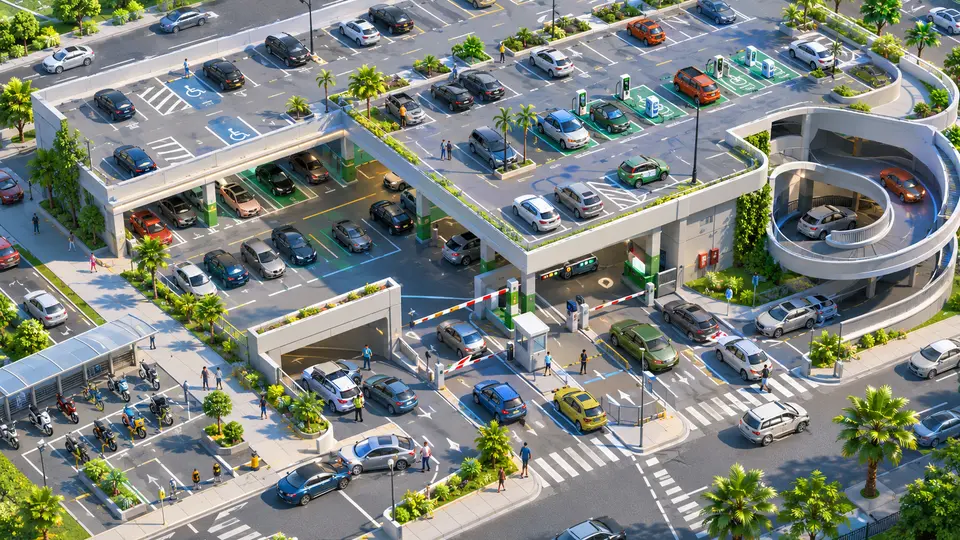
How many spaces are open right now?
15 cases: 9 raise an alert when something happens and 6 only measure. You see each image as it is, and then with what IRIS understands on top.

What does a venue with twenty thousand people inside see?
15 cases: 11 raise an alert when something happens and 4 only measure. You see each image as it is, and then with what IRIS understands on top.


And the best part
Nobody covers the night shift:the camera that is already on covers it.
It doesn’t tire, it doesn’t blink and it doesn’t go for coffee. What happens at night is understood just as it would be at midday, and whoever is on duty hears about it while it’s happening.
Tell us your problem and we’ll say whether IRIS understands it, or not yet.
A person answers, the same working day.