Solutions by typePersonal safety
What if the driver never sees them?
From the cab, they don’t exist
It’s 7:10 p.m. on the tipping floor of a waste plant. The sun has gone and the floodlights aren’t on yet. Three machines are maneuvering at once and a worker crosses between them with nothing reflective on and a folder under one arm. They’re going to say something to the loader driver. The loader is backing up. From the cab, against the light and through a dusty mirror, that person doesn’t exist.
8 cameras across 7 sectors
What IRIS is
IRIS watches the cameras for you.
IRIS Neural is an artificial intelligence that watches the cameras you already have and understands what happens in front of them. When something important happens —or something you told it you need to keep an eye on—, it alerts you; and whatever can be counted, it counts in numbers. All day long, without anyone having to watch a screen.
You tell it what you need to watch, and IRIS does it.
Works with the cameras you already have. Nothing to replace.
A person replies, not a form.
- Your footage never leaves your premises.
- It doesn't identify people.
- Certifications →
This is how you ask for it
«Tell me if someone enters the machine area without a safety vest, staff or visitor.»
Today nobody sees this until somebody shouts. And when it goes wrong there is no minor injury: there’s a months-long absence, a machine sealed off, an investigation and a whole shift stopped giving statements. Before that there were twenty identical crossings that ended fine, and none of them is written down anywhere, because nobody files a report for having stepped aside. All that is left is a feeling that you have to be careful out there.
You decide once
Health and safety decides once where the machine area starts and at what hours it is active. In one sentence: if a person enters the tipping floor, for more than ten seconds, and isn’t wearing high-visibility clothing, then tell the shift supervisor, open the camera and keep the evidence. That’s decided in one meeting. IRIS applies it the same on day one and on day two hundred.
A hard hat protects you from what falls. A safety vest protects you from nothing: it makes you visible. That’s why it’s the item people forget most, and the one they feel least guilty about forgetting, because taking it off never feels risky. And they’re right: the risk isn’t in their head. It’s in the head of the driver backing up with a load across half his view.
The day it goes wrong there is rarely a clear culprit. The operator looked and didn’t see. The person on foot assumed they had been seen. On a tipping floor, in a service hallway or at the truck gate of a jobsite, the scene repeats itself: someone in gray crossing in front of forty tons that needs sixty feet to stop. Nobody did anything strange. One of the two was simply invisible.
IRIS reads the color and contrast of the scene and alerts when someone without high-visibility clothing is where machines are moving. It alerts at the gate, not once they have been inside for half an hour. And the same idea works in reverse: in a packed concourse, counting how many staff vests are inside tells you the point is short-handed before anything happens. A vest isn’t paperwork. It’s the difference between being a person and being a shadow.
What changes
Before, the vest was checked at the morning briefing and never looked at again all day. If somebody walked in without one, it was spotted by chance. Now the supervisor gets the alert at the gate, with the camera open, while the person is still on the threshold and can turn back. And the monthly summary shows which entrances it happens at, and at what hour.
Where we have seen it
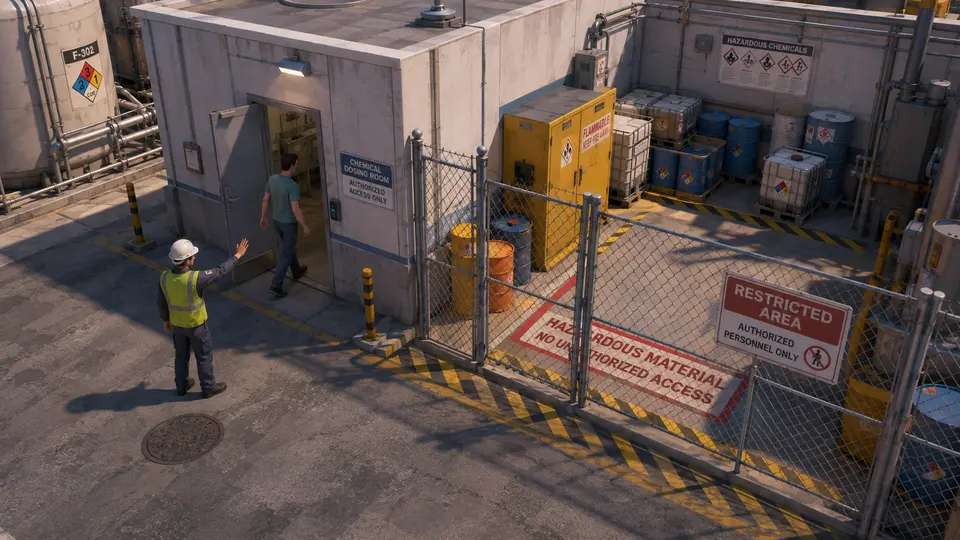
CAM-317Into the dosing room without the area kit
«Tell me if anybody goes into the dosing room without a hard hat, a vest and goggles.»
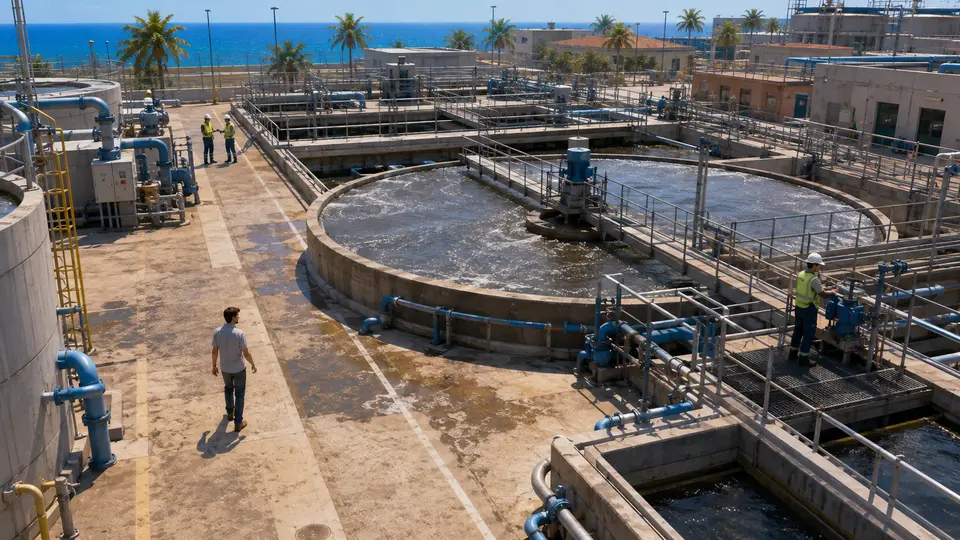
CAM-152No hard hat in the plant walkway
«Tell me if anyone walks into the technical area without a hard hat and a safety vest, whether they work here or not.»
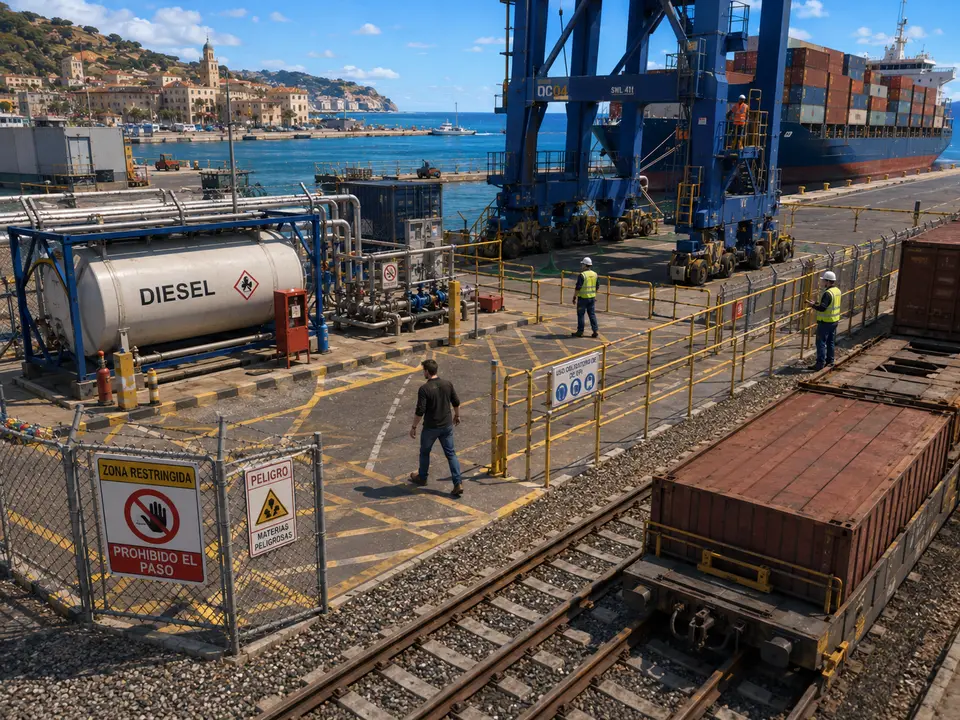
CAM-446Past the sign to the diesel tank with no hard hat
«Tell me if anyone enters the fuel area or crosses toward the track without a hard hat and a vest.»
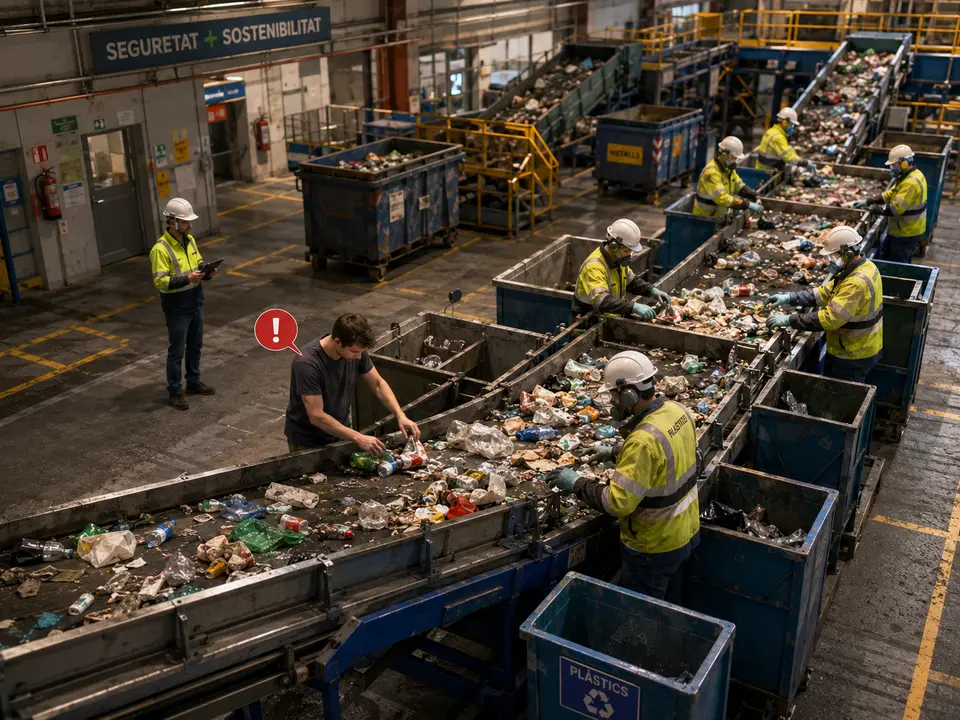
CAM-438No hard hat, no gloves, bare hand on the belt
«Tell me if somebody starts sorting on the belt without hard hat, gloves or a safety vest.»
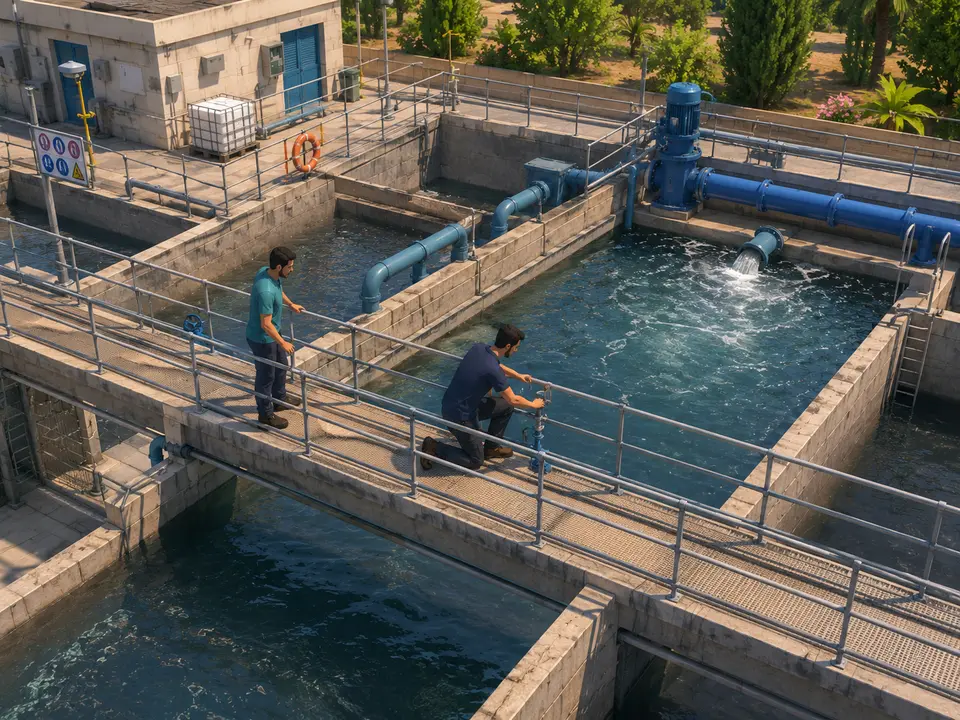
CAM-413No hard hat, no safety vest, right at the edge of the open tank
«Tell me if anyone works at the edge of a basin without a hard hat or a vest.»
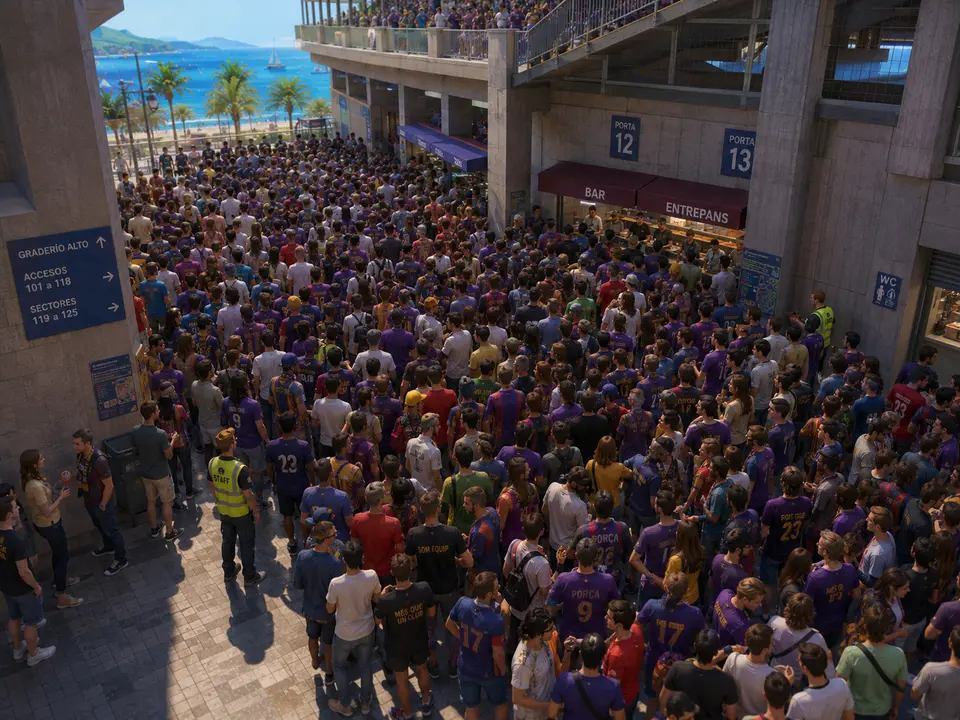
CAM-493A packed concourse and two safety vests in the whole shot
«Tell me if the concourse goes over nine hundred people and there are fewer than three staff vests inside.»
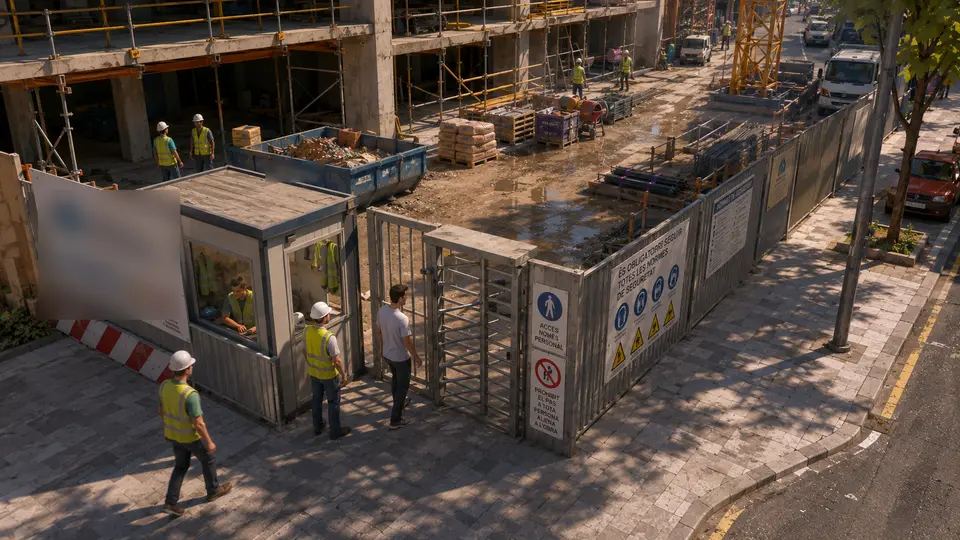
CAM-51Walking into the site with no hard hat
«Tell me if somebody turns up at the turnstile with no hard hat or no vest, and tell me there, at the gate, not once they have been inside the site for half an hour.»


What it doesn’t do
IRIS cannot tell a certified garment from one that merely looks like it, does not check visibility classes, and does not know if the fabric is too dirty to reflect anymore. It sees whether someone is wearing high-visibility clothing or not.
And in very low light with no floodlights it may not see it at all. Before accepting a night-time rule, look at that camera at that hour.
Questions
- Does it work at night or in poor light?
- Yes, provided the camera can see the scene. Under floodlights, reflective clothing stands out even better at night than by day. In a completely dark scene, it doesn’t. That’s why the camera goes where there’s light and where people pass head-on: the gate, the turnstile, the point everyone must cross. Looking at that camera at that specific hour takes five minutes and prevents launching a rule that won’t hold.
- Can it count how many vests are in an area?
- Yes, and in a venue with an audience it is one of the most useful things it does. Knowing there are nine hundred people in the concourse and only two staff vests among them says, with nothing to argue about, that the point is short-handed before anything happens. It’s a number, not an impression, and it can be read by hour and by door. That moves people in time instead of explaining it the next day.
- Is this for disciplining people?
- No, and using it that way ruins it. IRIS identifies nobody: it does not recognize faces and does not know who the person in the frame is. It sees someone without a vest where one is required and alerts in time for them to put one on. The point is for them to walk in wearing it, not to open a file. The day people believe the camera is there to catch them, it stops doing the one thing it is good for.
- Can it apply only in some areas and at certain hours?
- Yes, and it’s the sensible way to do it. Vests aren’t needed across the whole site: they’re needed where machines move. The zone is drawn once on the image and given the hours when there’s activity. Outside that zone and that window, IRIS says nothing. A rule that fires where it shouldn’t soon ends up ignored, and an ignored rule protects nobody at all.
Demo · IRIS at work
A new case each time. Always the same screen.
It plays by itself and shows one case from start to finish. It’s a summary: the real screen has far more functions than fit in this box.
- Cameras on the map
- You draw an area
- What passed shows up
Not seeing yours here?
These words are the ones we have built, not the ones IRIS understands. The list falls short on purpose: you ask for it in a sentence, and sentences don’t run out. Tell us what is in front of your cameras and we’ll tell you whether it understands it, or not yet.
And the best part
You already record.The hard part was always watching it.
Years of video that only get opened once something has gone wrong. IRIS understands those same images as they arrive, so the answer no longer lives only in the archive.
Tell us your problem and we’ll say whether IRIS understands it, or not yet.
A person answers, the same working day.