Solutions by typeIntrusion detection
What if the metal there isn’t the metal that should be there?
The metal that shouldn’t be there
It’s 12:50 p.m., almost lunchtime. Two people inside the substation yard. One is crouched in front of a field cabinet wide open, pulling copper conductors out of it; the other is watching the gate. On the track there is a white van with its rear doors open. They aren’t doing this at night on purpose: at midday nobody thinks robbery, they think maintenance.
2 cameras across 2 sectors
What IRIS is
IRIS watches the cameras for you.
IRIS Neural is an artificial intelligence that watches the cameras you already have and understands what happens in front of them. When something important happens —or something you told it you need to keep an eye on—, it alerts you; and whatever can be counted, it counts in numbers. All day long, without anyone having to watch a screen.
You tell it what you need to watch, and IRIS does it.
Works with the cameras you already have. Nothing to replace.
A person replies, not a form.
- Your footage never leaves your premises.
- It doesn't identify people.
- Certifications →
This is how you ask for it
«Tell me if a cabinet is opened or cable is taken out of the yard when there is no authorized work on.»
What they take doesn’t cost what the copper is worth. It costs the substation out of service, the crew called out at dawn, a neighborhood without power, and the risk of somebody being electrocuted inside a yard they don’t know. And it comes to light when something stops working, which is always afterward. The video yields a white van with no readable plate, and after that it yields nothing.
You decide once
You decide this once, and the interesting part is that it isn’t a decision about people: it’s a decision about the calendar. You say which cabinets and which zones count, and when authorized work is on. When there’s a work order, silence. When there isn’t, an alert, with camera and time, to whoever you name and in the color you choose. IRIS applies it every day of the year, including the fifteenth of August at midday.
Copper is money and everyone knows it. A substation, a solar farm, a jobsite with cable drums on the ground, a railroad line. And it doesn’t always go at night: plenty of people walk in in broad daylight, with a van and a safety vest, because at midday nobody asks. An open cabinet at twelve thirty looks like maintenance; at three in the morning it looks like something else. The image is the same; what changes is what you expect to see.
The other face of this same word is inside a factory, and nobody’s stealing anything. Morning shift on a slitting line: mounted on the decoiler there is a copper-colored coil, and the order says steel. At six in the morning nobody read the label. The line starts and for forty minutes it cuts the wrong material. The batch goes to scrap, so do the blades, and the customer gets an awkward phone call.
What joins the two scenes is that metal is identified by looking, not by reading. Copper has a color nothing else in the warehouse has, and an open cabinet is visible from fifty yards. The camera is the only thing present at the exact moment, not three hours later. IRIS knows no metallurgy: it knows that the thing there doesn’t look like the thing that should be there, and it says so while the van still has its doors open and while the line has cut one coil, not ten.
And as with almost anything worth money, it doesn’t happen once. The same yard, the same stretch of track, the same site: they come back, because they already know the way in and the hour when nobody’s there. That’s why the log matters as much as the alert. Two months later you have it written down: how many times a cabinet was opened outside hours, in which zones and at what time. That’s what turns a complaint into a plan — where to add light, which gate to change and which stretch to look at first.
What changes
Before, you found out through a power cut or the year-end inventory; in the factory, through the batch that reached the customer wrong. The conversation always started with damage already done. Now it starts while it’s happening: the control room sees the van still inside the yard, and the line manager stops after the first coil instead of after the tenth. The video stops being an explanation of what happened and starts being a way to arrive in time.
Where we have seen it
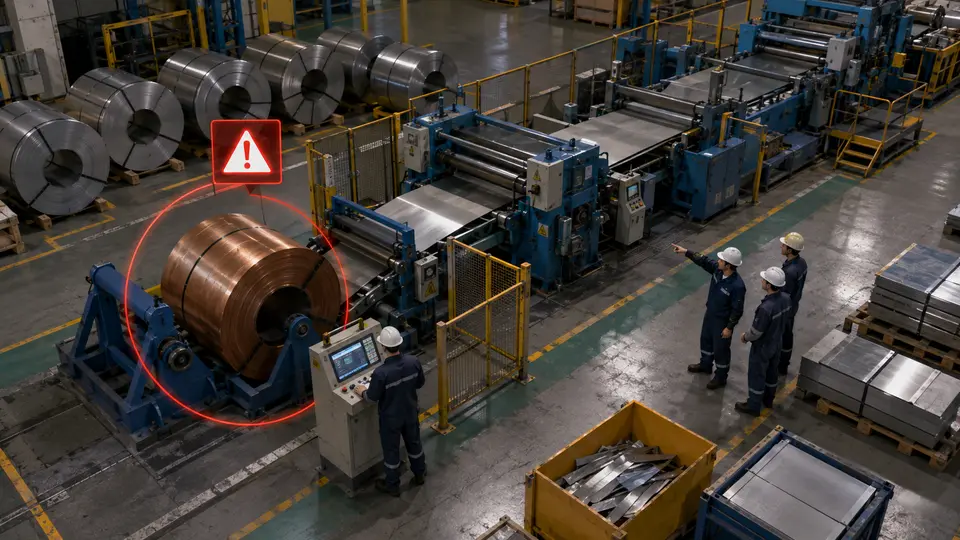
CAM-244A copper coil mounted on a steel line
«Tell me if the coil mounted on the uncoiler does not look like the material on the active order.»
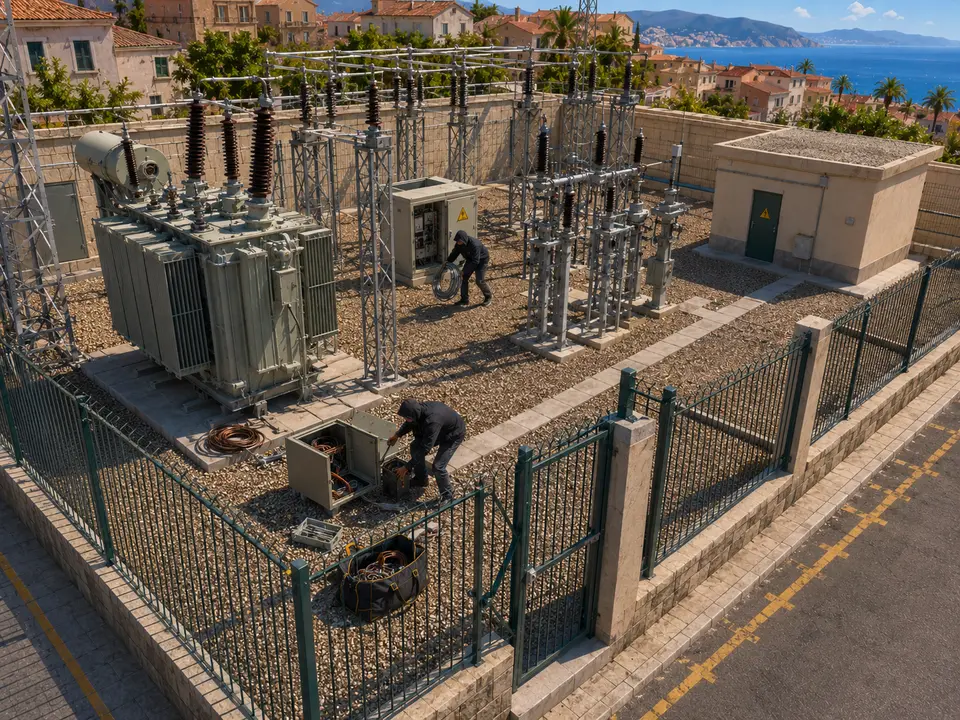
CAM-343A cabinet is being emptied of its copper
«Tell me if a cabinet is opened or cable is taken out of the yard when no authorized work is under way.»


What it doesn’t do
IRIS does not know whether the copper is copper. It sees a color, a shape and a place, and it alerts when what is there does not look like what should be there. It does not read labels, weigh anything or analyze materials: that is what the lab and the scales are for.
And it does not tell an authorized crew from a thief. It works with the calendar you gave it: with a work order it stays quiet; without one it alerts, even if the person inside is wearing a safety vest and a hard hat. A vest is not a permit.
Questions
- Can IRIS tell copper from aluminum?
- When they look different, yes; when they look the same, no, and it should be said plainly. A copper coil among gray coils is a difference anyone spots from the doorway, and IRIS spots it too. Two grays that only differ by what the label says aren’t a camera problem: that’s solved by reading the label or weighing the coil. IRIS works with what is visible, which is exactly why it does well with copper.
- What if the people going in are the maintenance crew?
- Then nothing fires, because that work is on the calendar. IRIS does not recognize the crew and does not know who anyone is: what it knows is that today, from eight to two, there is authorized work in that zone. Inside that window it says nothing. Outside it, it always alerts, even if the person has a safety vest, a hard hat and a van with a company name on the door. That’s more reliable: clothing can be bought, and the work order is signed by someone in your own organization.
- Can it stop the line if the wrong coil is loaded?
- No. IRIS alerts; stopping a line is a person’s decision, and that isn’t a limitation: it’s what you want. Stopping a slitting line has consequences, and the person who carries them has to be the one who signs the order. What changes is that the line manager gets the alert with the picture of the decoiler after one coil, not ten, and decides with time and with the image in front of them instead of finding out through a return.
- Is it any use in a warehouse full of coils?
- Yes, because the rule doesn’t live in the warehouse: it lives on the decoiler. It’s written per machine and per production order: “on this line, for the duration of this order, the mounted material is gray.” When production changes the order, the reference changes, and that’s production’s job, not IRIS’s. That way the rule is one simple comparison in one place, rather than an attempt to recognize a hundred coils stacked at the back.
Demo · IRIS at work
We won’t just tell you. We’ll show you.
It’s a summary of the real screen: it plays by itself, step by step, and shows only the path of one case. The actual tool has far more than fits in here.
- The alert fires
- It lands in the tray
- You open it
- You confirm or dismiss
Not seeing yours here?
These words are the ones we have built, not the ones IRIS understands. The list falls short on purpose: you ask for it in a sentence, and sentences don’t run out. Tell us what is in front of your cameras and we’ll tell you whether it understands it, or not yet.
And the best part
A recollection can’t be checked.A number can, and it comes out the same every day.
The number doesn’t depend on who was on shift or how they remember it. It’s measured the same way every day, and that’s why people counting is approved by the Centro Español de Metrología. That approval is Spanish and it isn’t equivalent to any U.S. certification: we say so up front and not at the end.
Tell us your problem and we’ll say whether IRIS understands it, or not yet.
A person answers, the same working day.