CAM-368
A plume is blasting out of the dome and crossing the yard
Mid-morning at the plant. A dense pale plume is blasting out under pressure from the elbow where the duct meets the process dome, crossing the yard horizontally to the left. The site road runs underneath: one worker is alone on the roadway and a group of four in safety vests stands by the furnaces, whose mouths are glowing at that moment. A loaded truck waits further back. IRIS sees the plume and the point it comes from, not what it is made of.

Turn on IRIS Vision
AI-generated image
What IRIS is
IRIS keeps an eye on the plant for you.
IRIS looks at the cameras you already have on the plant floor and understands what it sees: a stopped line, someone inside a robotic cell, someone without their safety gear on, jammed parts. When something like that happens, it lets you know right away; and whatever can be counted, it counts in numbers. All day long, with no one needing to watch a screen.
You tell it what you need to watch, and IRIS does it.
In a spot like this, the camera catches the plume the second it blasts out of the dome and flags exactly where the leak is coming from. You get the alert with the picture and the timestamp right away. From there, staff decide which way to send people, while the fixed detectors handle figuring out what gas it actually is.
Works with the cameras you already have. Nothing to replace.
A person replies, not a form.
- Your footage never leaves your premises.
- It doesn't identify people.
- Certifications →
What IRIS understands
What it recognizes in this scene
- plume blasting out under pressure
- point it is coming from
- process dome
- group of workers in the yard
- worker alone on the roadway
What this camera measures
An alert says something’s happening. The reading says how much.
- 1 min 40 sTime since the plume was seen
- 9People in the yard
- 3Vehicles in the yard
- 2Plumes seen at this point today
- 09:58Time of the alert
The figures on this screen are an example from the illustration, not any client’s measurement.
The rule
You decide once. IRIS applies it always.
If
a visible plume appears outside the normal emission points
Then
- alert the control room with the camera, the time and the point it is coming from
- save the video from the first frame in which the plume is visible
- show which yard cameras have people in frame
The instruction that set it up«Tell me if a cloud or a plume comes out of somewhere that normally releases nothing.»
What changes
What changes for whoever answers for the plant
While the plume crosses the yard, the person coordinating the plant is walking it with a radio in hand, looking for where it comes from. That’s the first question and it’s the one the camera answers: the alert brings the image of the leak point and the time, and people can be sent in the right direction right away. Which gas it is, whether it’s toxic and at what concentration, is told by the fixed detectors and the instrumentation. That’s the division of labor, and it works because each part does what it is good at.
What people usually ask
Can a camera detect a toxic gas?
No. IRIS sees the plume: that there’s a cloud, where it starts, what shape it has and which way it’s going. Composition and toxicity are measured by the plant’s instrumentation, the fixed detectors and the portable units. The two complement each other: the detector says what’s in the air where it stands, and the camera says which piece of equipment it’s coming out of and who it’s drifting over.
What if steam is normal in that area?
Then it shouldn’t alert, and it doesn’t. The plant marks on the image where steam is normal and at what hours. IRIS only triggers when one appears outside those points, or with a different shape and force from the usual. What counts as normal for each piece of equipment is decided by the plant, not by the camera, and that’s why the tuning is done with the people who run the installation.
Does it work at night or in fog?
It depends on the spot. With enough light, yes. At night you need lighting in the area or a thermal camera, which sees a hot plume even when the visible image loses it. In thick fog the visible image drops a lot, and that’s worth saying before installing rather than after. Every point is checked against the real image from that camera, at the worst hour of the day.
Other cameras
- CAM-360 · The slab has stopped on the mill, with the beacons on red
- CAM-361 · The ladle stream has missed and molten metal is running across the floor
- CAM-362 · Snow and closed drums in the basket, still hanging over the furnace
- CAM-363 · The basket has been loaded from four different bays
- CAM-364 · Somebody is walking the aisle while the full ladle is moving
- CAM-365 · A coil is passing right over a worker
Every simulation
On the edge of a drop
Tell me if someone steps to the edge of a drop with nothing holding them.
- The sentence
- Where it applies
- What it finds
- The same rule
Next step

Who is watching when the load swings over somebody?
11 cases: 9 raise an alert when something happens and 2 only measure. You see each image as it is, and then with what IRIS understands on top.
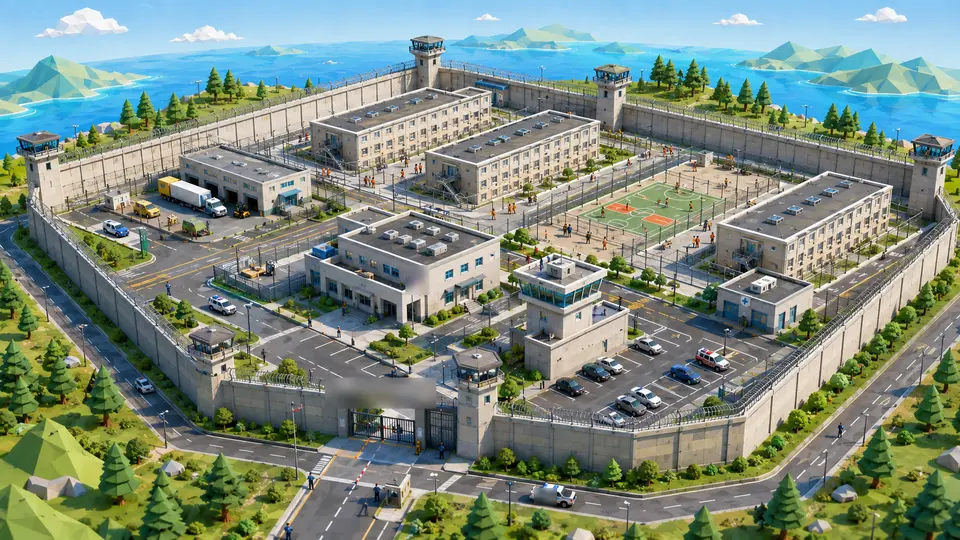
Who is watching the yard screen when the fight starts?
17 cases: 16 raise an alert when something happens and one only measures. You see each image as it is, and then with what IRIS understands on top.


And the best part
Whoever is on duty already has a job.Watching forty screens doesn’t fit into the shift.
No shift has time to spare. IRIS watches all forty at once and brings only what needs to be seen, with its camera and its time. What happens next is that person’s call.
Tell us your problem and we’ll say whether IRIS understands it, or not yet.
A person answers, the same working day.