CAM-174
A car in the dry bed
A channelized urban wash, its floor dry and tufts of grass growing out of the joints. A four-wheel drive is driving along the bottom, heading for the arch of the bridge. Past the bridge a thin run of water still moves down the middle. From the walkway, a few people watch over the parapet. IRIS sees that there’s a vehicle in the bed; it doesn’t read the license plate and doesn’t know whose it is.

Turn on IRIS Vision
AI-generated image
What IRIS is
IRIS watches over your critical infrastructure.
IRIS looks at the cameras you already have at the dam, the water plant, or the power plant, and understands what it sees: someone entering where they shouldn't, a strange vehicle, an overflow, the perimeter. When something like that happens, it lets you know right away; and whatever can be counted, it counts in numbers. All day long, with no one needing to watch a screen.
You tell it what you need to watch, and IRIS does it.
In this scene, IRIS spots a car driving into the dry wash, though it never reads the plate or figures out whose car it is. The alert goes out while the vehicle's still moving, tagged with the camera and the exact spot it came in from. From there, staff decide whether to send someone, block that access, or both — then check later if the same spot gets used again.
Works with the cameras you already have. Nothing to replace.
A person replies, not a form.
- Your footage never leaves your premises.
- It doesn't identify people.
- Certifications →
What IRIS understands
What it recognizes in this scene
- vehicle in the bed
- bridge over the wash
- water still running on the floor
- people on the parapet
- wall with no way out
What this camera measures
An alert says something’s happening. The reading says how much.
- 1Vehicles in the bed
- 3 minInside for
- 0Exit ramps in frame
- 4Stretches with water running
- 5Watching from the parapet
- 12:05Time of the alert
The figures on this screen are an example from the illustration, not any client’s measurement.
The rule
You decide once. IRIS applies it always.
If
a vehicle appears driving or stopped inside the bed
Then
- alert the emergency officer with the camera, the spot and the video
- say how long it has been in there and where it got in
- log it, so the city learns which accesses people slip in through
The instruction that set it up«Tell me if any vehicle gets into the bed of the wash, at any hour.»
What changes
What changes for whoever answers for the site
A dry bed doesn’t look like a river. It looks like a short cut, an open yard, a place people have always driven across. And it’s one, most of the year. The trouble is the day it stops being one: the water arrives from far upstream, the floor is walled in on both sides, and once you’re down there’s no way out, on foot or in a car. Today nobody knows that car is down there unless somebody walks past the parapet and calls it in. With IRIS the alert arrives while the car is still driving, with the camera and the spot, and there’s time to get it out, close the access it came in through, or both. And the record of where people get in is worth almost as much as the alert: it’s what tells you which access actually needs closing.
What people usually ask
Isn’t it normal for people to go down into the bed when it’s dry?
Often it is, and that’s exactly why the rule is written by the authority in charge of the channel and not by us. You can allow people on foot and alert only on vehicles, leave it open on maintenance days, or watch it only while a weather warning is active. What IRIS adds is that when a closure is decided, the closure holds: somebody finds out there’s a car in there without having to walk past.
Does it read the vehicle’s license plate?
No. IRIS does not identify anyone: it does not read license plates and does not recognize faces. It sees that there’s a vehicle in the bed, where it got in and how long it’s been there. Whose it is, it doesn’t know, and it doesn’t need to: what has to happen is getting it out, and that doesn’t depend on the owner’s name.
Can it tell a car from a maintenance truck?
Yes, and the difference matters. A private car cutting across where it shouldn’t is one thing; the plant coming to clear the floor is another. The rule can accept one type of vehicle and refuse another, or accept it only inside the working window. What IRIS doesn’t do is decide that on its own: the rule is written by the authority in charge and IRIS simply applies it.
Simulation · how IRIS works
This isn’t a video. It’s a slice of the real screen.
A summary of the real interface, played hands-free. You see one case from start to finish; what you don’t see are the other screens, and there are many.
- The alert fires
- You open it
- You confirm or dismiss
Next step

Who is watching when the load swings over somebody?
11 cases: 9 raise an alert when something happens and 2 only measure. You see each image as it is, and then with what IRIS understands on top.
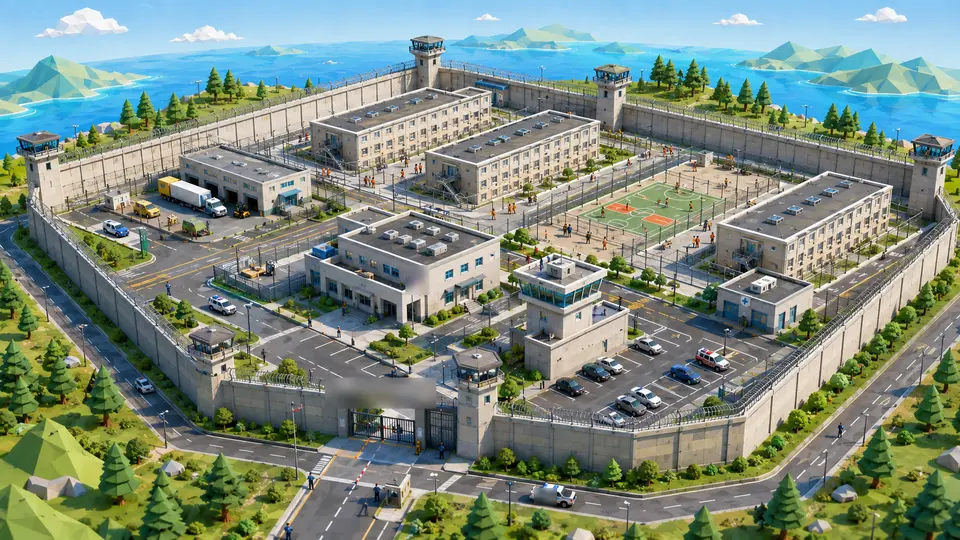
Who is watching the yard screen when the fight starts?
17 cases: 16 raise an alert when something happens and one only measures. You see each image as it is, and then with what IRIS understands on top.


And the best part
You decide once what matters to you.It stops depending on who happens to be on shift.
You say it in your own words and it stays written down. Nobody has to remember anything at the start of a shift: what you decided is already in place, and still there tomorrow.
Tell us your problem and we’ll say whether IRIS understands it, or not yet.
A person answers, the same working day.