CAM-36
Smoke in a built-up area
Black smoke is pouring out of a flat window and rising along the facade. People have stopped on the sidewalk to look up, and the café patio next door is still full.

Turn on IRIS Vision
AI-generated image
What IRIS is
IRIS watches the street for you.
IRIS looks at the cameras you already have on streets and sidewalks and understands what's happening: a fight, a spill, an overflowing trash can or a crowd building up. When something important happens, it alerts you; and whatever can be counted, it counts. All day long, with no one watching a screen.
You tell it what you need to watch, and IRIS does it.
Take this fire scene: the second black smoke shows up at that window, IRIS alerts the dispatcher with the picture, which building front it's coming from, and roughly how high up — so crews already know where to go in before they roll up. From there, it's the dispatcher's call to send the trucks and pick which street to shut down.
Works with the cameras you already have. Nothing to replace.
A person replies, not a form.
- Your footage never leaves your premises.
- It doesn't identify people.
- Certifications →
What IRIS understands
What it recognizes in this scene
- smoke on the facade
- resident on balcony
- onlookers
- patio
- vehicle
- trash cans
- pedestrian
The rule
You decide once. IRIS applies it always.
If
smoke is detected coming out of a building
Duringmore than 15 seconds
Then
- alert whoever runs the emergency plan
- report the facade and the floor
- clear the street below the facade
The instruction that set it up«Tell me if smoke is coming out of a building, and from which facade and which floor.»
What changes
What changes for whoever runs the city
Twenty past two in the afternoon: black smoke is coming out of a window and the café patio next door is still full. In a home fire the first minute counts, and today that minute goes on somebody on the sidewalk looking up, wondering whether it’s smoke or steam and deciding to call; and whoever calls almost never knows which floor. With IRIS the control-room operator gets the alert from the street camera itself, with the façade and the approximate height, which is exactly what the fire station asks. The crew leaves knowing which way to go in and which street has to be kept clear. Turning out is still decided by a person, who confirms the image first.
What people usually ask
Does IRIS mistake kitchen steam or dust for smoke?
IRIS can mistake kitchen steam or dust for smoke, which is why the rule includes a minimum duration and context. Kitchen extract steam always appears at the same point and disperses quickly; smoke from a fire grows, changes color and doesn’t stop. Even so, a smoke alert is always reviewed by a person before anybody is sent out: IRIS shortens the time to that decision, it doesn’t replace it.
Can IRIS say which facade and which floor the smoke comes from?
Yes, IRIS can say which facade and roughly which floor the smoke comes from, within what the camera sees and if the zones have been marked on the image. An alert that arrives naming the facade and the approximate height saves minutes for the engine already on its way. What the camera doesn’t frame — the inner courtyard, the back of the building — can’t be known from that spot, and it’s worth being clear about that upfront.
Does IRIS detect fire, or only smoke?
IRIS can detect both fire and smoke, but smoke usually appears first and is visible from further away, which is why it’s the main street-level alert. Flame stands out well at night and much less in full sun. Either way a person confirms the alert before anybody is called out: IRIS shortens the time to that decision, it doesn’t make it.
A different case every time
A new case each time. Always the same screen.
It plays by itself and shows one case from start to finish. It’s a summary: the real screen has far more functions than fit in this box.
- Checks the whole system
- Flags what is failing
- Puts it on one screen
Next step
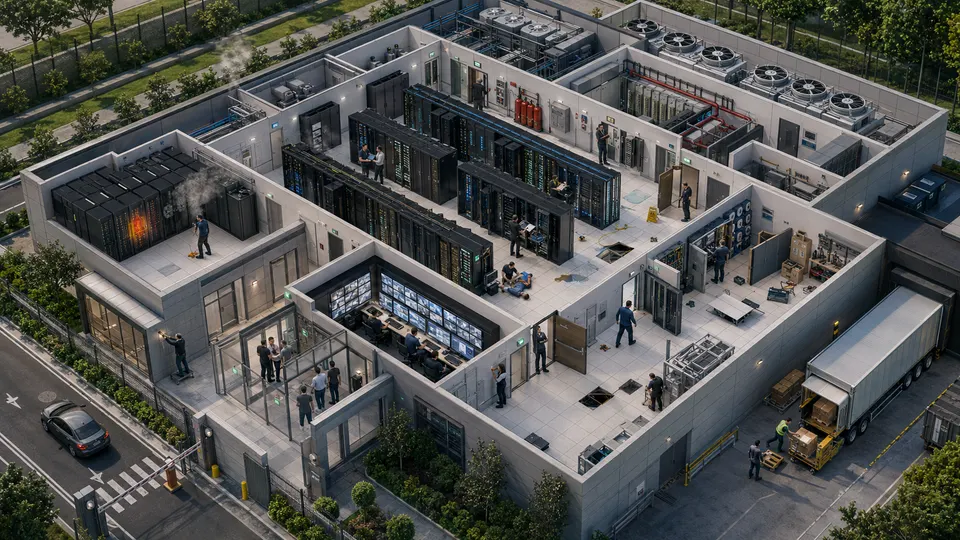
What if the outage doesn’t start with an attack?
13 cases, and in every one of them IRIS raises an alert when something happens. You see each image as it is, and then with what it understands on top.
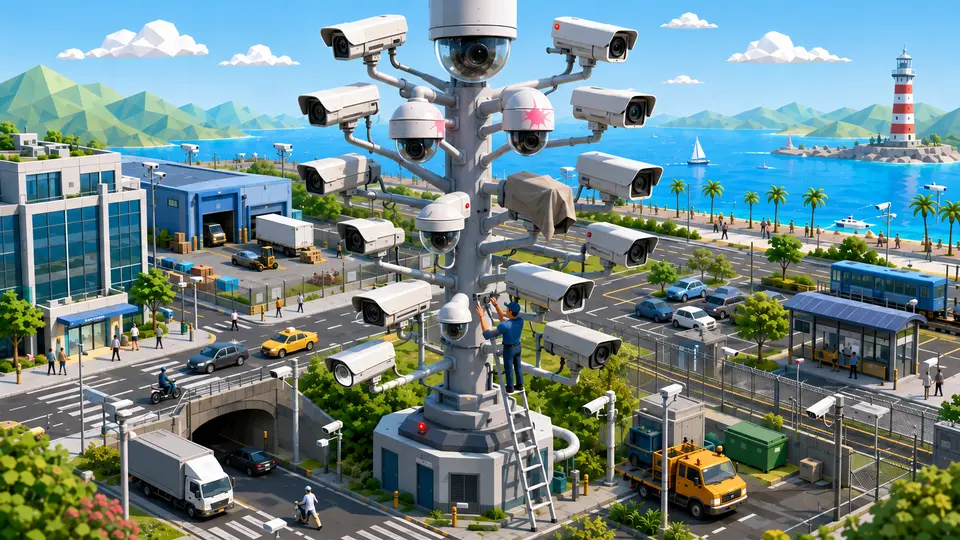
And who watches the cameras?
34 cases, and in every one of them IRIS raises an alert when something happens. You see each image as it is, and then with what it understands on top.


And the best part
“The white van, Tuesday afternoon.”That’s enough to find it.
You type it the way you’d tell a colleague, and the matching minutes come back, each with its camera and its time. You don’t need to remember the exact moment.
Tell us your problem and we’ll say whether IRIS understands it, or not yet.
A person answers, the same working day.