CAM-909
Being taken down
A sunlit square, seen from the camera. The same person has climbed a stepladder and is level with the equipment. In one hand a screwdriver whose tip is already against the mount; with the other they grip the housing, so close that it comes out blurred. Along the right edge and the bottom corner the camera’s own bracket has come into shot: the framing has started to move. Behind, the square carries on: a patio with an umbrella and people at the tables, a row of orange trees, a parked scooter, pale façades. IRIS sees a tool in contact with the mount and a person within reach of the equipment. It does not know who that is or what they intend: it does not recognize faces and does not read license plates.

Turn on IRIS Vision
AI-generated image
What IRIS is
IRIS watches the cameras for you.
IRIS Neural is an artificial intelligence that watches the cameras you already have and understands what happens in front of them. When something important happens —or something you told it you need to keep an eye on—, it alerts you; and whatever can be counted, it counts in numbers. All day long, without anyone having to watch a screen.
You tell it what you need to watch, and IRIS does it.
Here, for example, IRIS catches the screwdriver touching the camera mount and shoots you an alert right away, with the camera and the exact time stamped on it. You find out while the unit's still up and running, not after it's already on the ground. That alert is what lets you decide whether to send someone out to check, and the footage from those minutes gets pulled aside so it doesn't get overwritten.
Works with the cameras you already have. Nothing to replace.
A person replies, not a form.
- Your footage never leaves your premises.
- It doesn't identify people.
- Certifications →
What IRIS understands
What it recognizes in this scene
- tool on the mount
- a person
The rule
You decide once. IRIS applies it always.
If
a tool comes into contact with the mount, the housing or the Junction box, or the framing starts to swing while somebody is in front of it
Then
- alert at once with the camera, the spot and the time
- set aside the video of the previous minutes so the recording cycle cannot erase it
- wake the neighboring camera that covers the same spot, so the scene stays covered if this one goes down
The instruction that set it up«Tell me the moment somebody touches a camera mount or housing with a tool, even if the picture still looks fine, and set the video aside.»
What changes
What changes for whoever answers for the cameras working
The alert that says a camera has lost signal always arrives late: it arrives when there’s nothing left to see. If a camera ends up on the ground, the last thing it recorded is a piece of sky or sidewalk, and what mattered — who turned up, with what, at what time — happened a few minutes earlier, when nobody was watching that screen. With IRIS the alert goes out while the tool is on the mount, with the camera still alive and the square still in frame. And the video of those minutes is set aside so the recording cycle can’t erase it. That’s the difference between finding out tomorrow that a camera is missing and knowing today what’s happening to it.
What people usually ask
Does IRIS recognize the person handling the camera?
No. IRIS does not recognize faces and does not read license plates. All it states is what can be seen: there’s a tool in contact with the mount and there’s a person within reach of the equipment. It does not say who that is, does not look them up in any database and does not store anyone’s identity. Who it’s and what they were doing is for a person watching the video to decide. That’s the usual split: IRIS alerts while it’s happening, a person judges afterward.
Does this work as evidence?
What counts is the video, and what IRIS does is make sure it exists. When the alert fires, the preceding minutes are pulled out of the overwrite cycle and kept with their camera, date and time, alongside the record of which rule fired and when. That’s what goes to whoever has to weigh it up. IRIS does not classify what happened and does not identify anyone: it describes what was in front of the lens. Classifying is a job for people, with the video in front of them.
And what if it’s the maintenance technician, there to take it down?
It fires anyway, and it has to: from the lens, scheduled work and anything else look exactly the same. What you tune is the response, not the detection. With a work order open for that camera, the alert is logged and wakes nobody; with no work order, it calls. And there’s a side effect maintenance crews like: it’s on record that work was done on that camera and at what time, so when one turns up hanging loose, nobody has to reconstruct it from memory.
See it for yourself
This isn’t a video. It’s a slice of the real screen.
A summary of the real interface, played hands-free. You see one case from start to finish; what you don’t see are the other screens, and there are many.
- Four cameras at once
- Each understands its own view
- The numbers climb by themselves
Next step
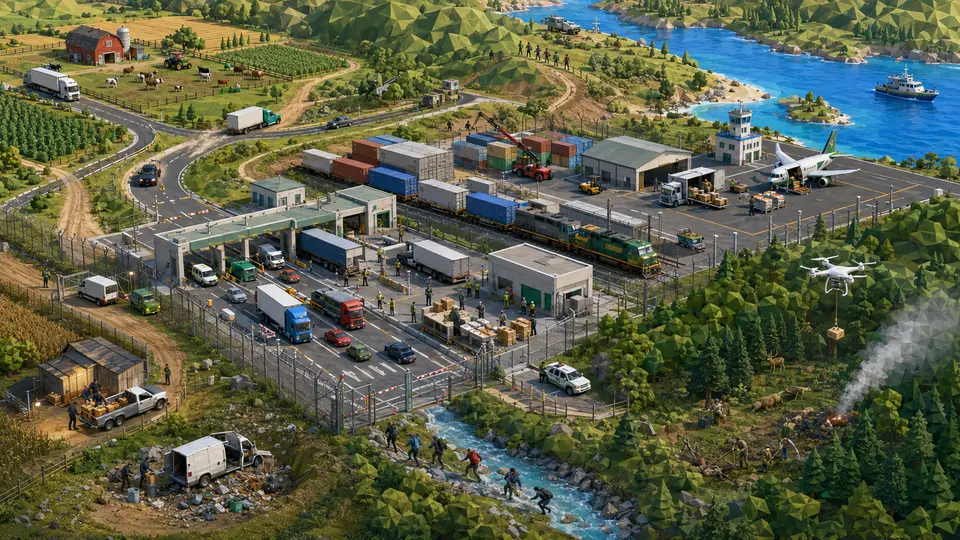
What can a camera see without pointing at anyone?
13 cases: 9 raise an alert when something happens and 4 only measure. You see each image as it is, and then with what IRIS understands on top.
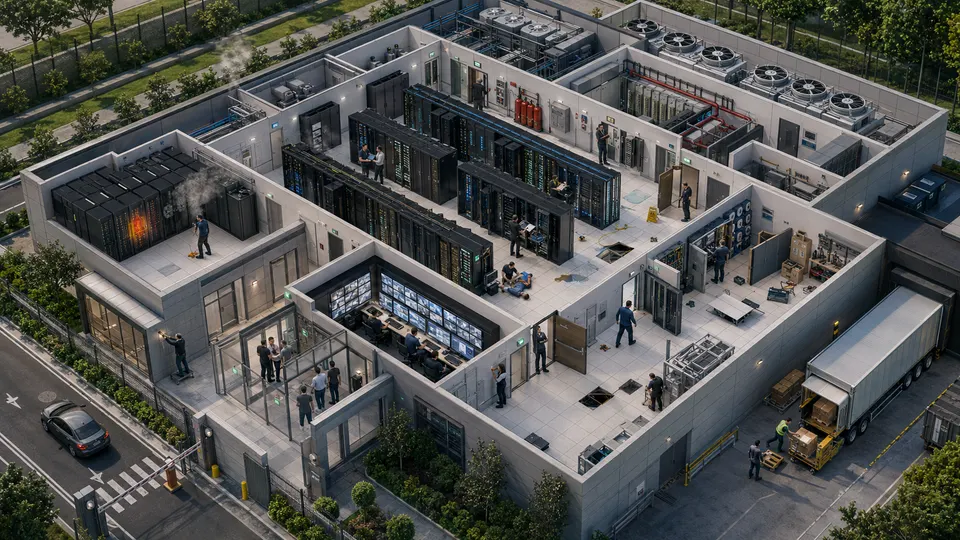
What if the outage doesn’t start with an attack?
13 cases, and in every one of them IRIS raises an alert when something happens. You see each image as it is, and then with what it understands on top.


And the best part
What happens in the small hoursdoesn’t have to wait for the morning report.
IRIS understands it there and then and tells whoever is on call, with the camera and the time. The next day there is nothing to reconstruct: it’s already written down.
Tell us your problem and we’ll say whether IRIS understands it, or not yet.
A person answers, the same working day.